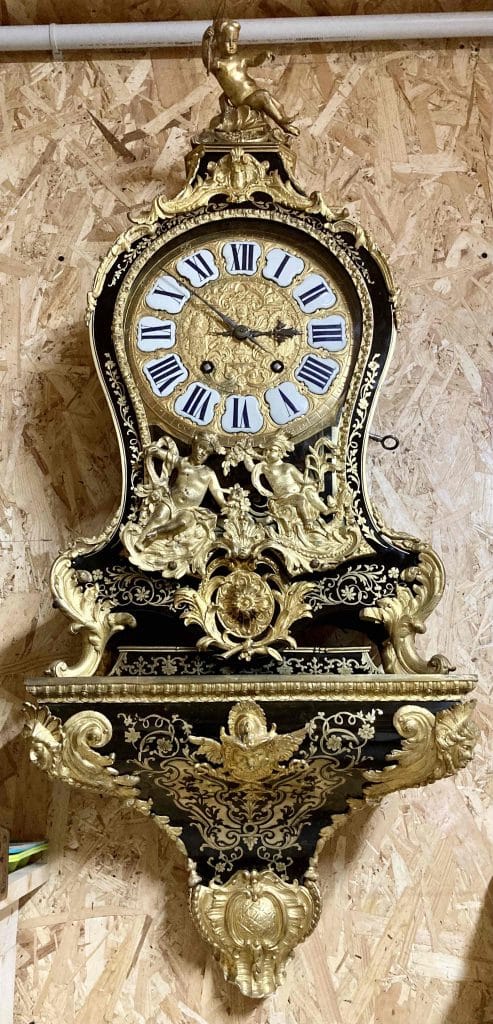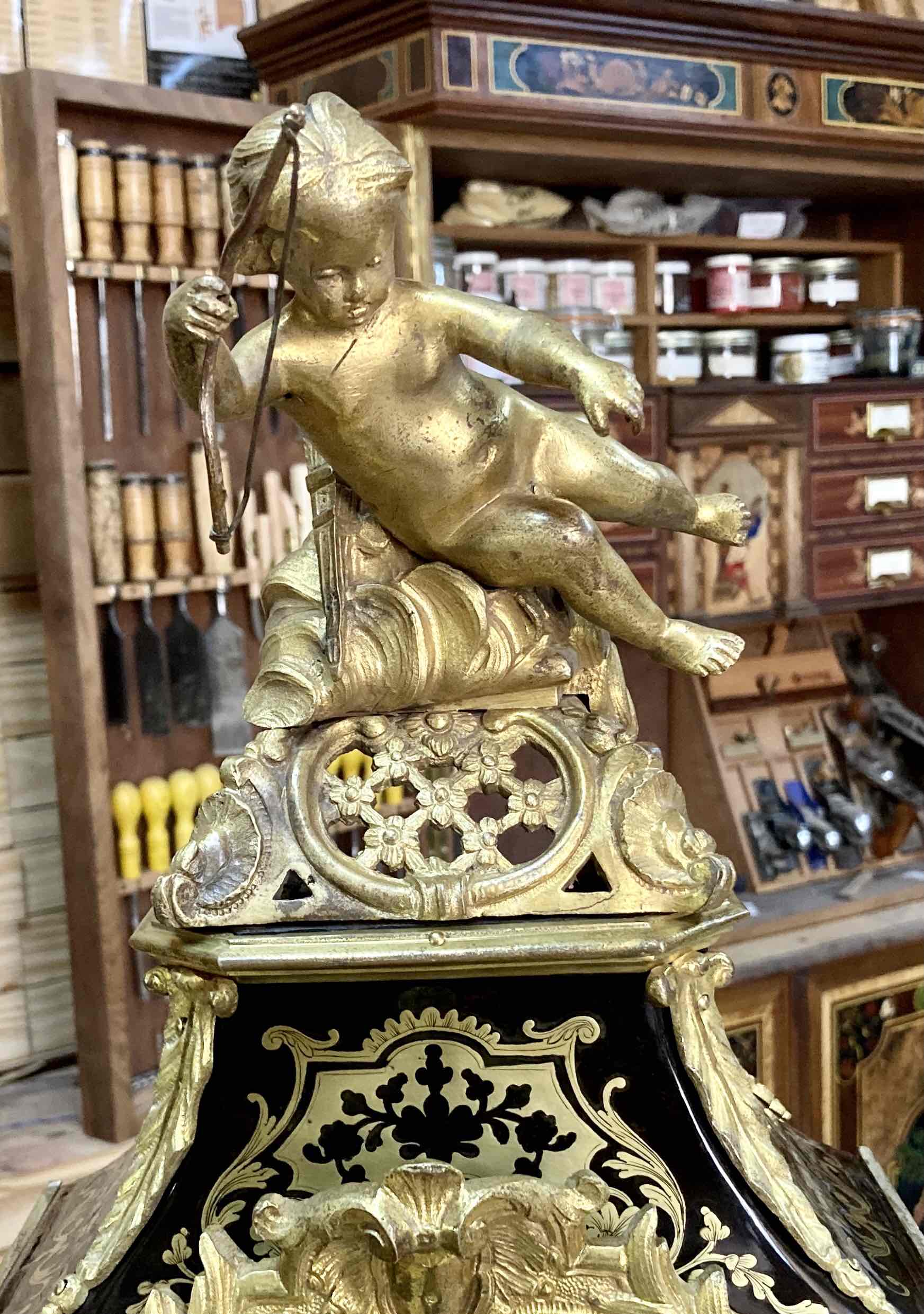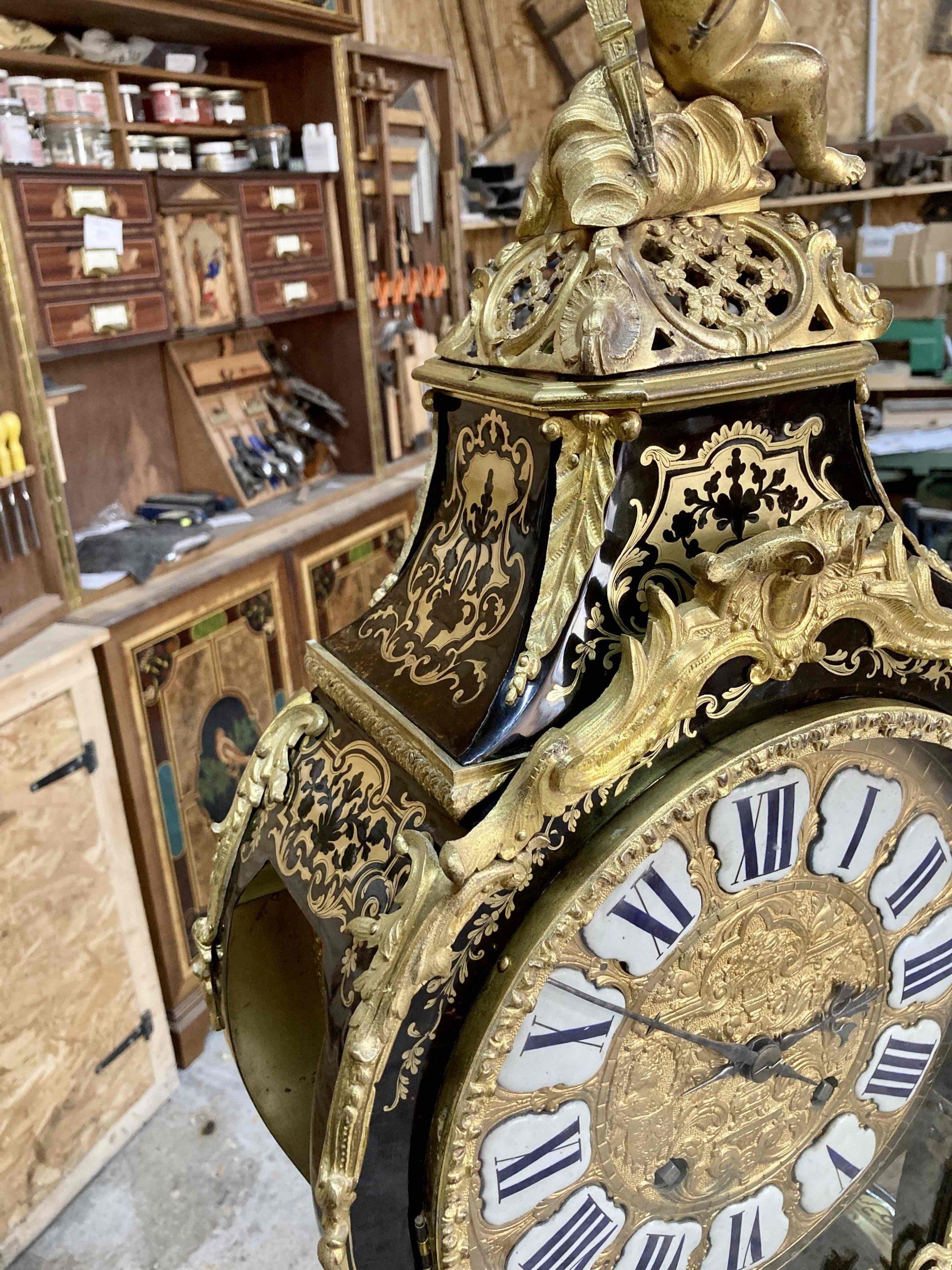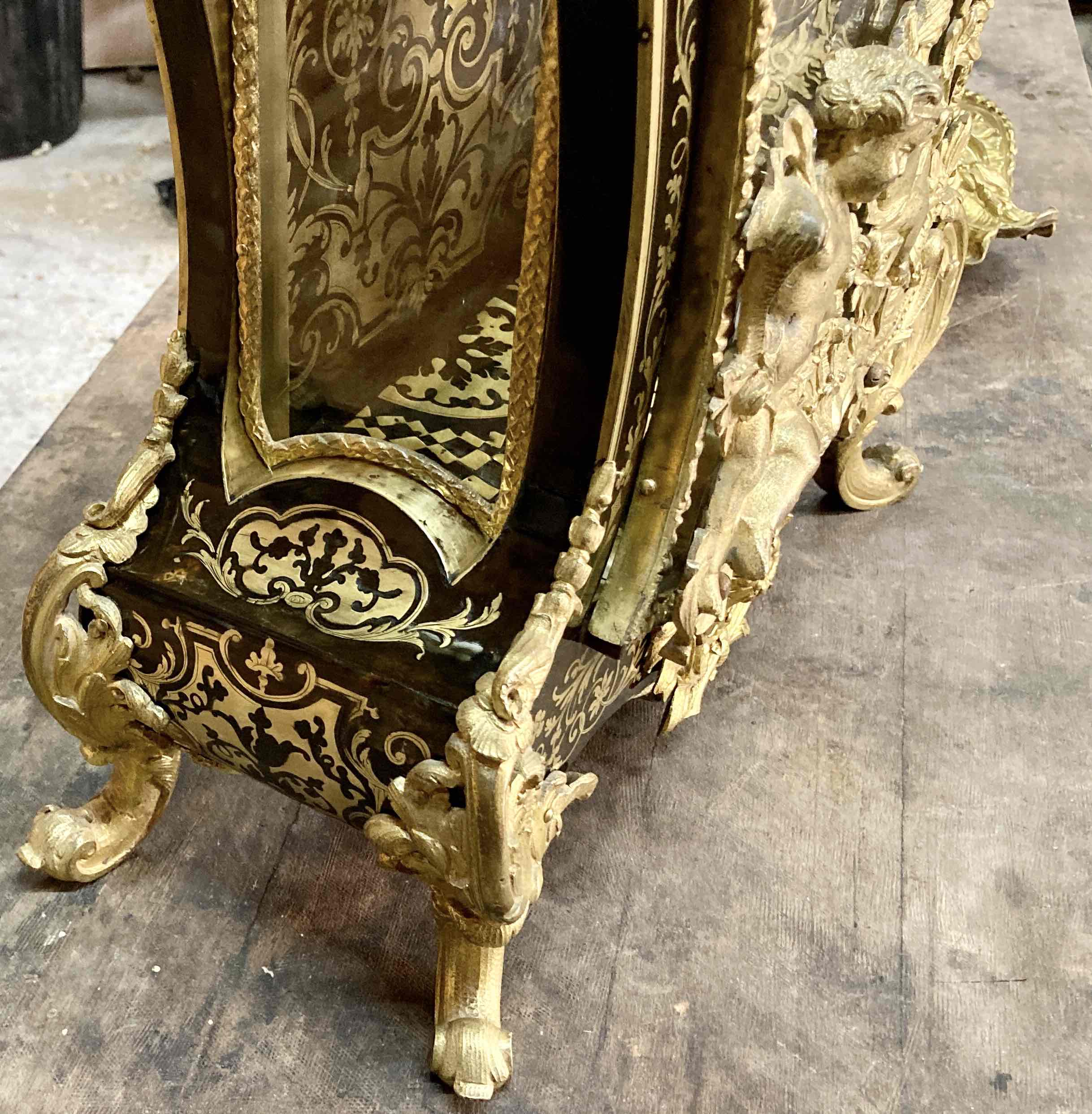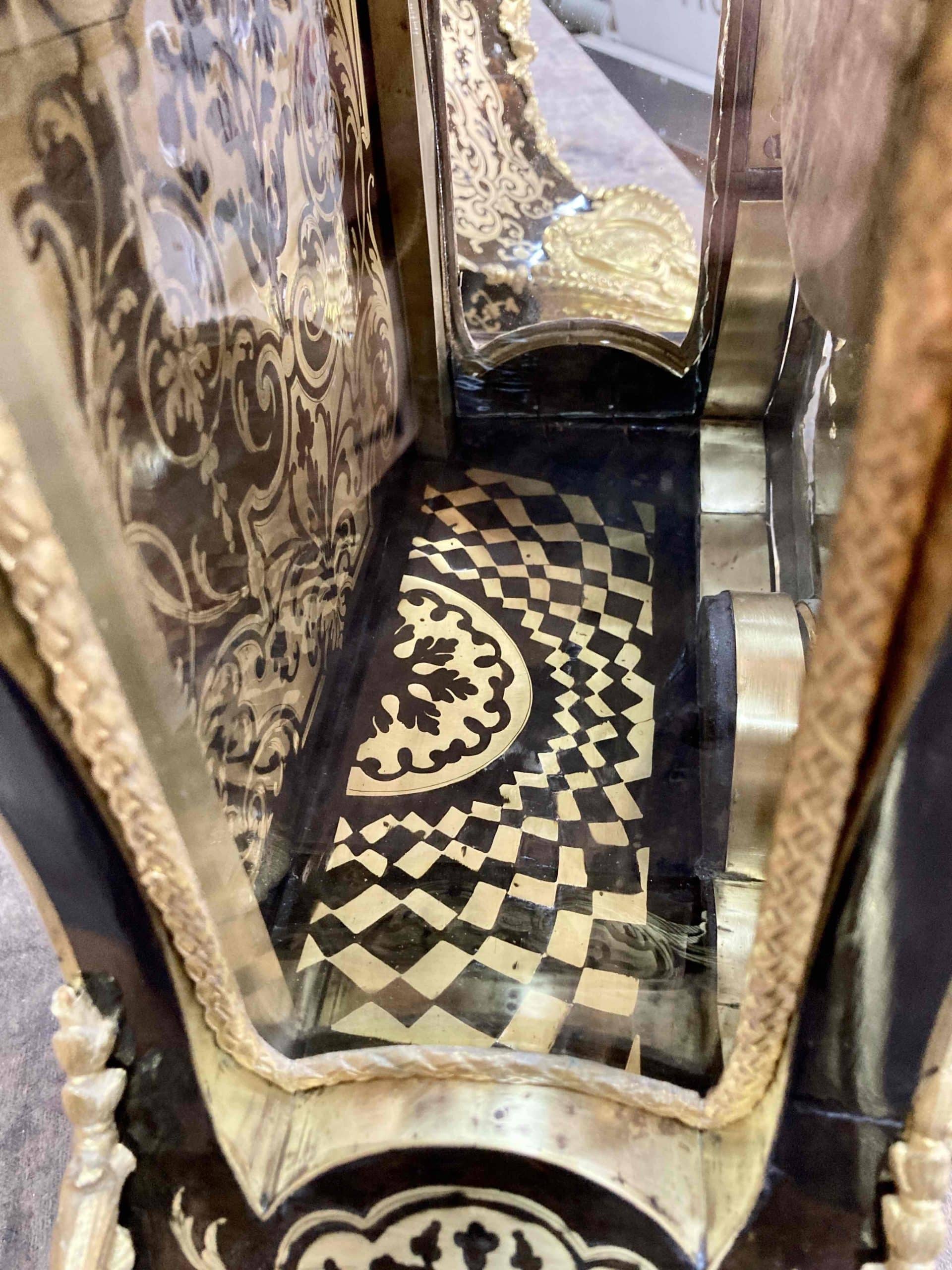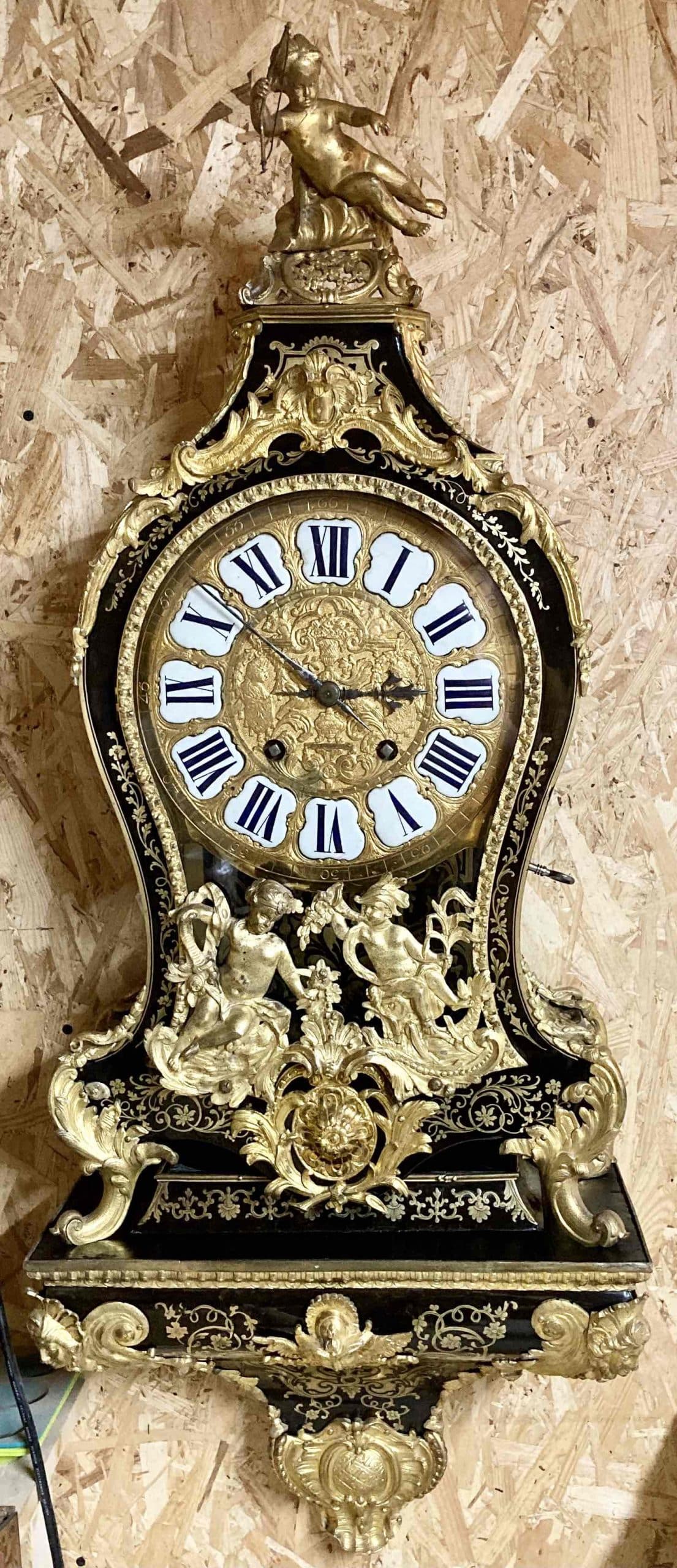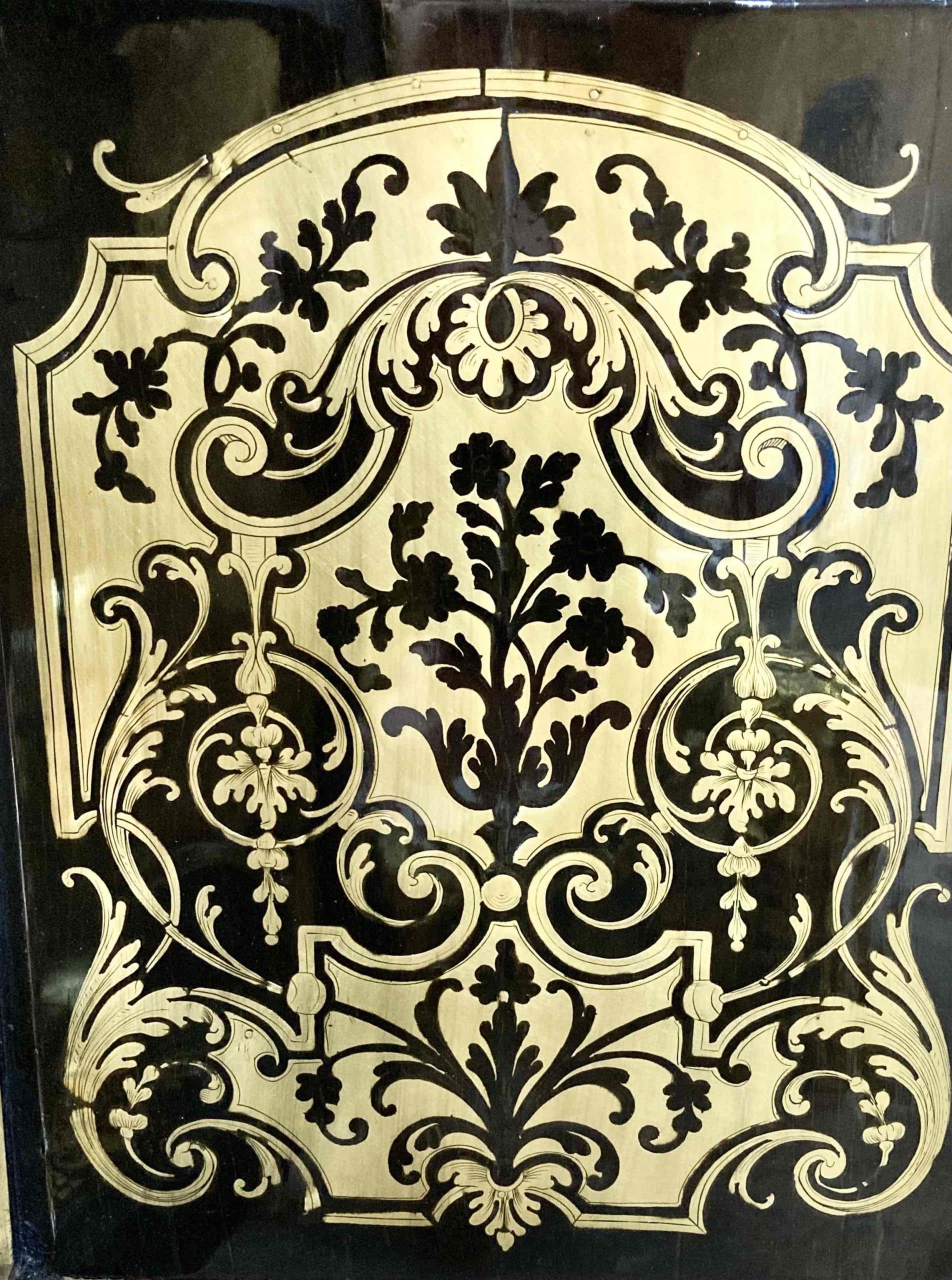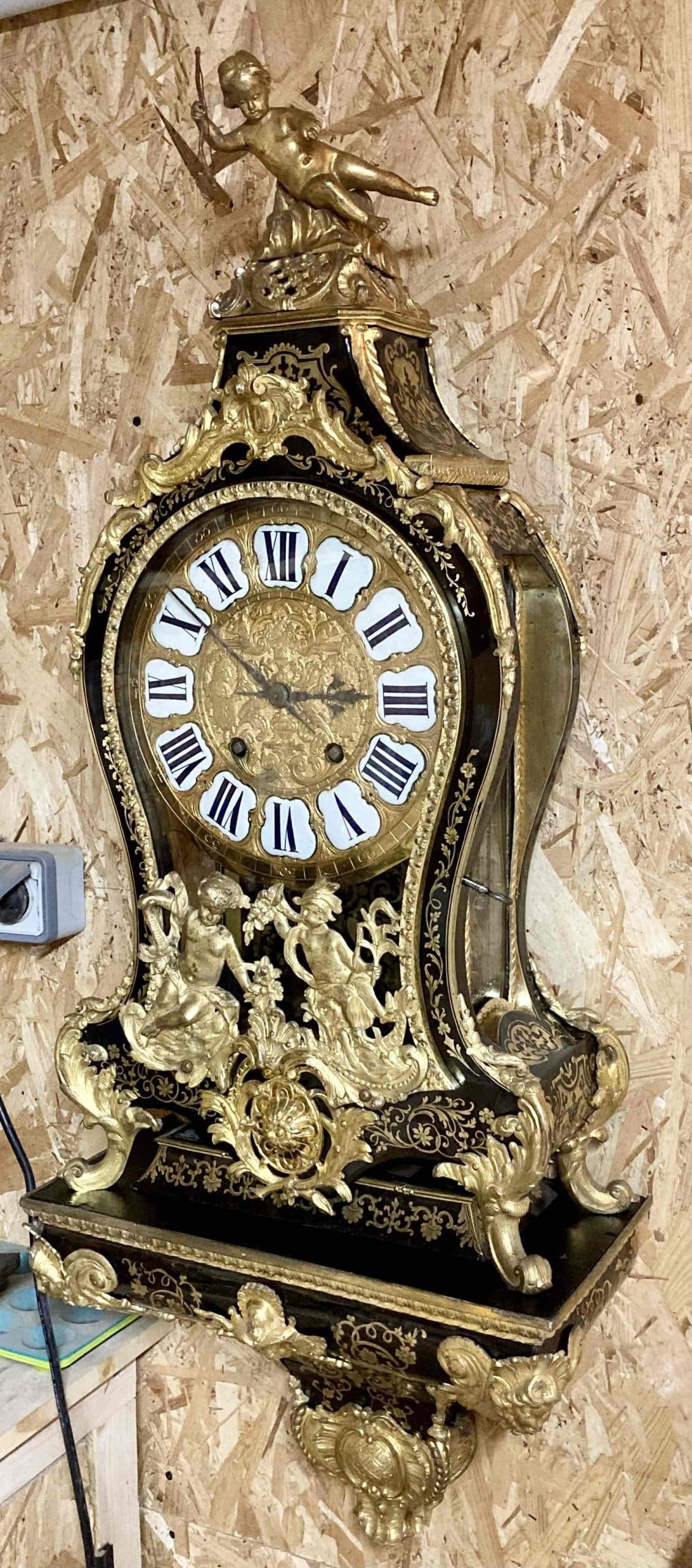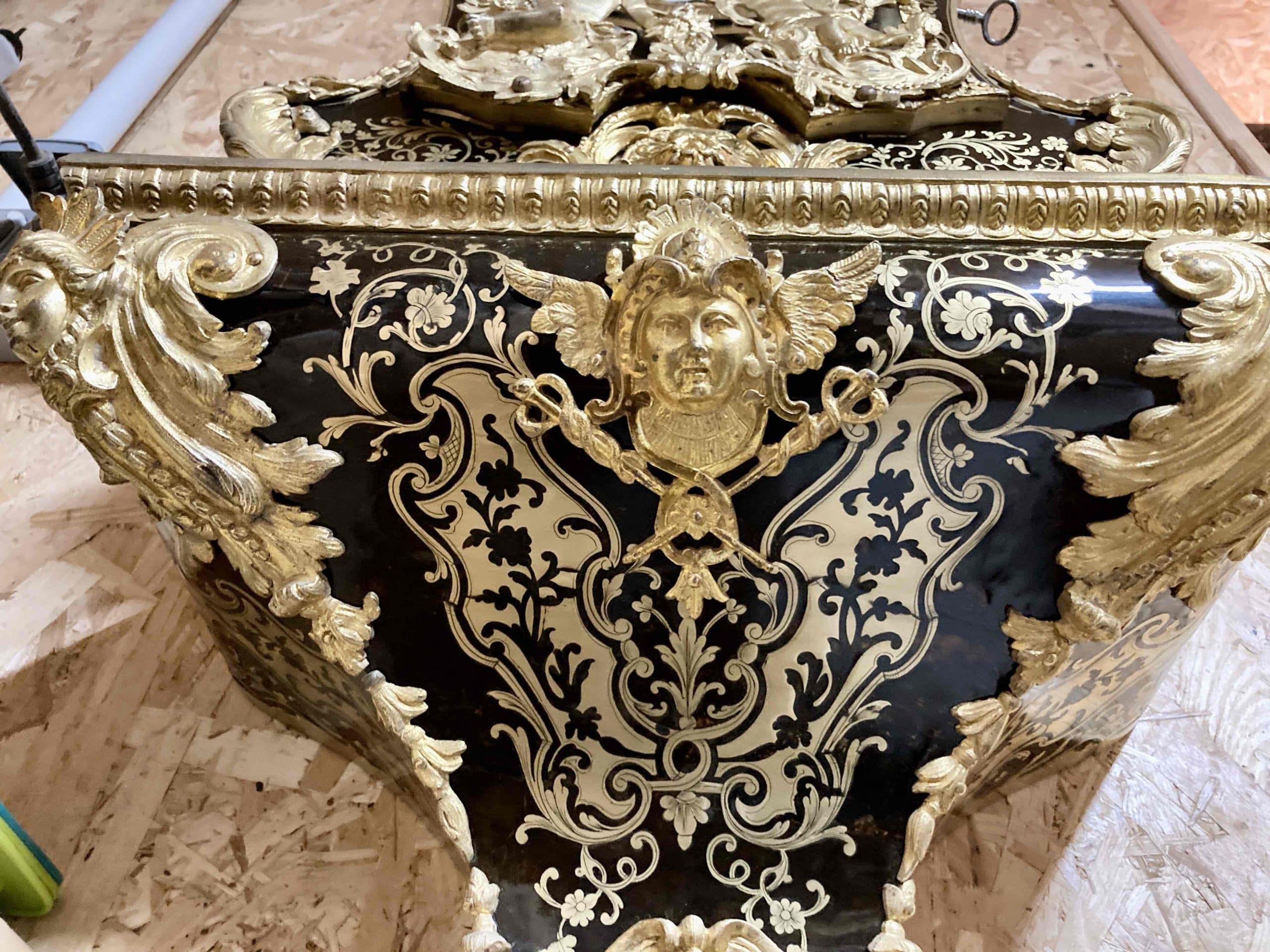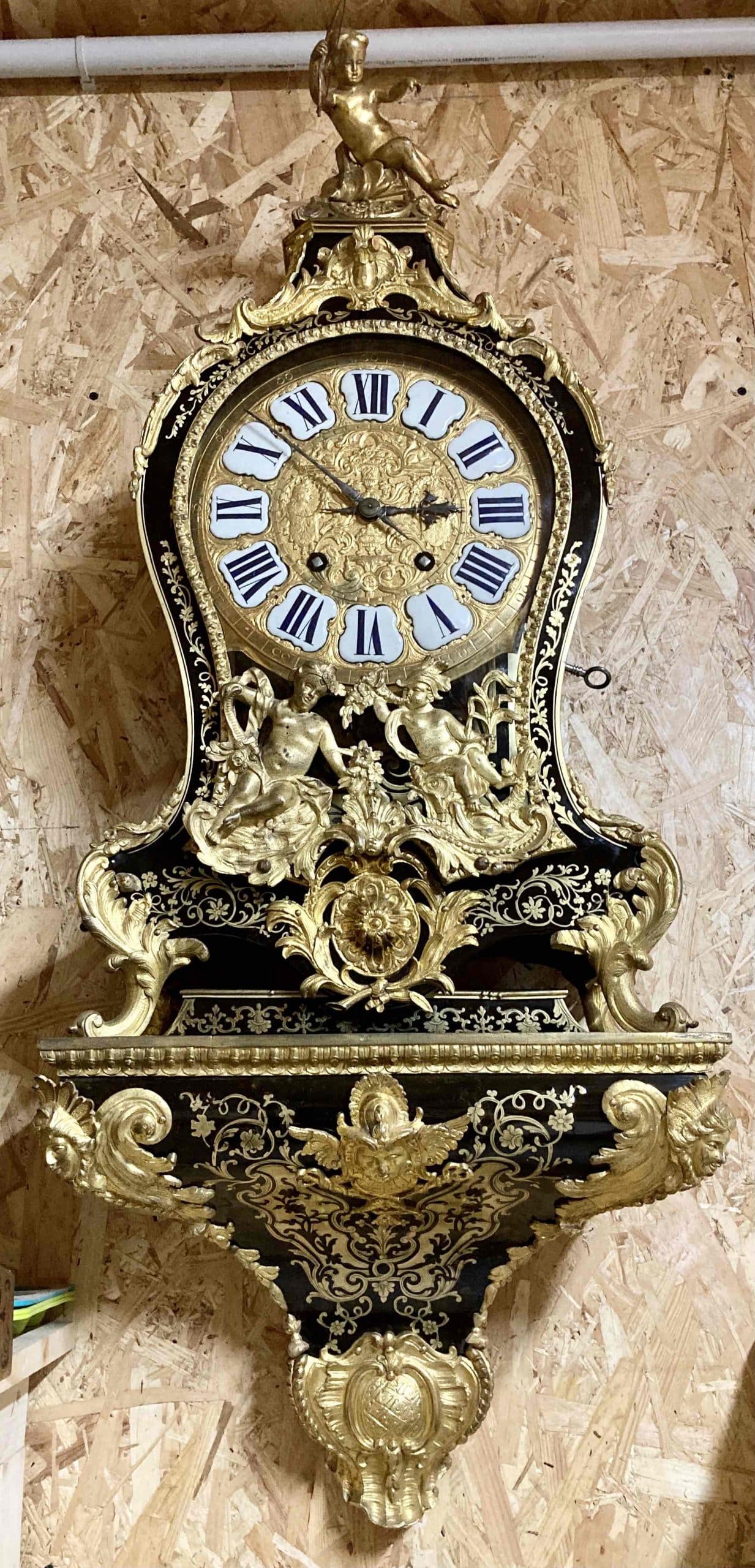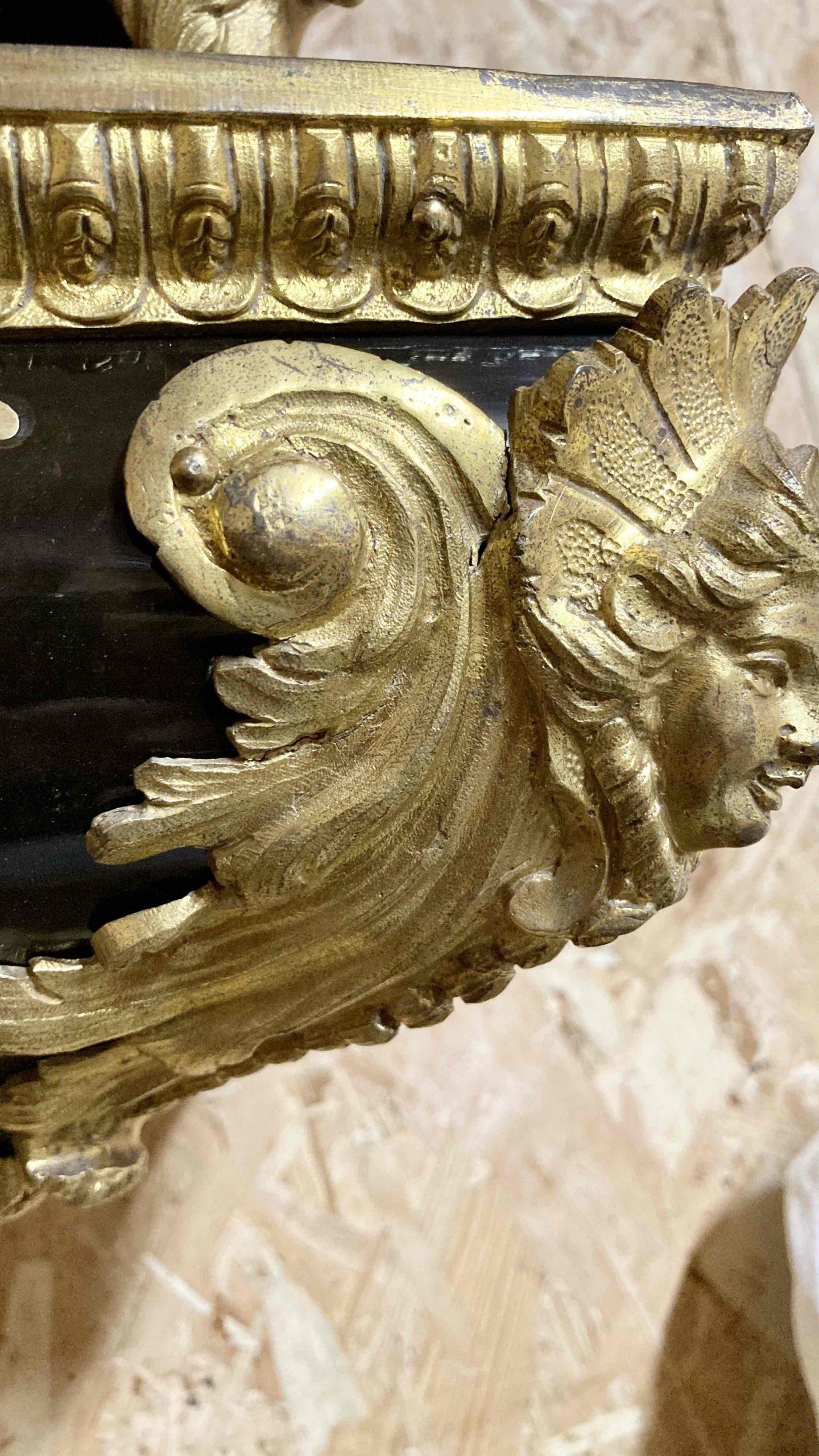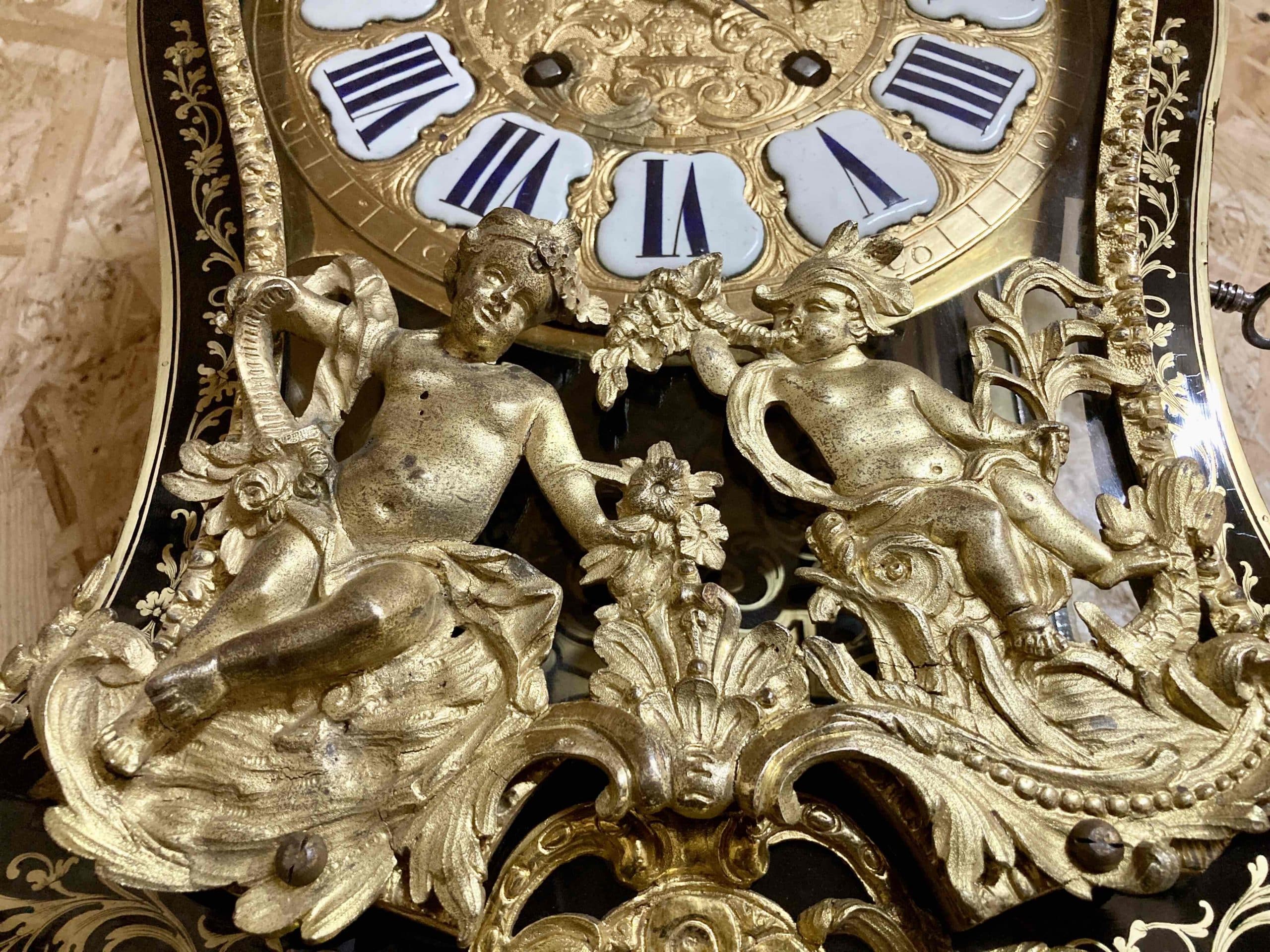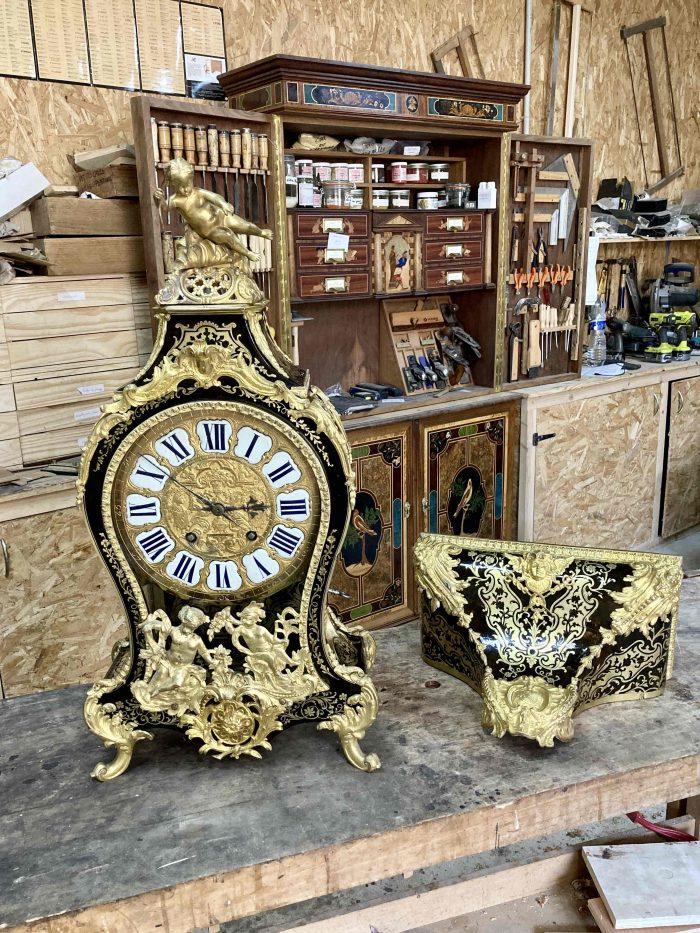
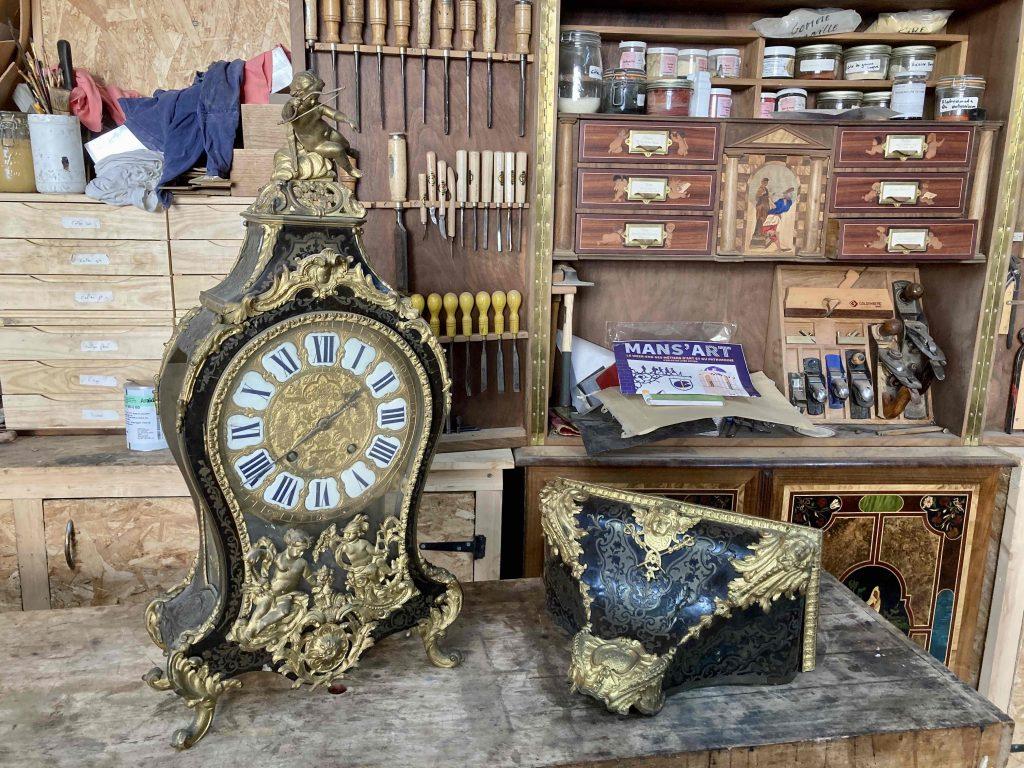
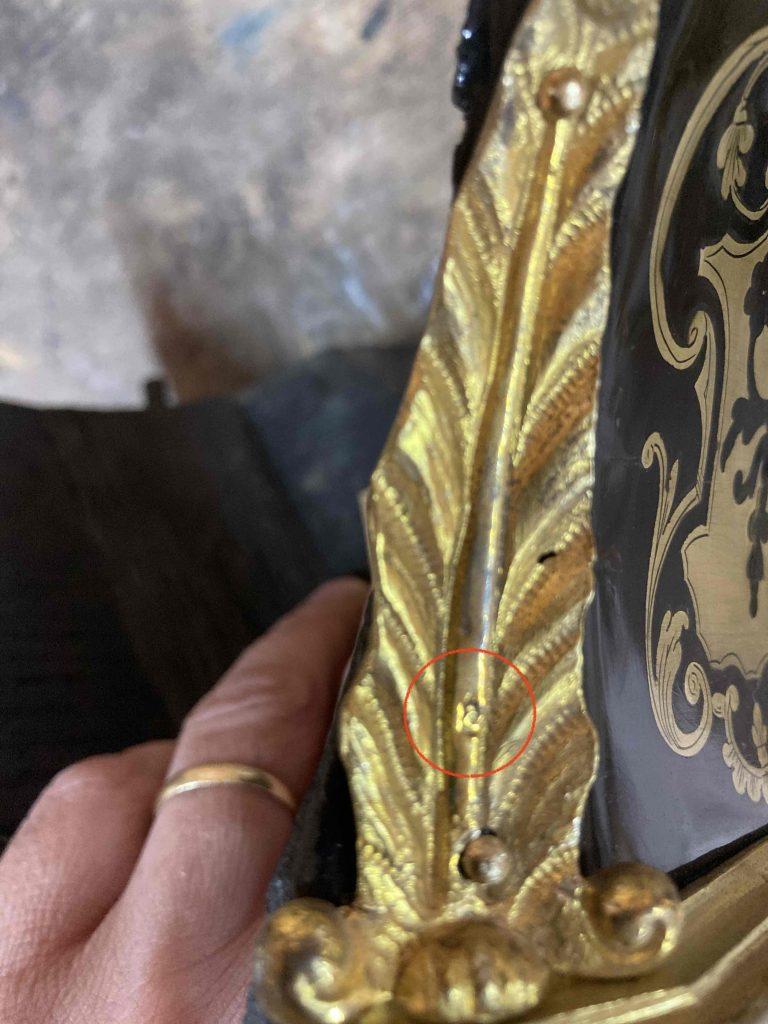
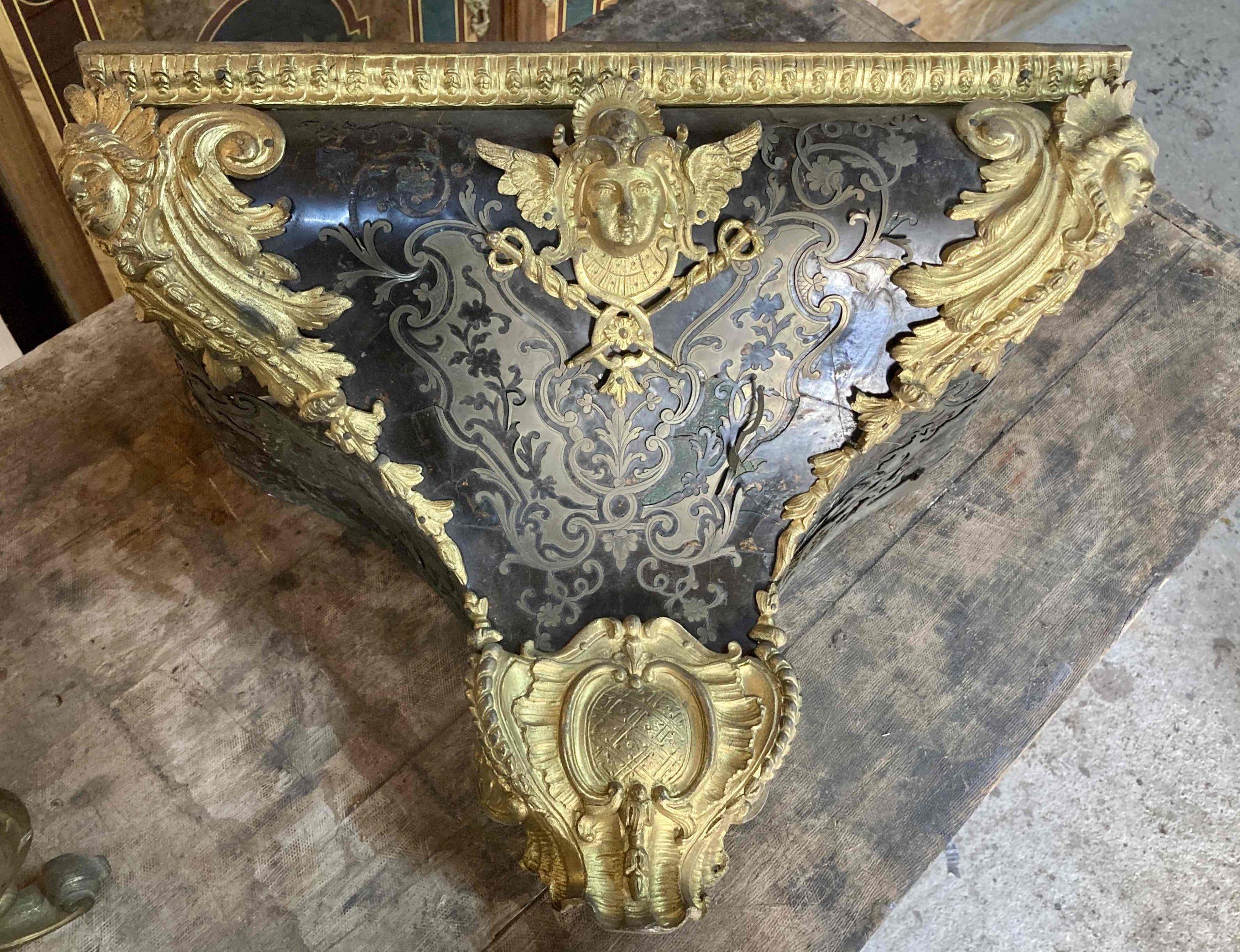
Here are some images of the restoration of a clock case that some of you may have seen during the work at the Mans'Art fair this year. This Louis XV period clock case is inlaid with tortoiseshell and brass, and the frame is made of oak. The bronze mounts bear the crowned C hallmark.
The crowned C
It was an edict of 1745 that required bronze workers to mark their pieces with a small distinctive letter, a C surmounted by a crown, thus subjecting them to a tax. This tax applied to both objects and furniture adorned with it.
This is a mark sanctioning a tax paid on bronze and copper objects between 1745 and 1749. Like any tax, it was widely unpopular, and countless lawsuits pitted artisans against state agents. Yet the edict of February 1745 was unequivocal: it applied to "all works, old and new, of bronze, pure copper, cast iron, mixed copper, forged, ground, hammered, planed, engraved, gilded, silvered, and colored, without exception.".
Each craftsman had to go to the hallmark office in the "cul-de-sac des Bourdonnais," in the Les Halles district, to have the hallmark stamped and pay the fee. This detail is important: it was the time of the War of the Austrian Succession, and military needs were pressing. In February 1749, the Peace of Aix-la-Chapelle was signed, and some prominent figures noted the "abolition of minor new taxes.".
But in the meantime, the hallmark must appear on all copper-plated metalwork made or sold during those four years. The text also specifies that it applies to "all work, old or new." It is therefore possible to find it on pieces predating 1745. This simply requires that the object be re-gilded or enter the market during those four years. This is the case with certain pieces of furniture by André-Charles Boulle, from the Louis XIV period, whose popularity continued. It is therefore possible to encounter it on a work predating 1745, although this is rare.
Bibliography
- «"French Gilt Bronzes of the 18th Century" by Pierre Verlet – Picard Publisher – 1987
State of affairs report
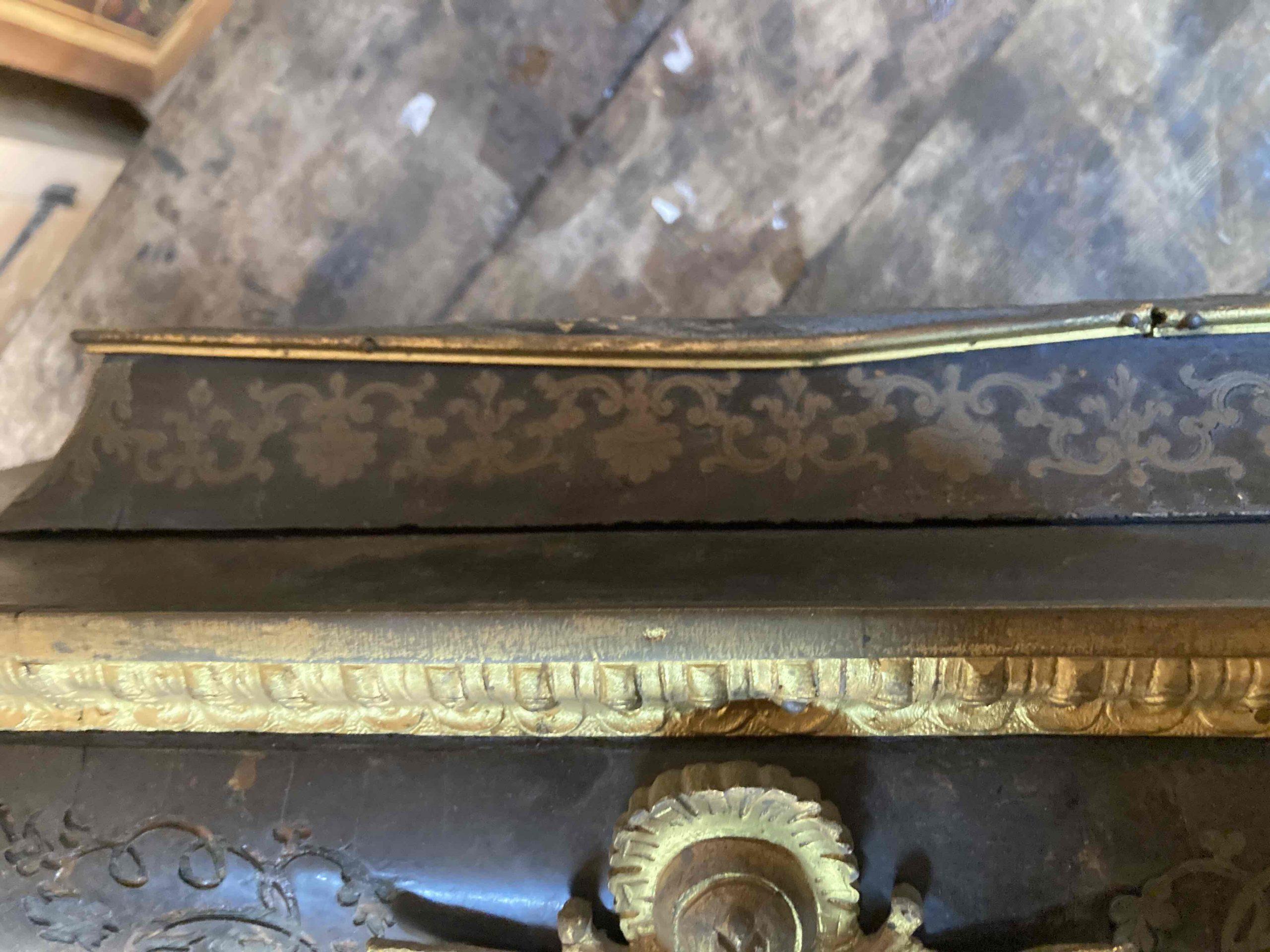
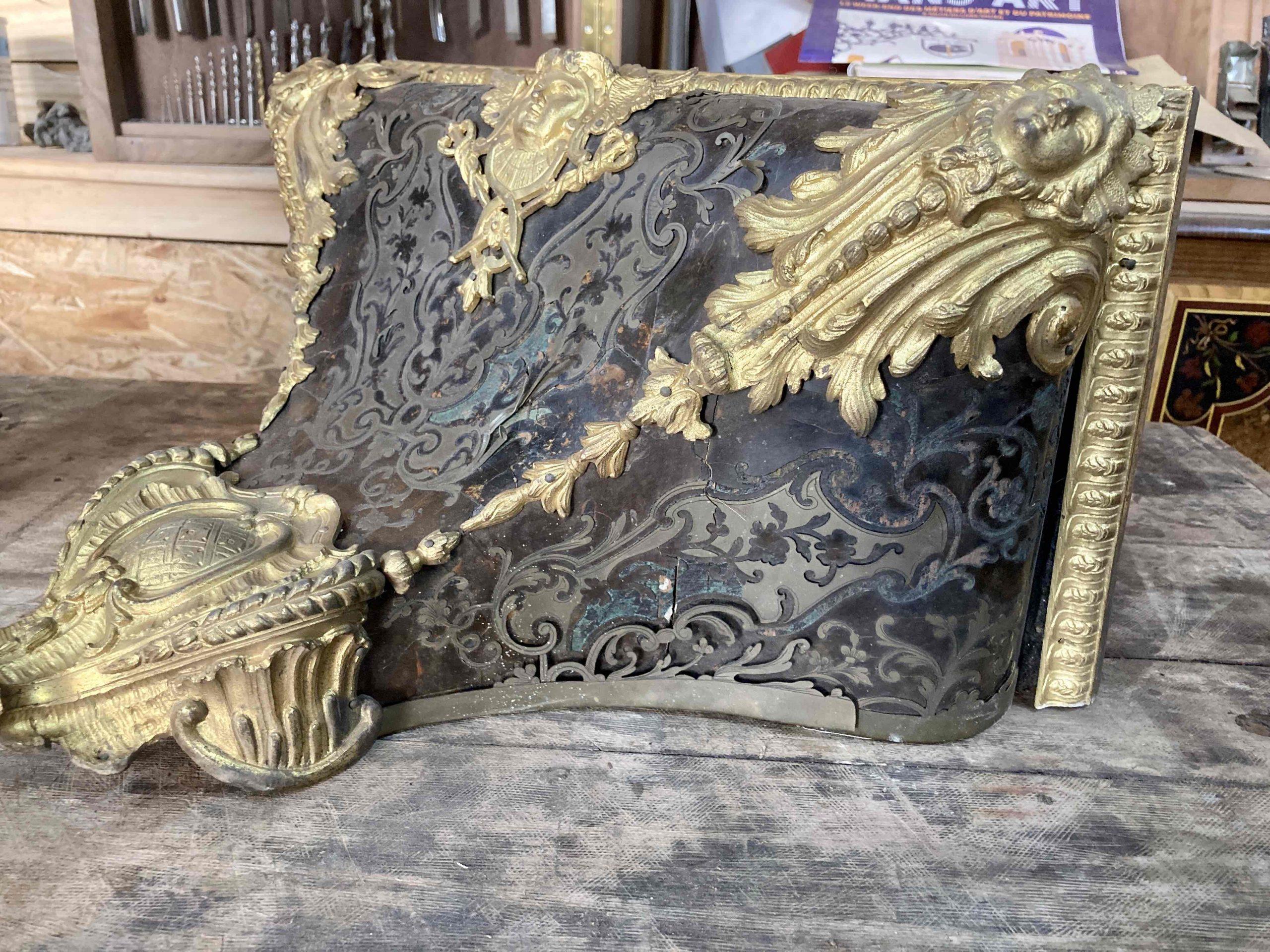
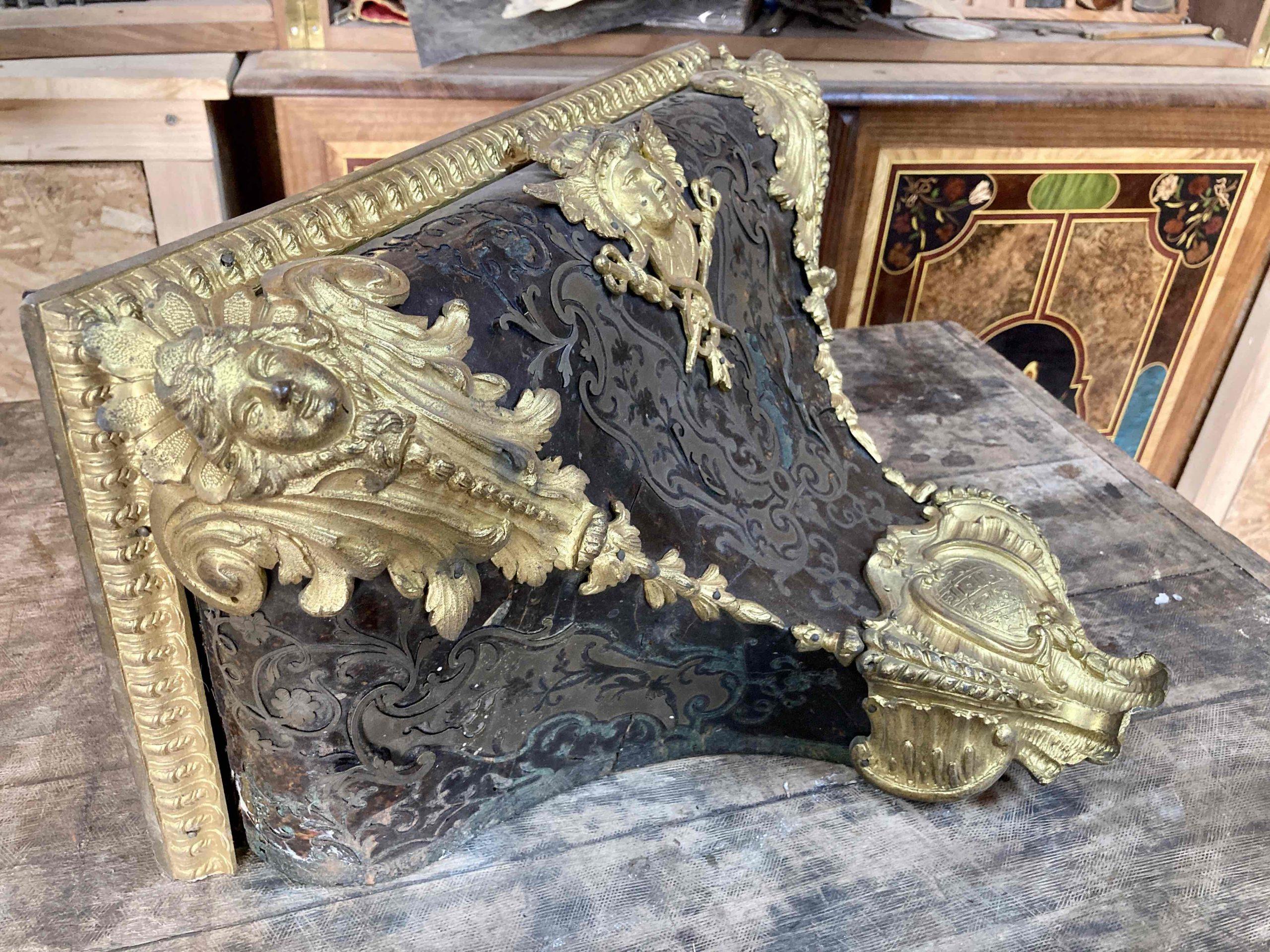
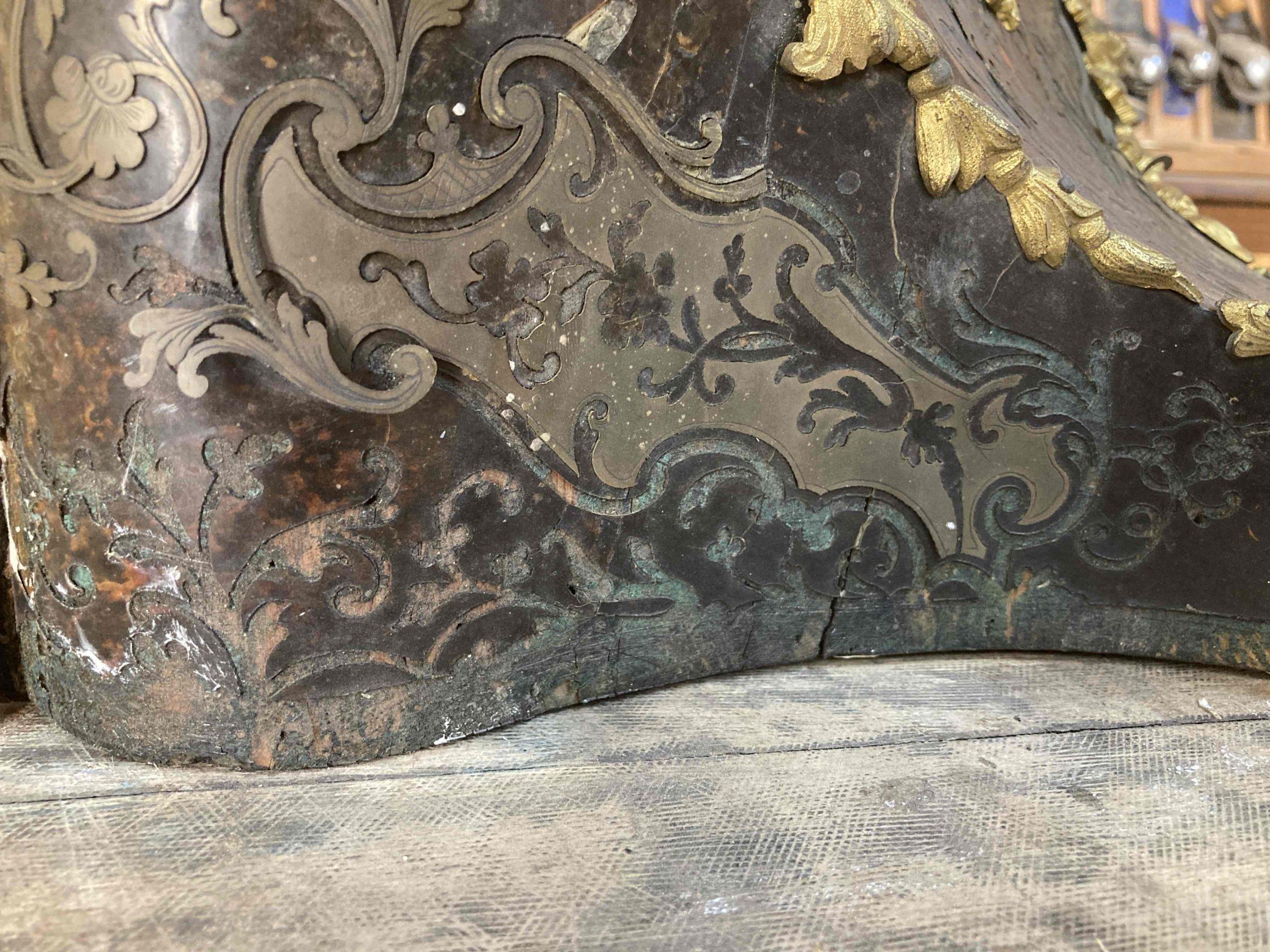
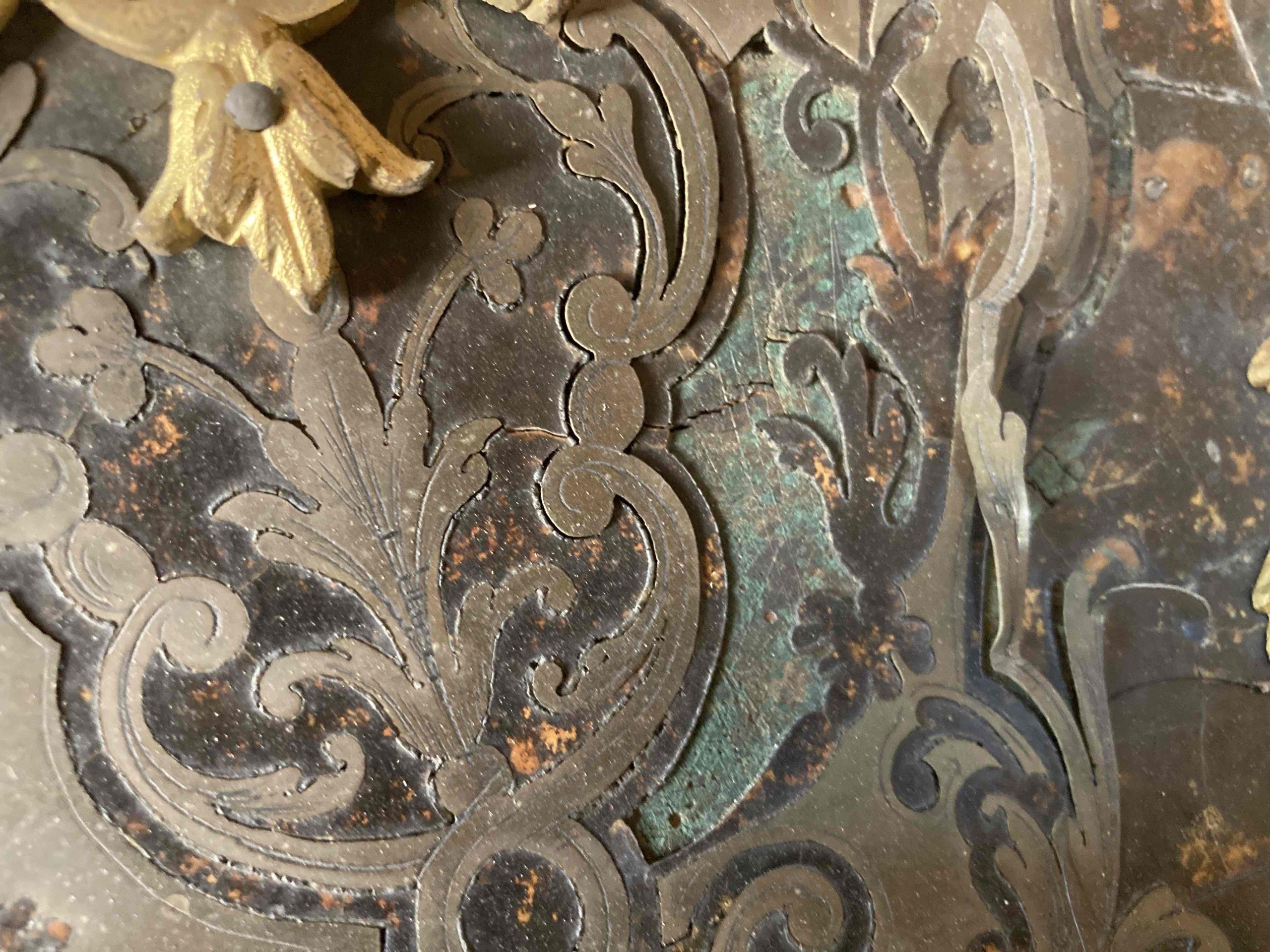
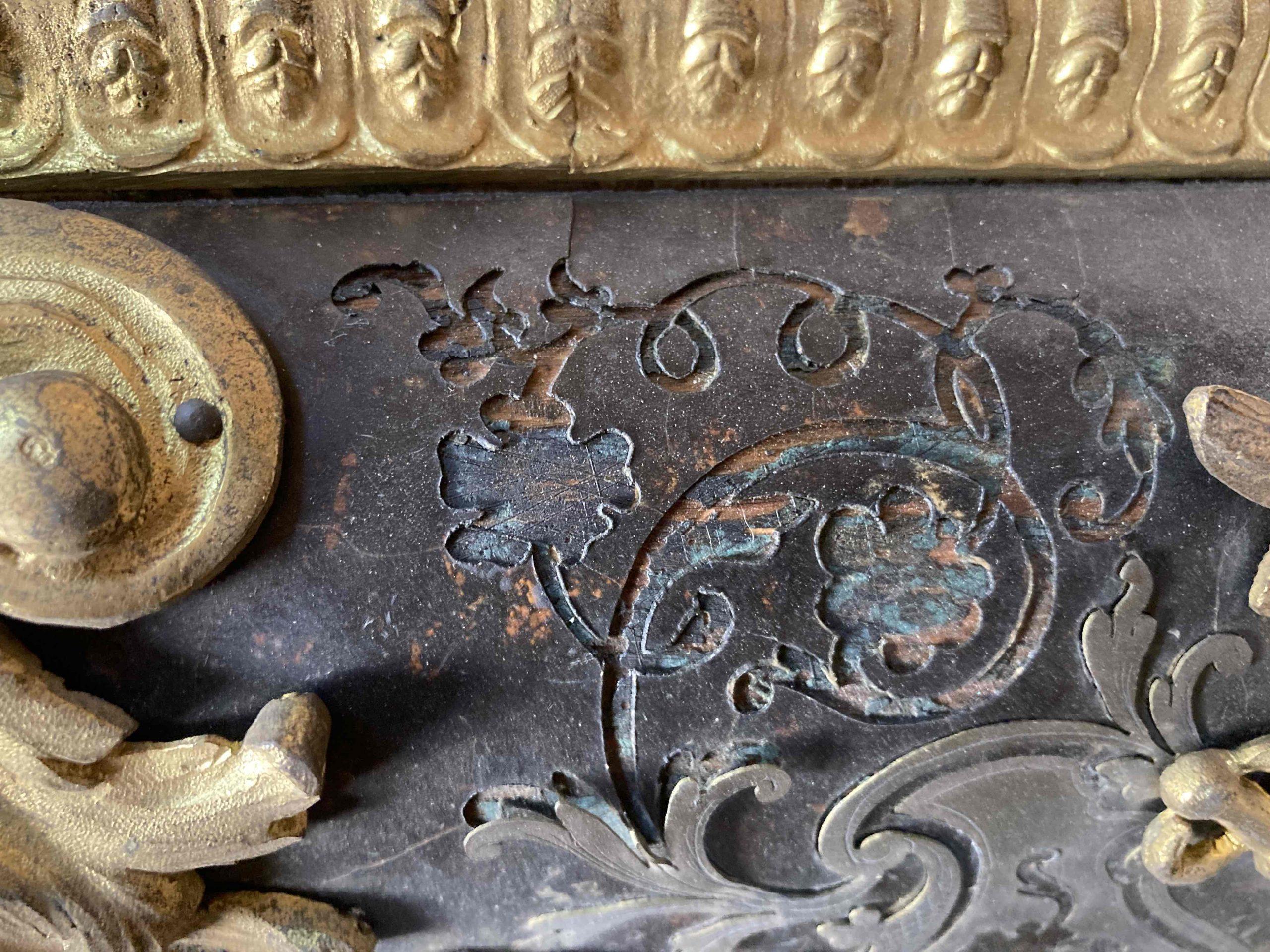
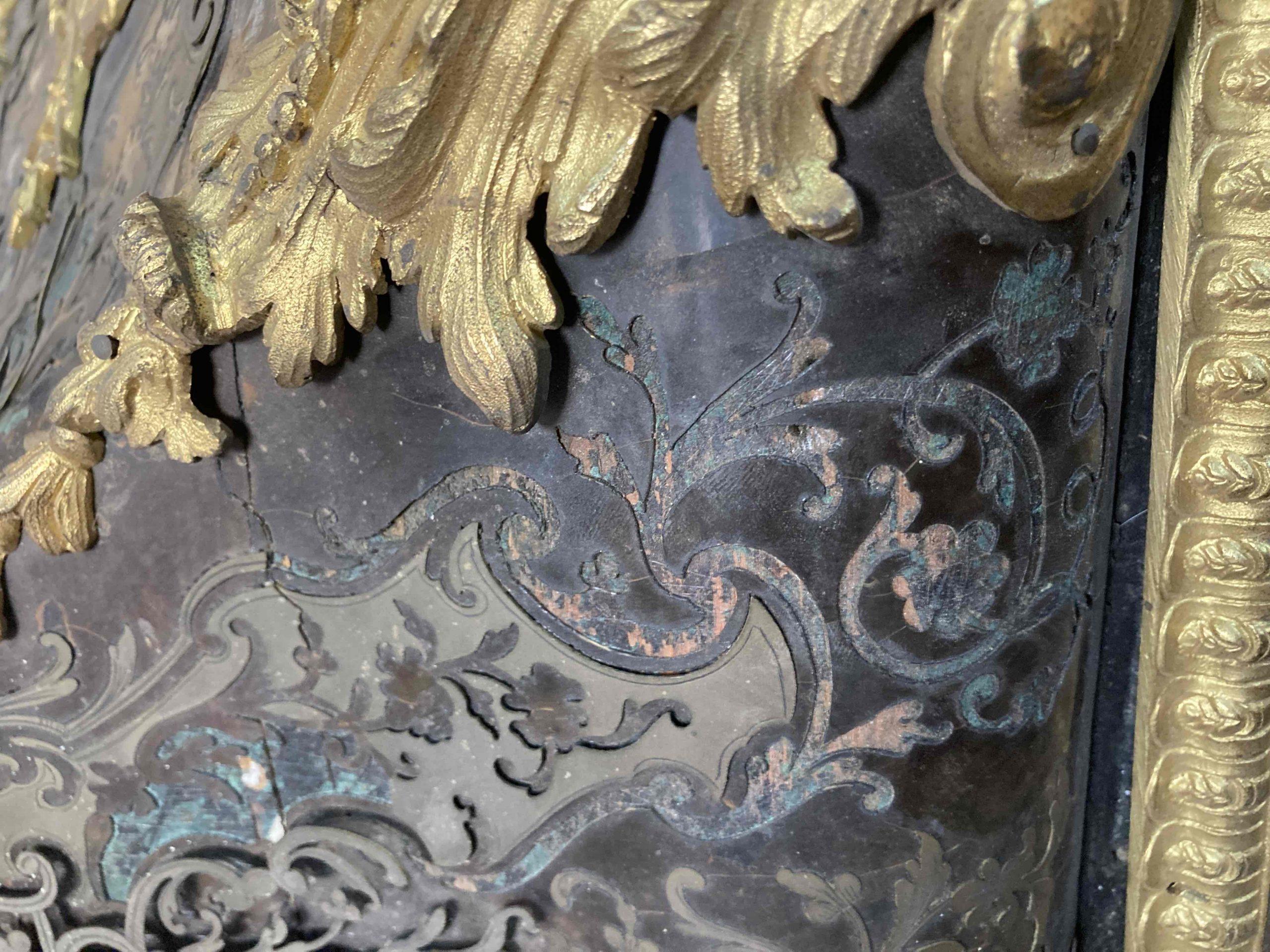
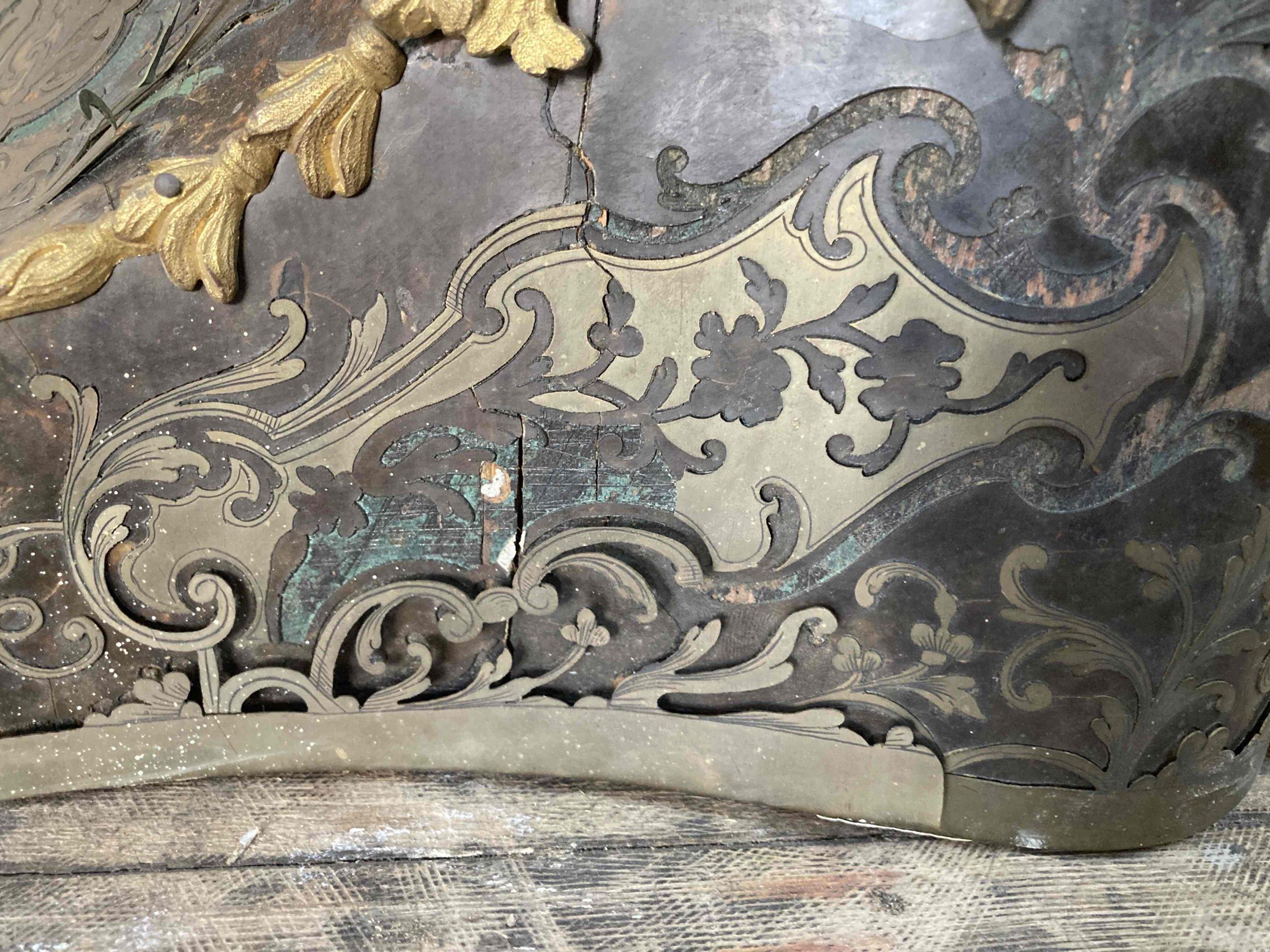
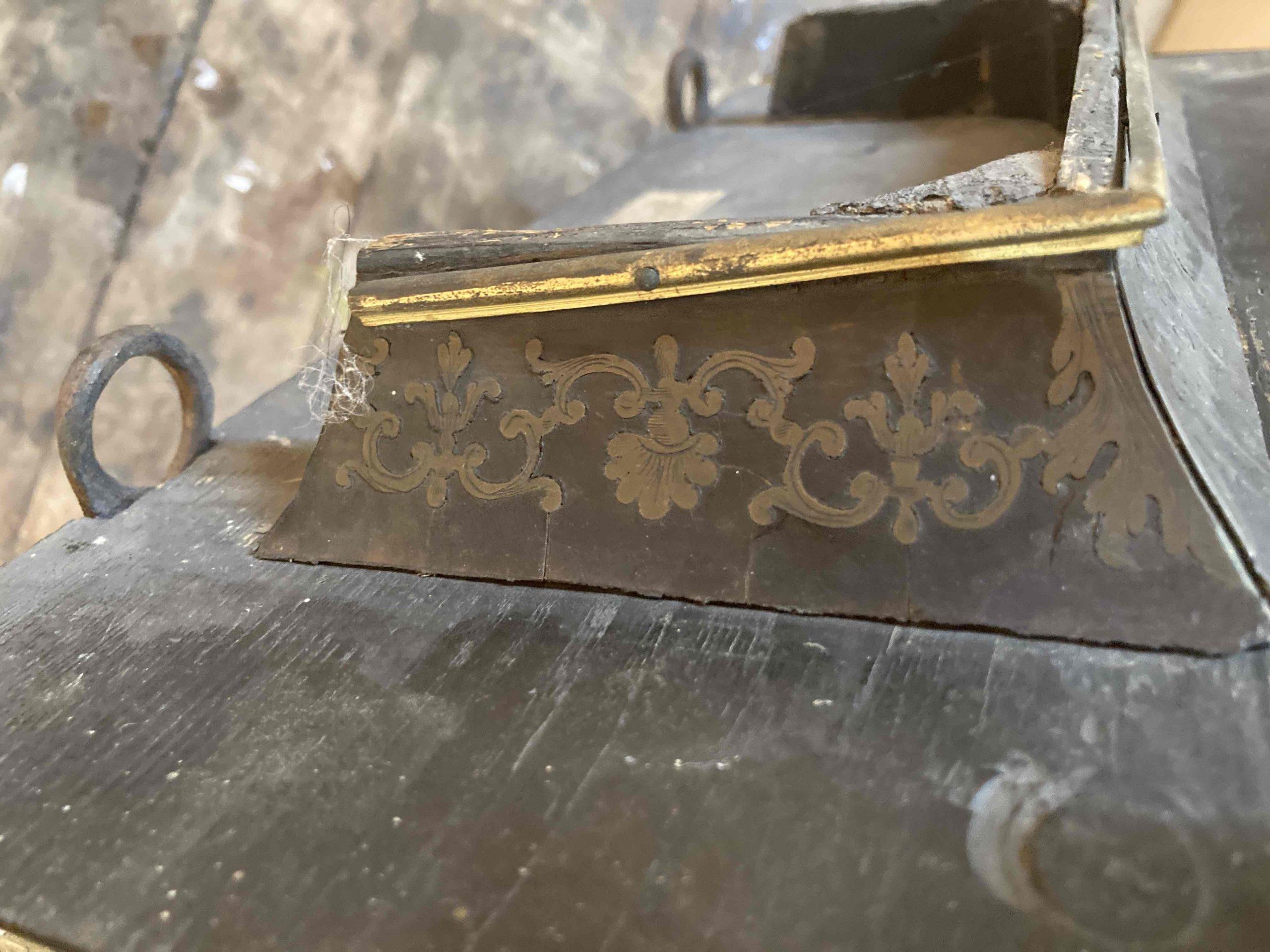
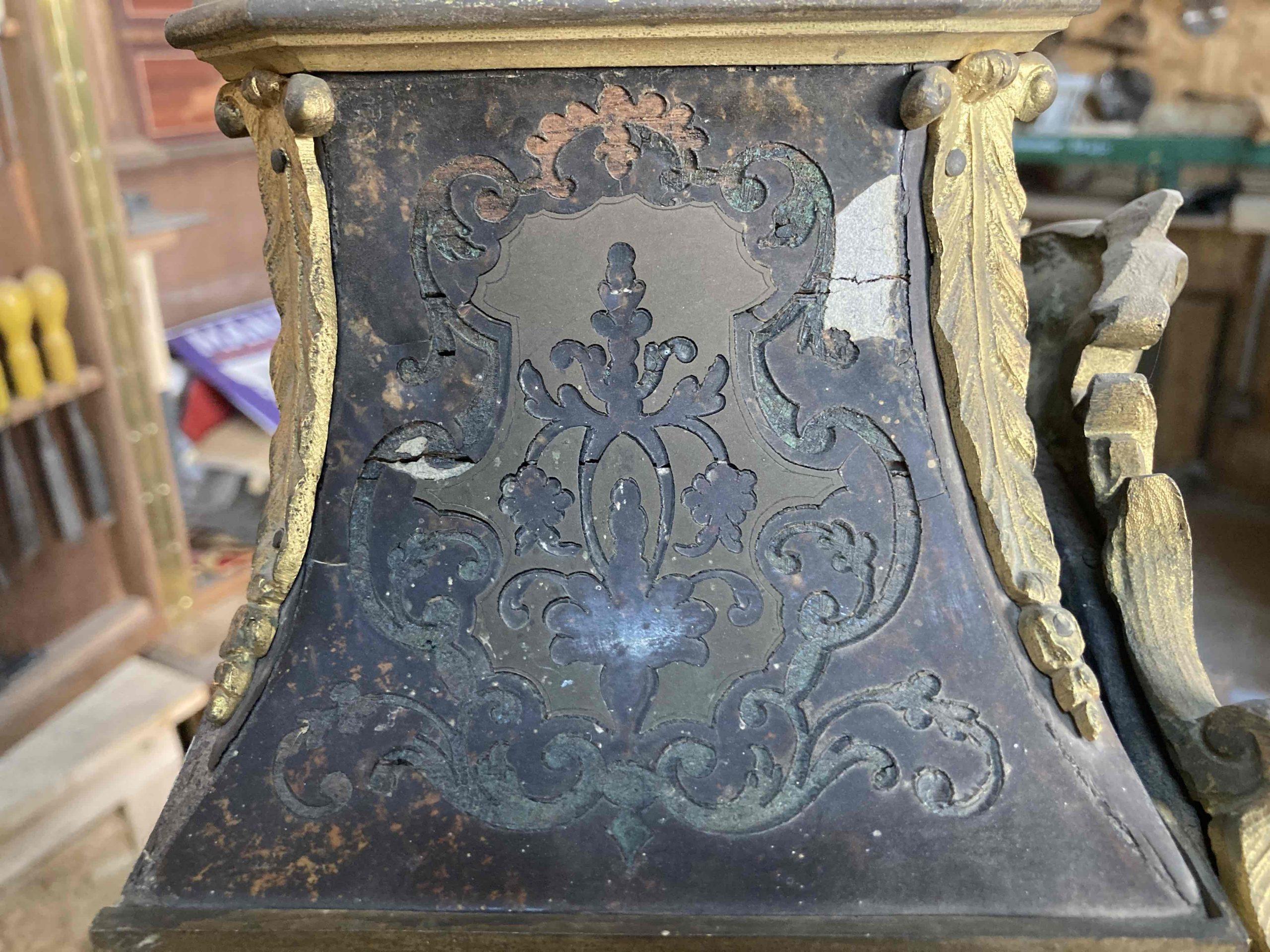
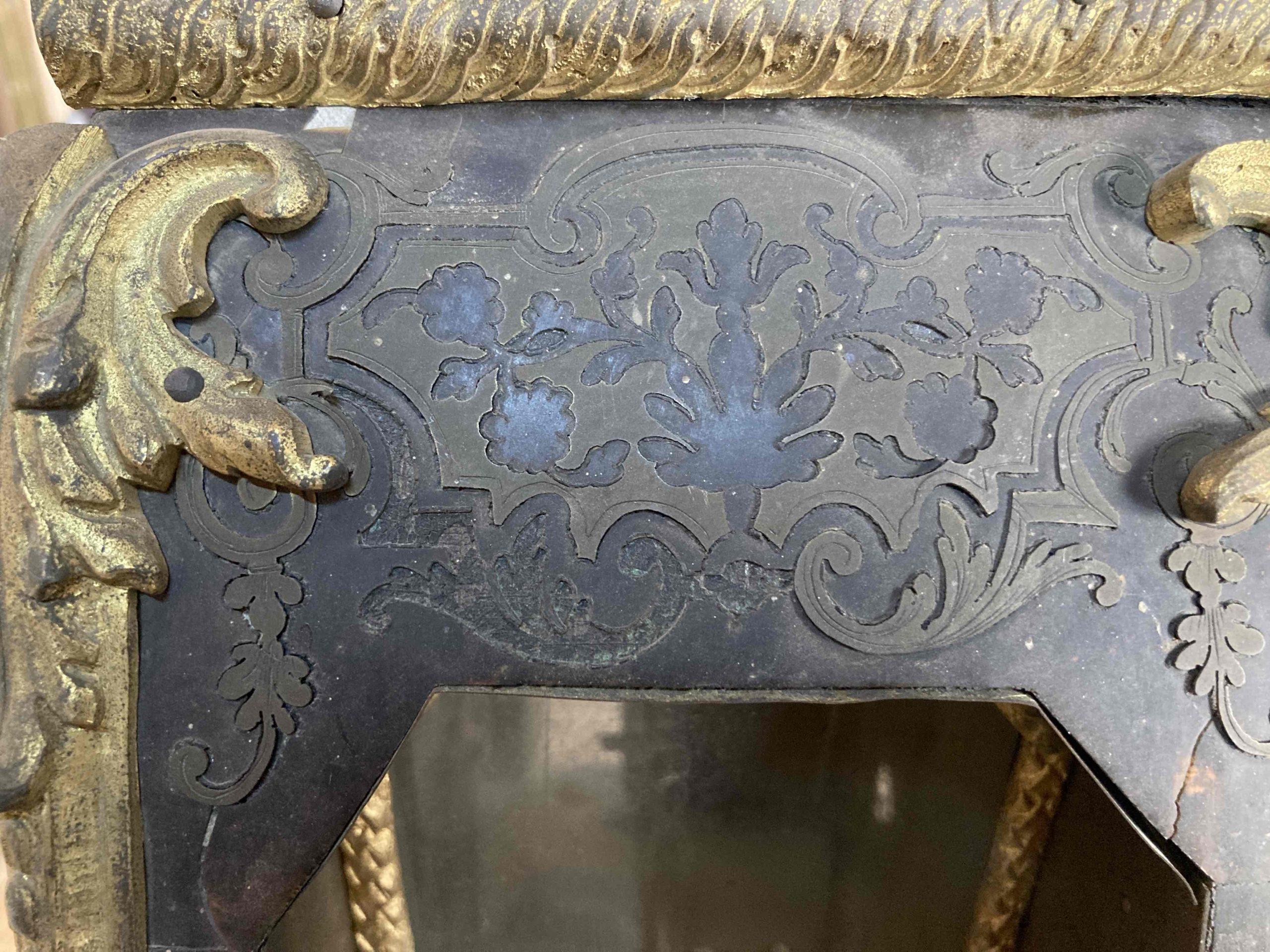
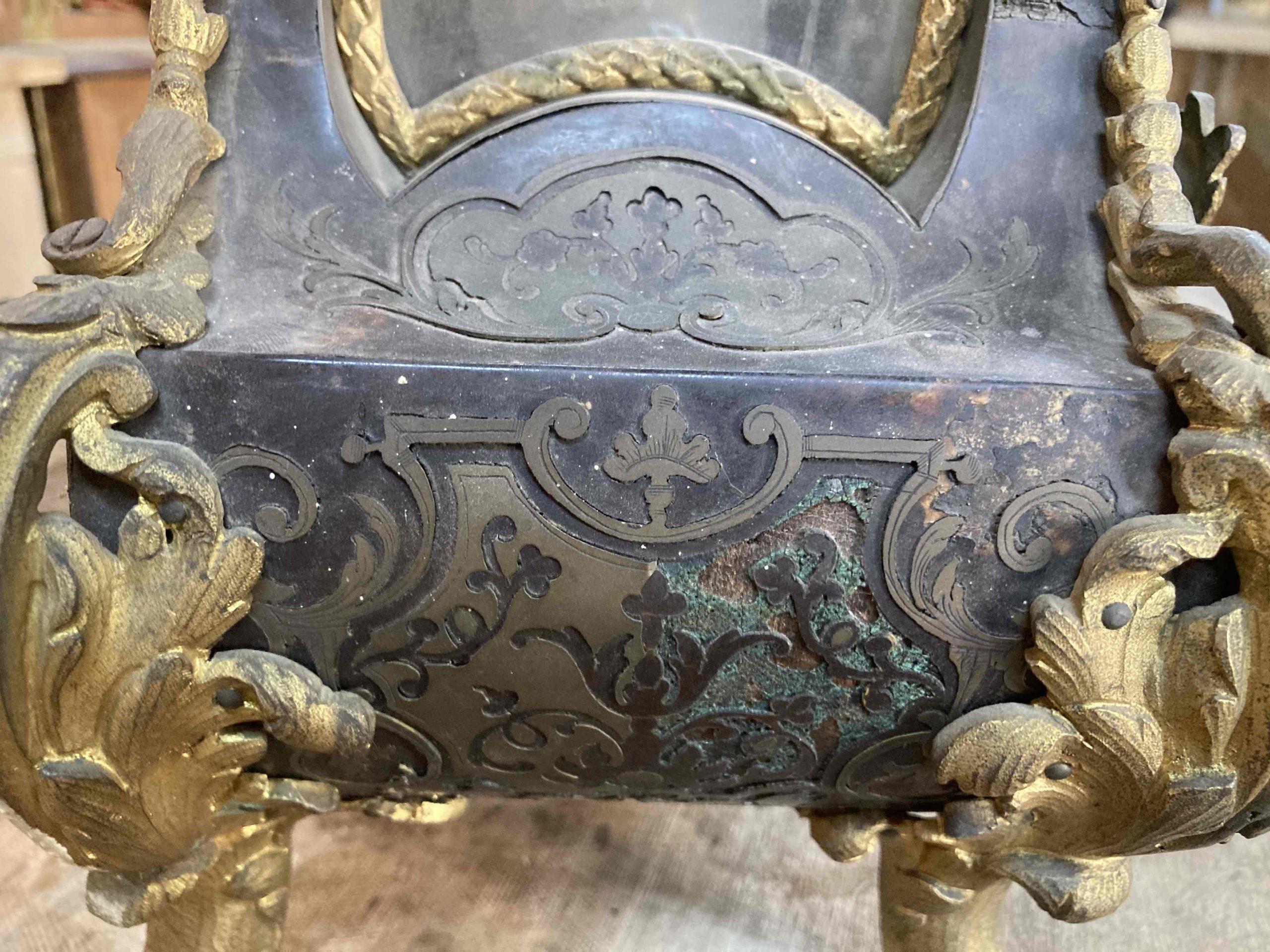
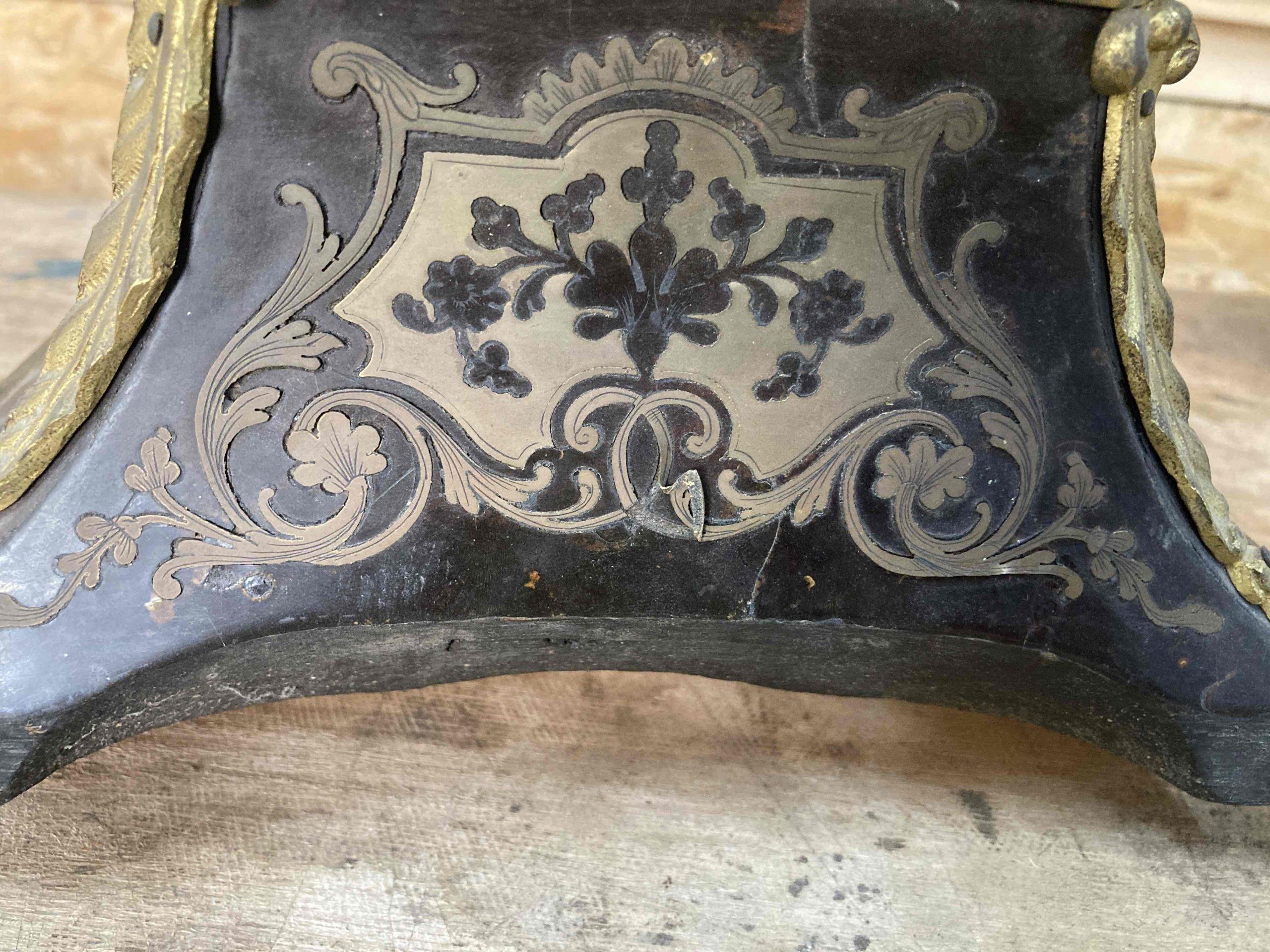
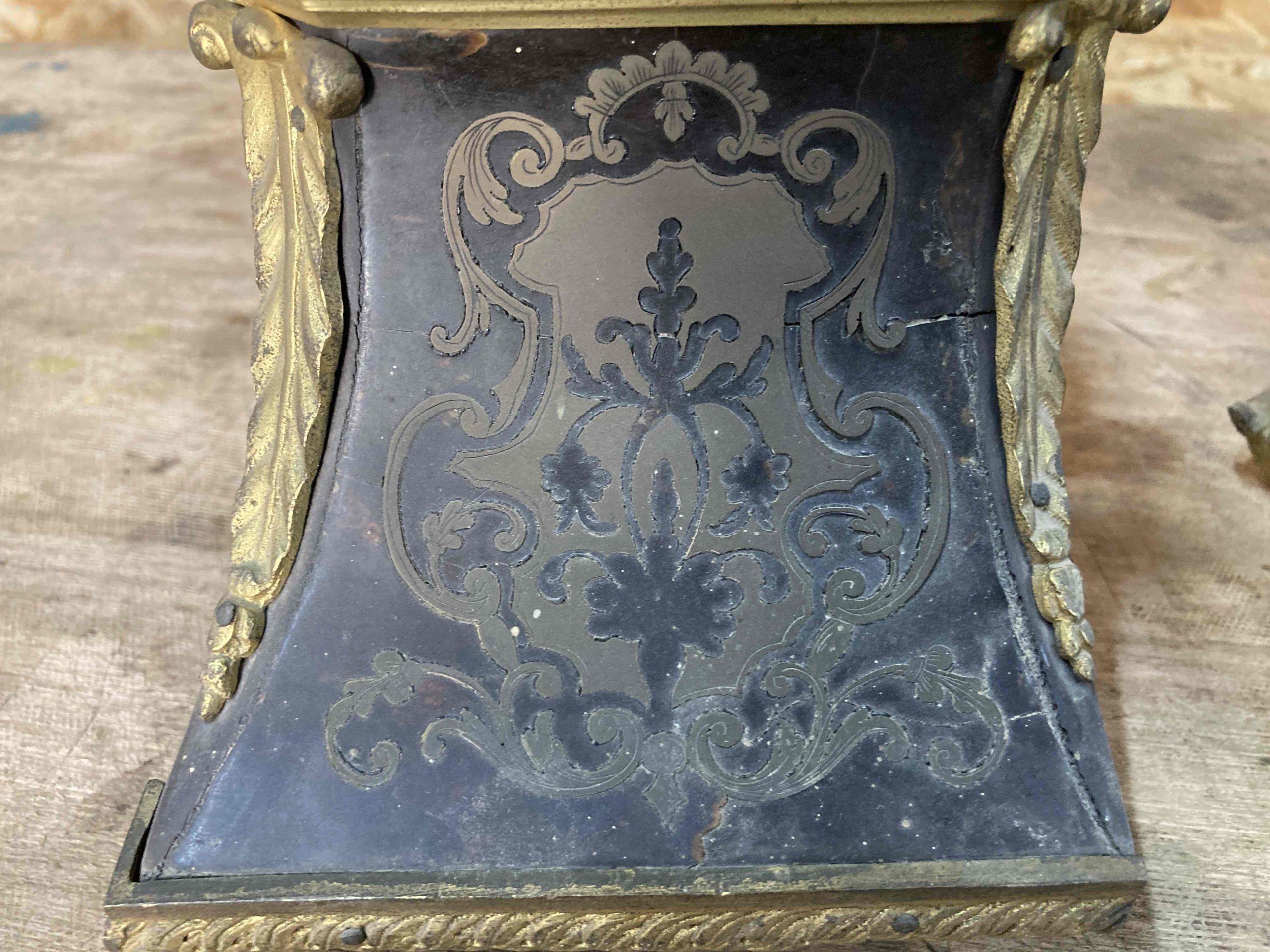
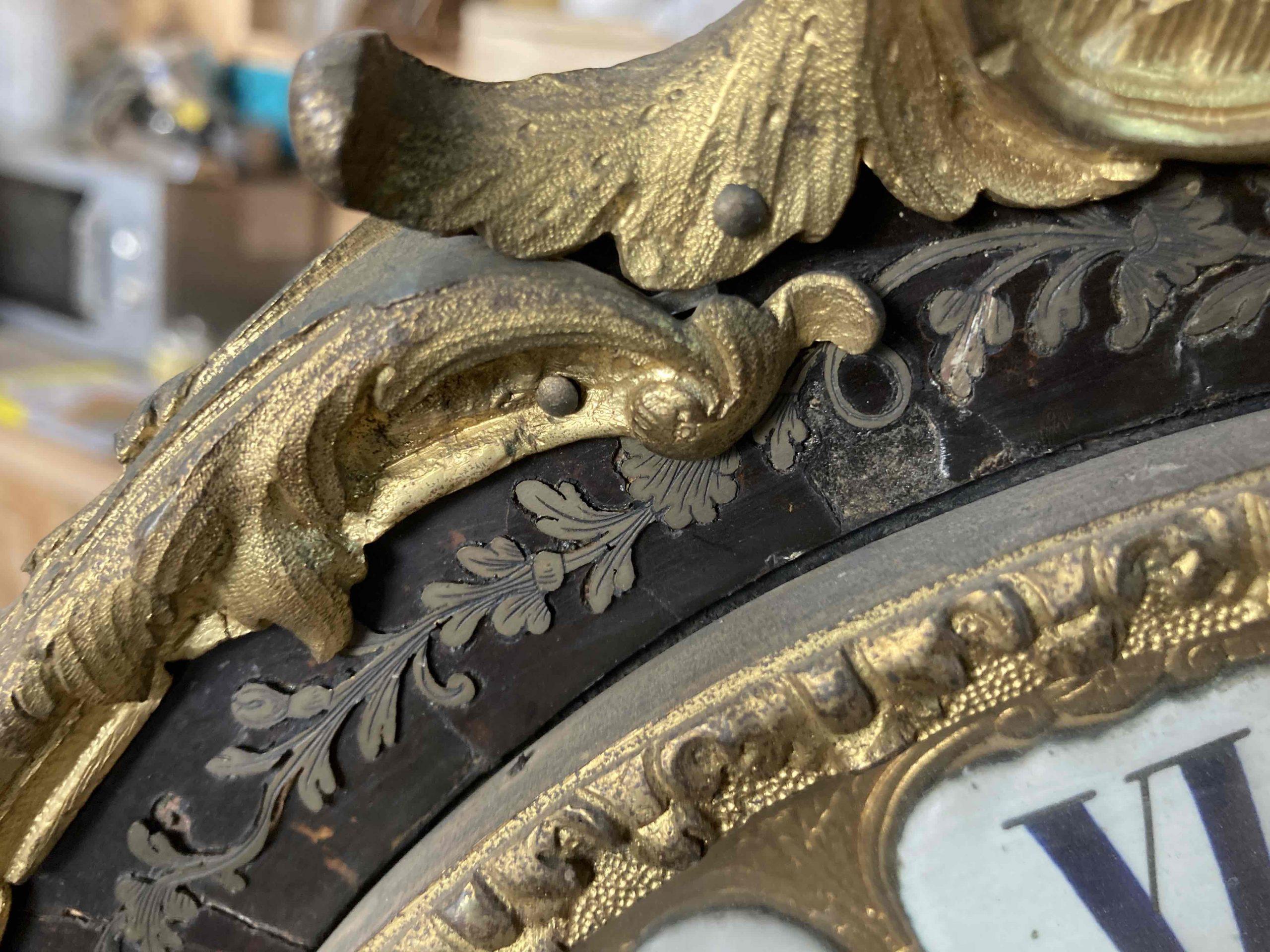
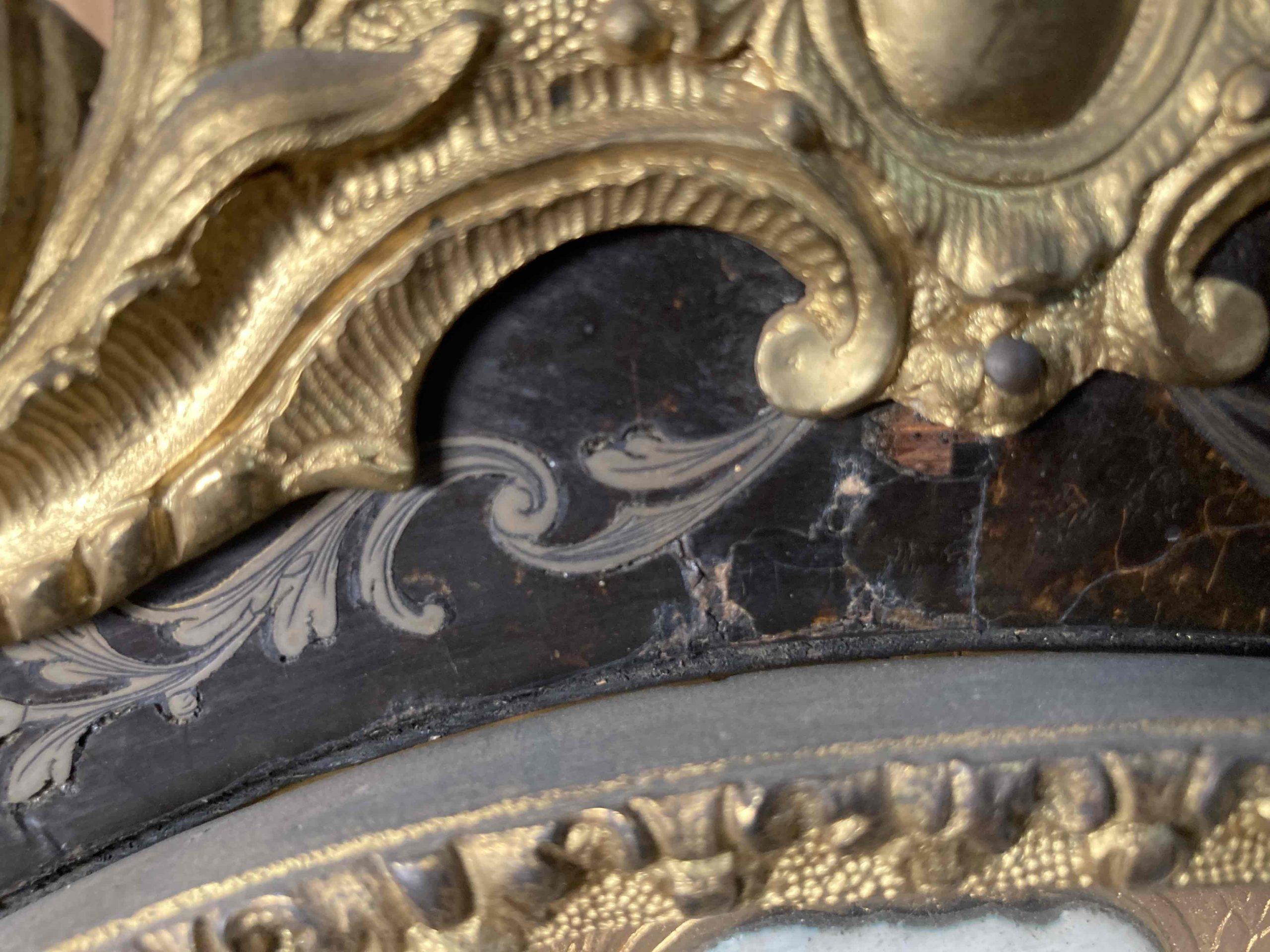
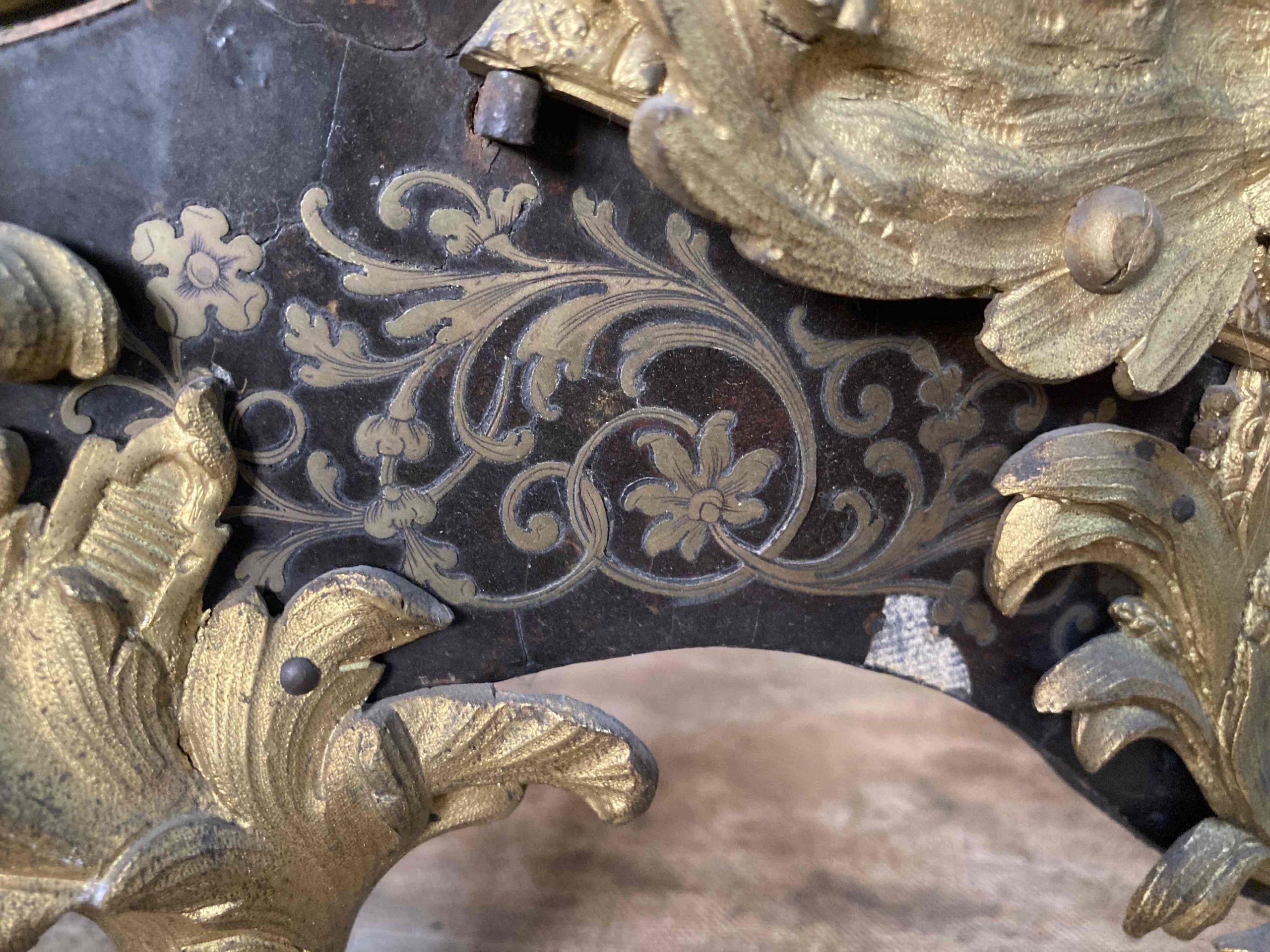
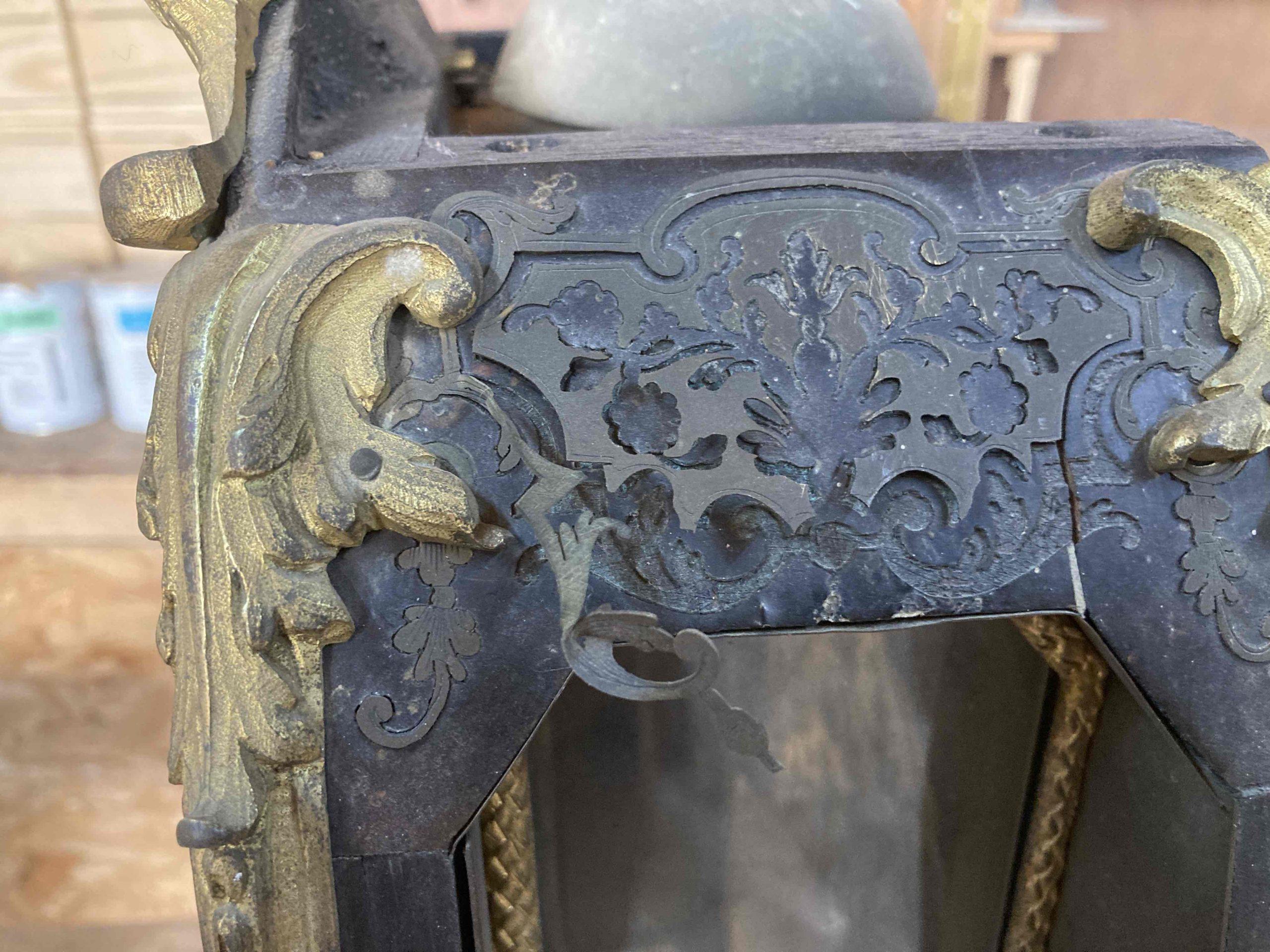
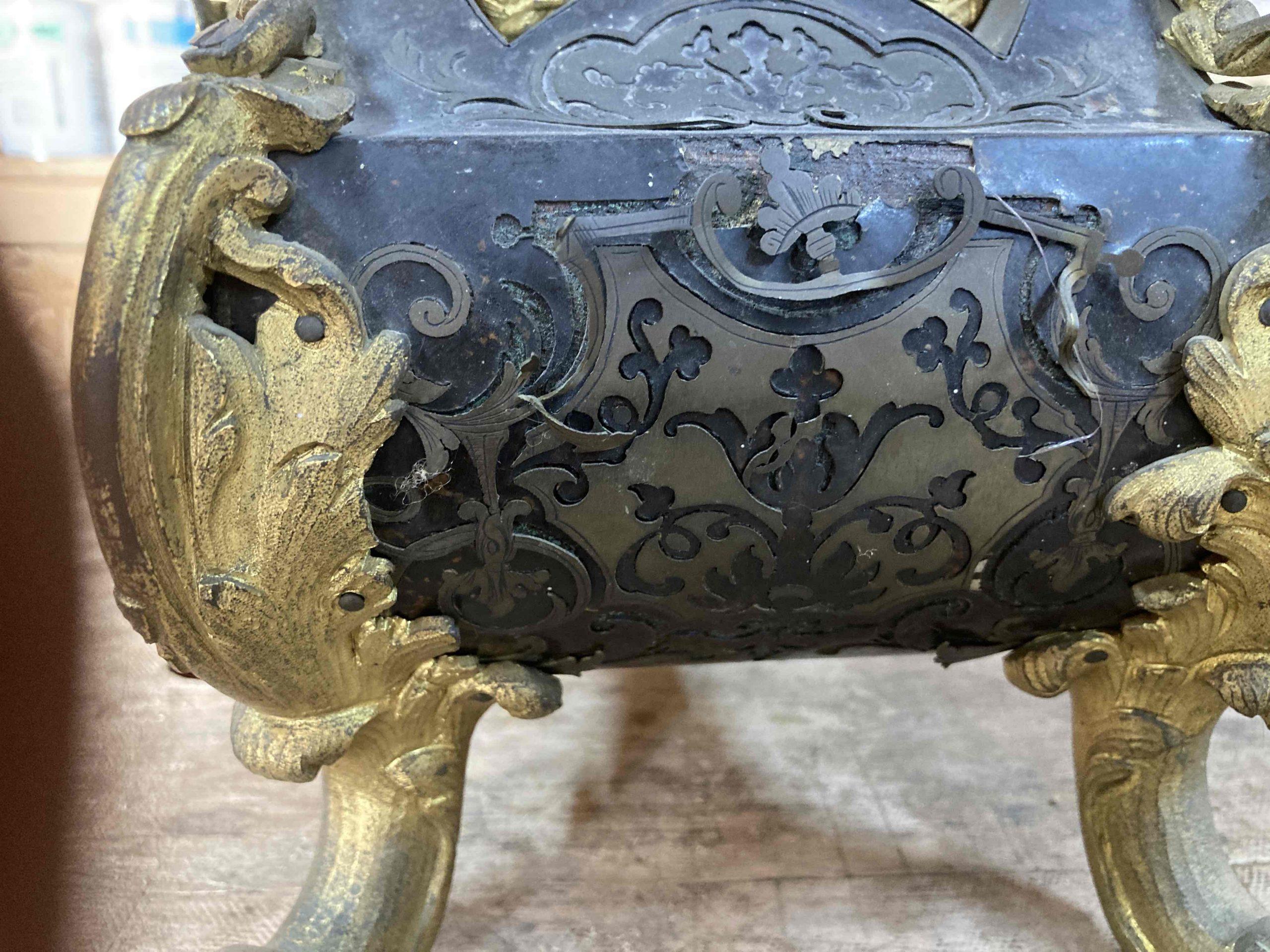
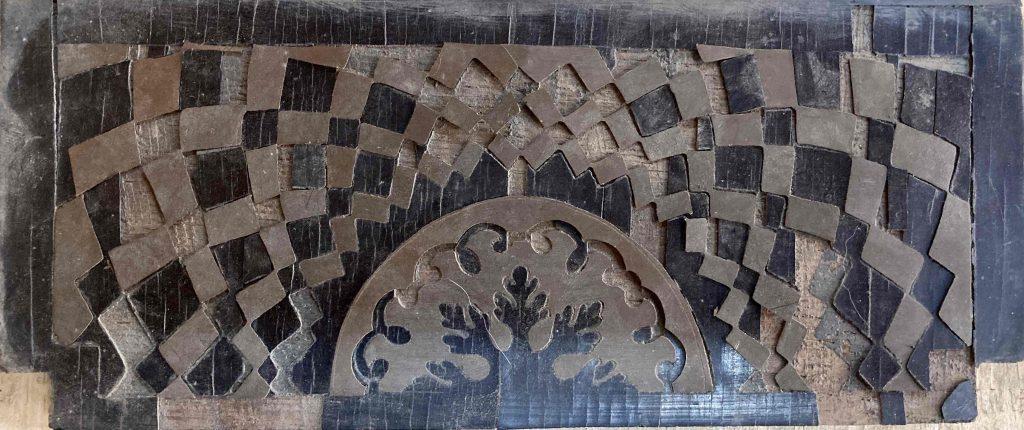
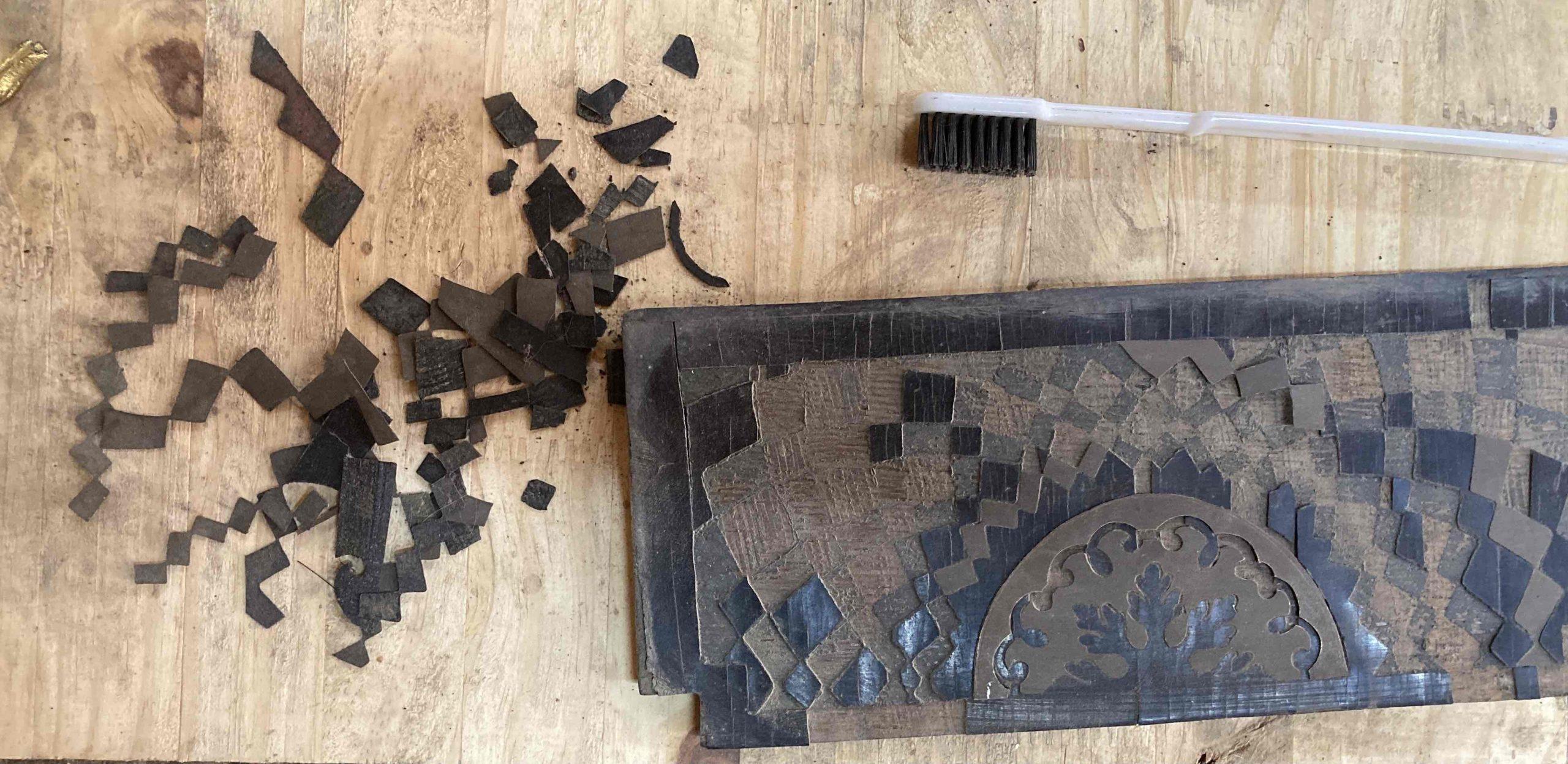
A classic example of a Boulle marquetry cartel clock. Many pieces of brass and tortoiseshell are missing. And of course, all the brass is peeling off. The bronze, however, is in very good condition.
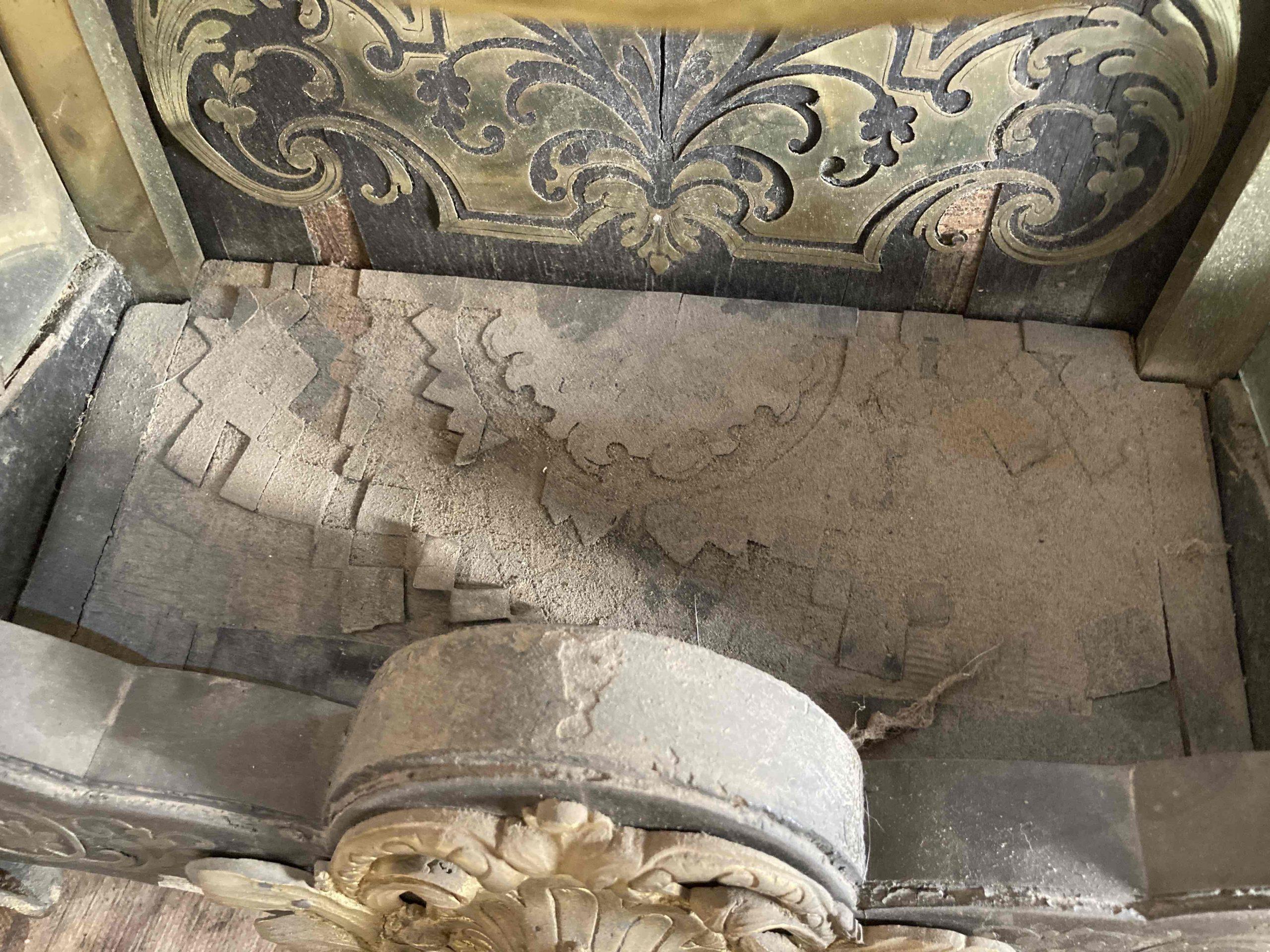
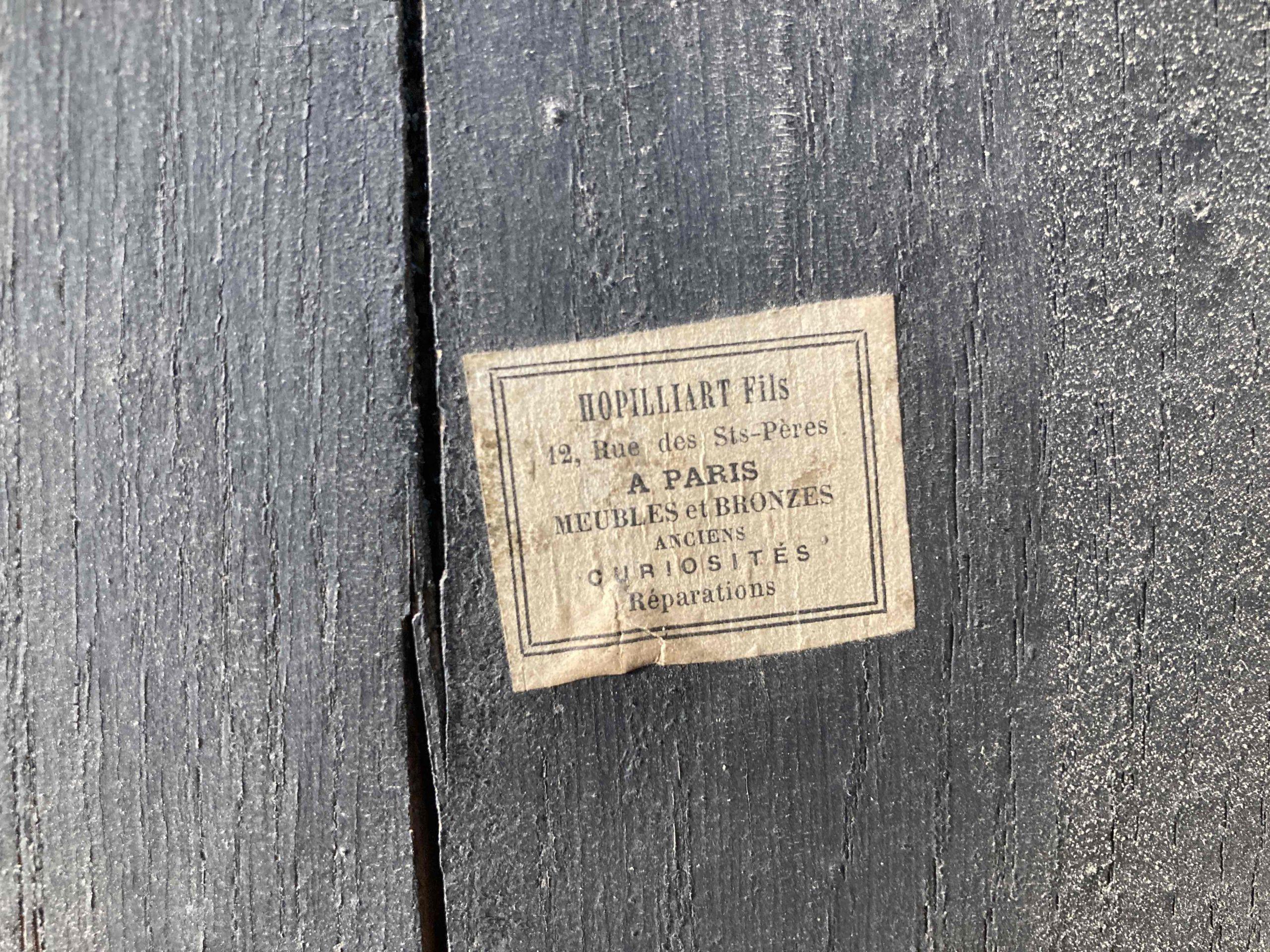
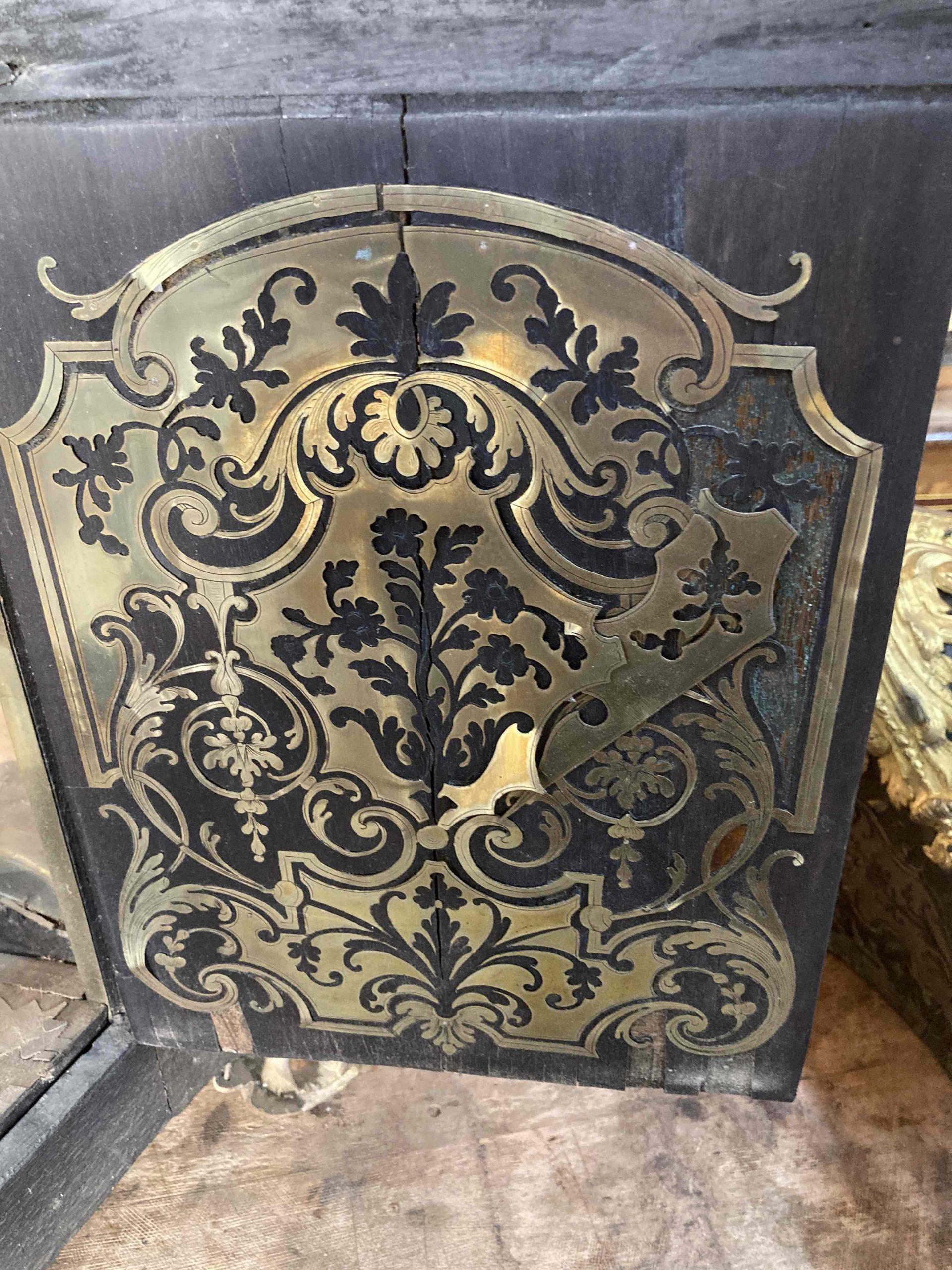
The Restoration
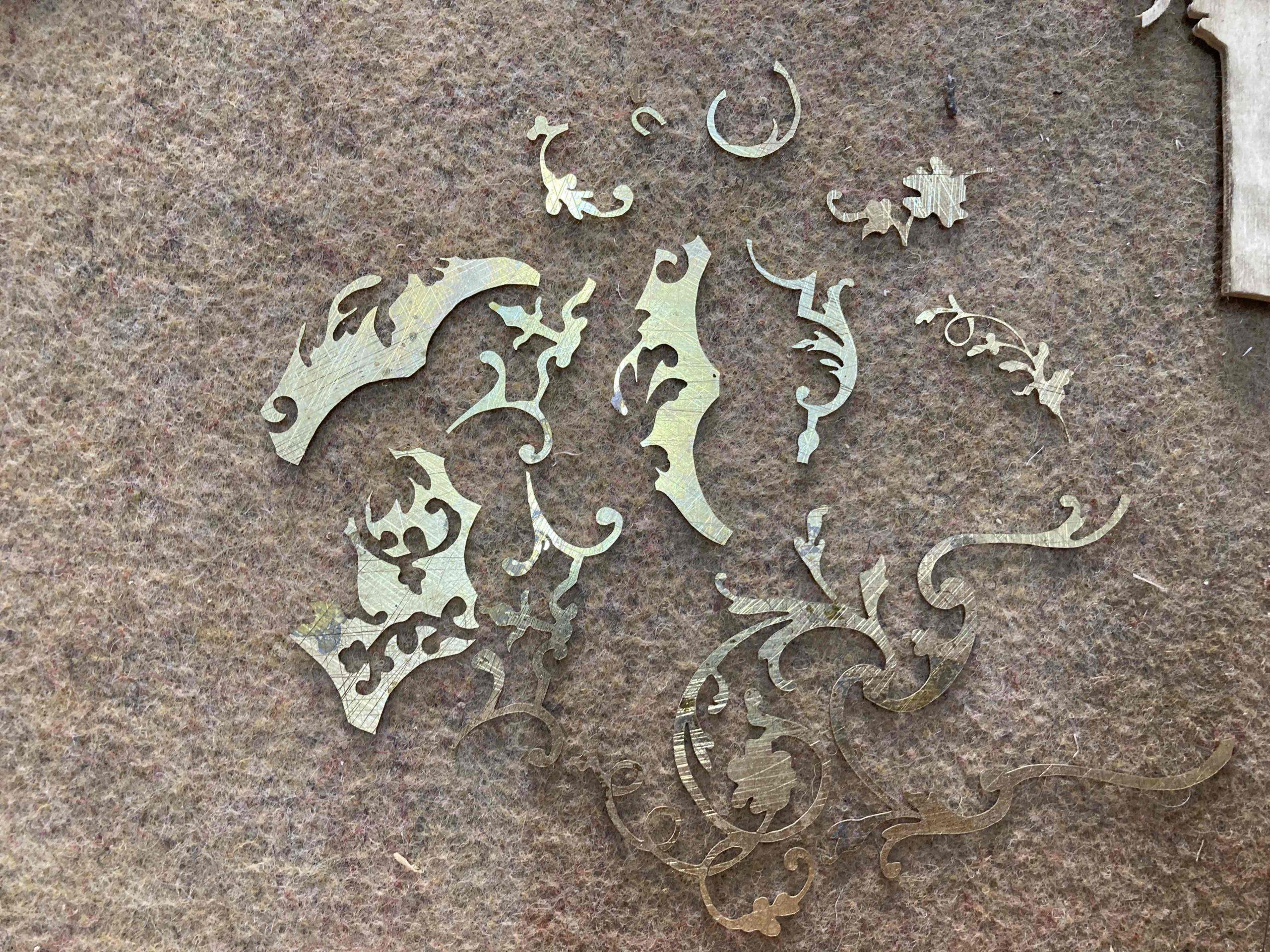
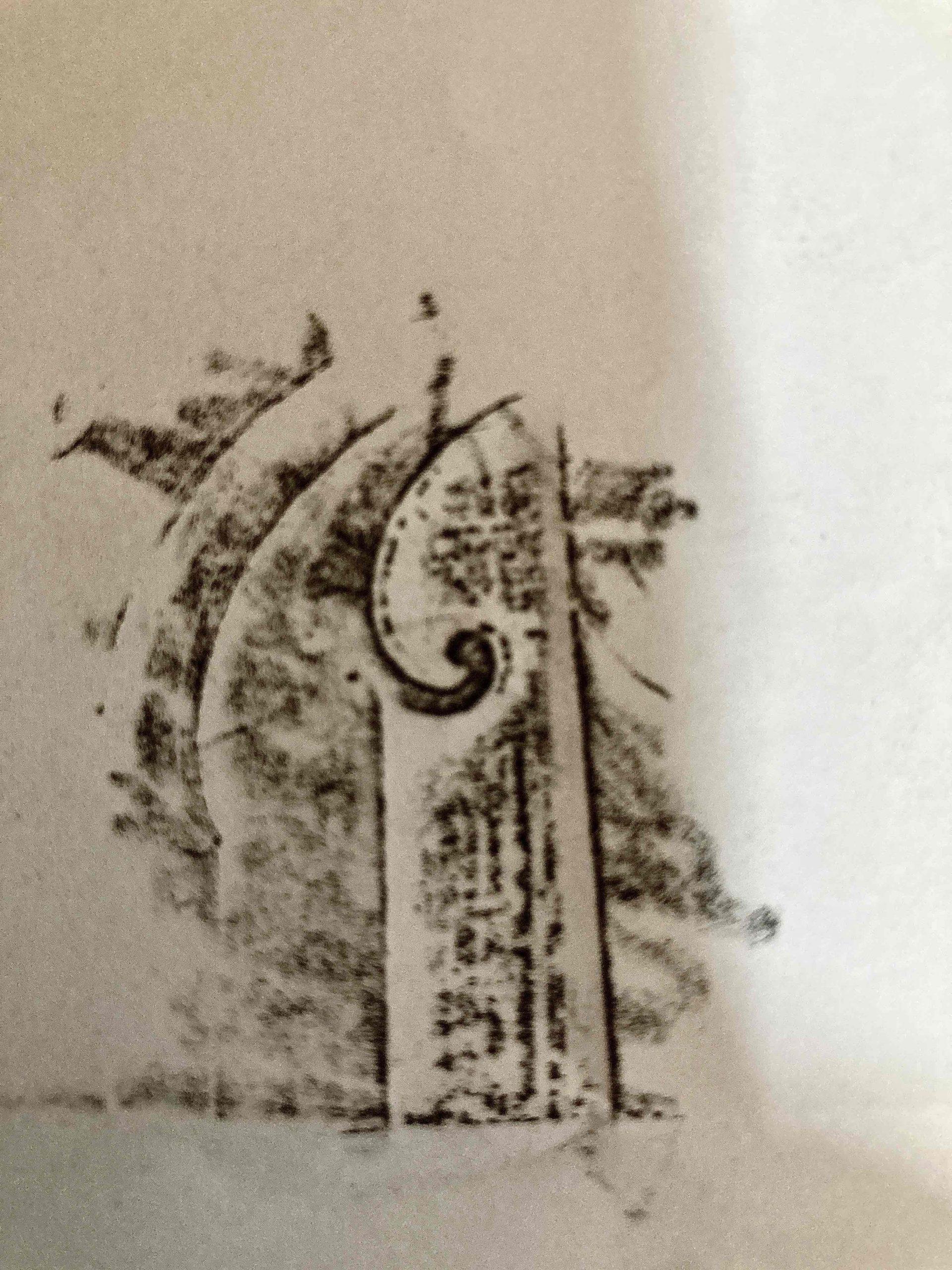
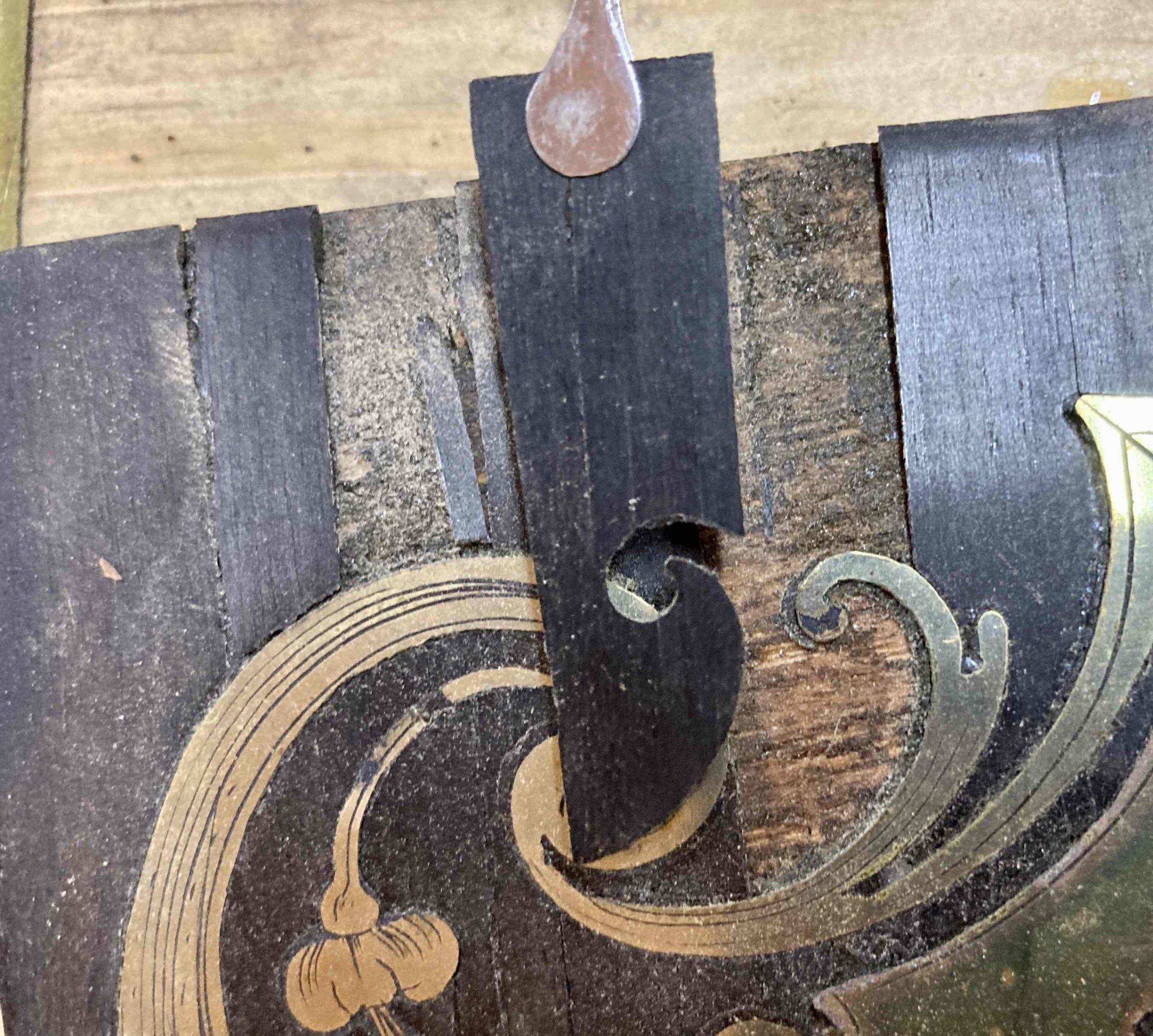
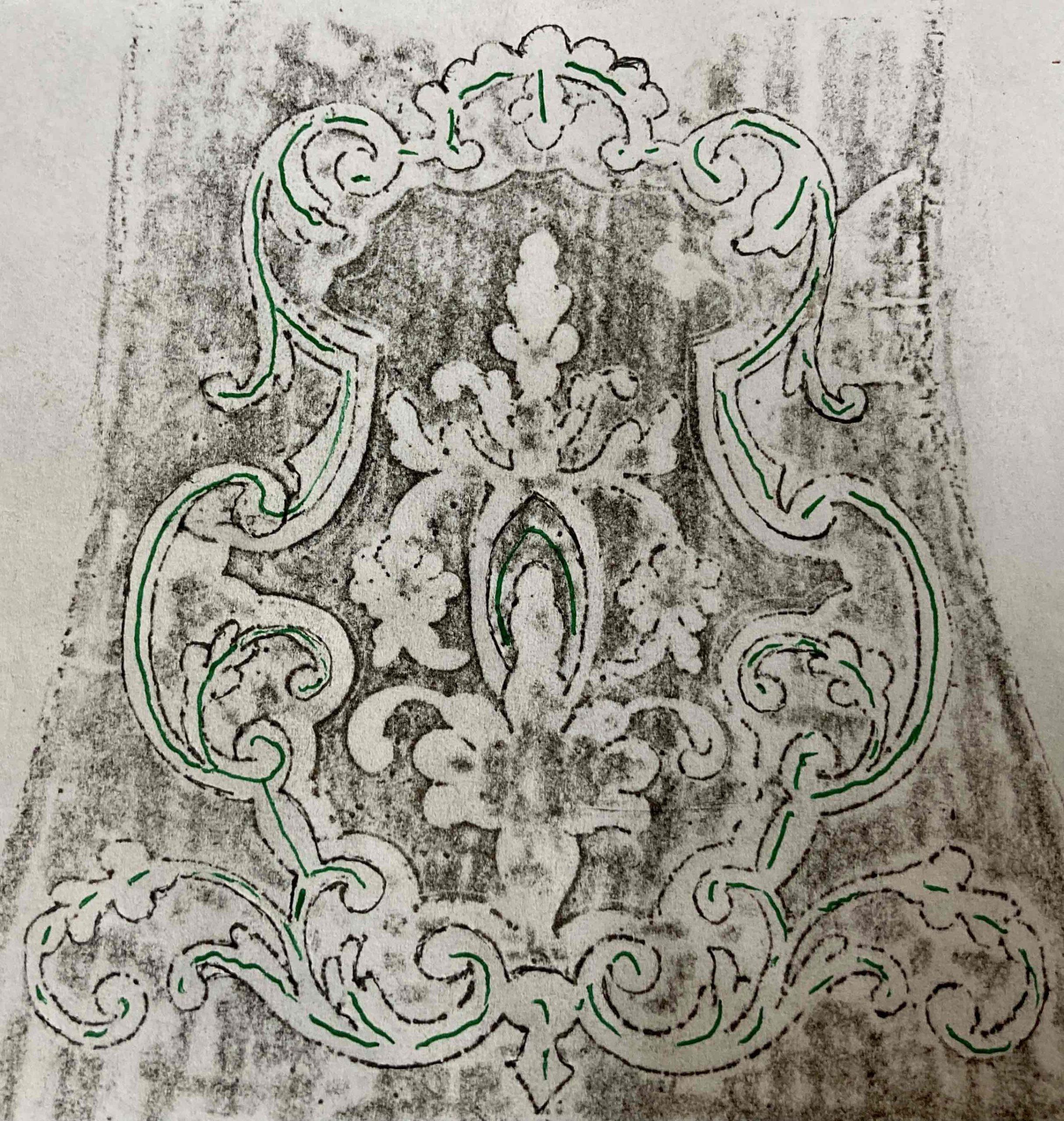
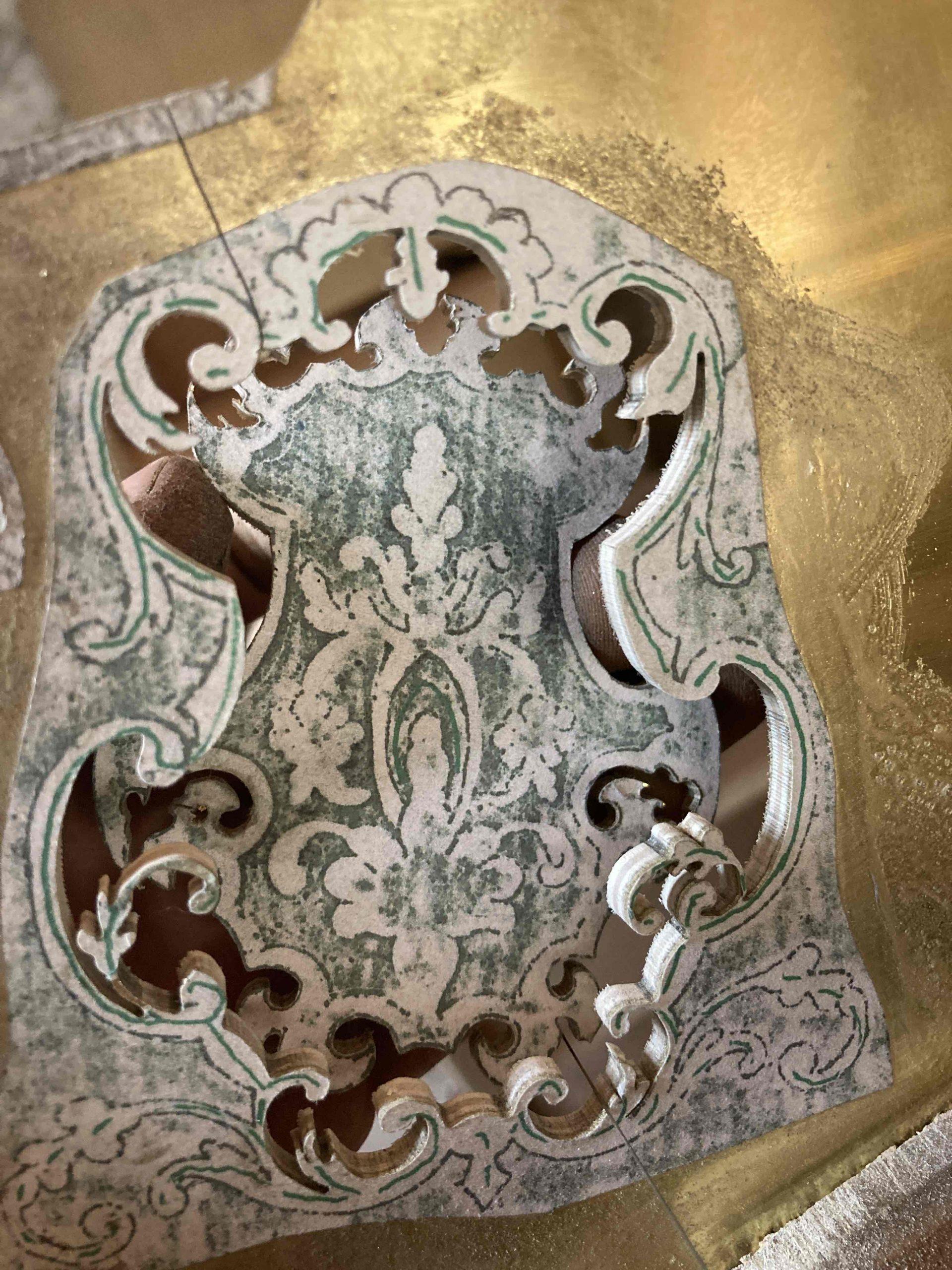
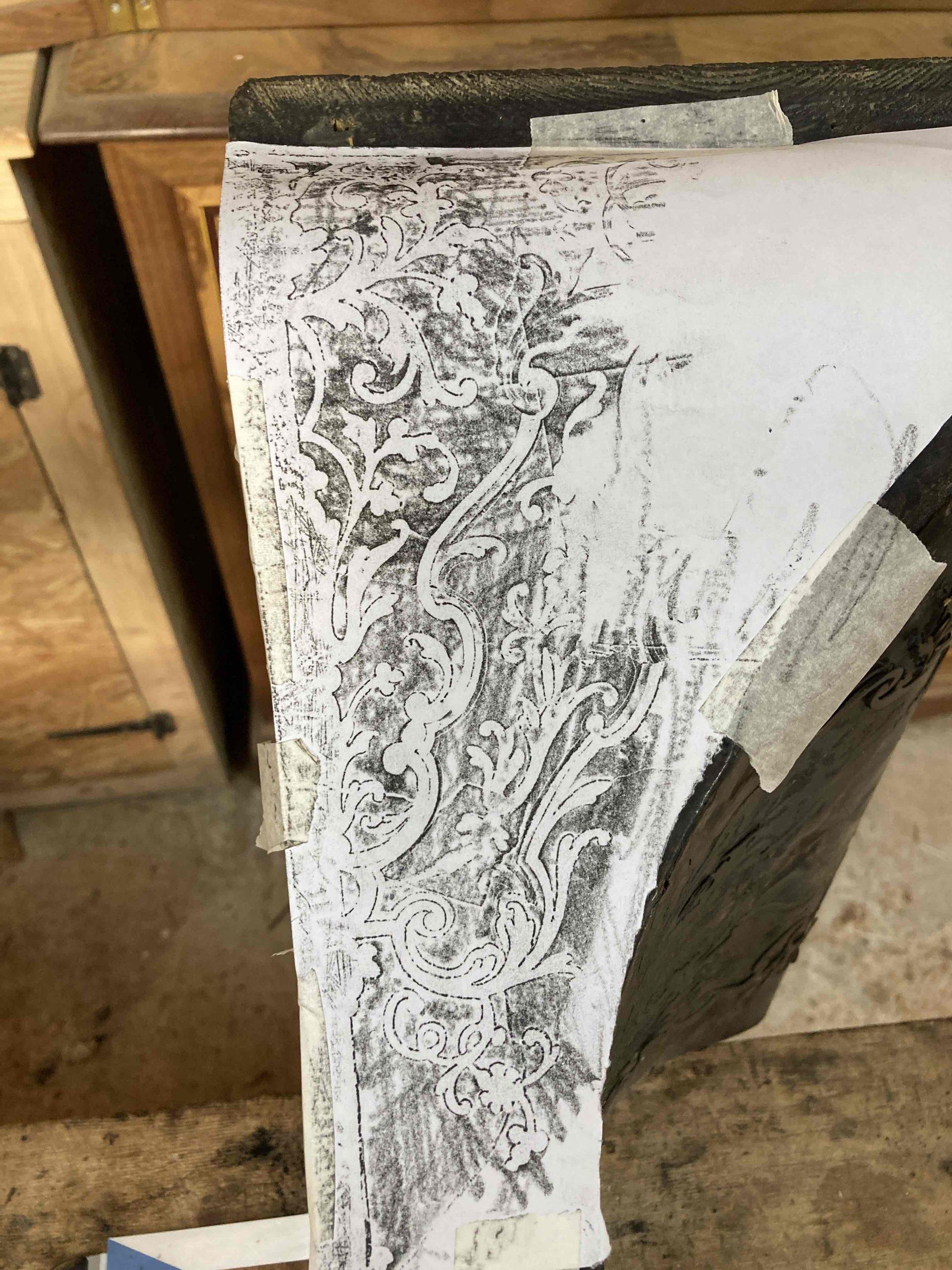
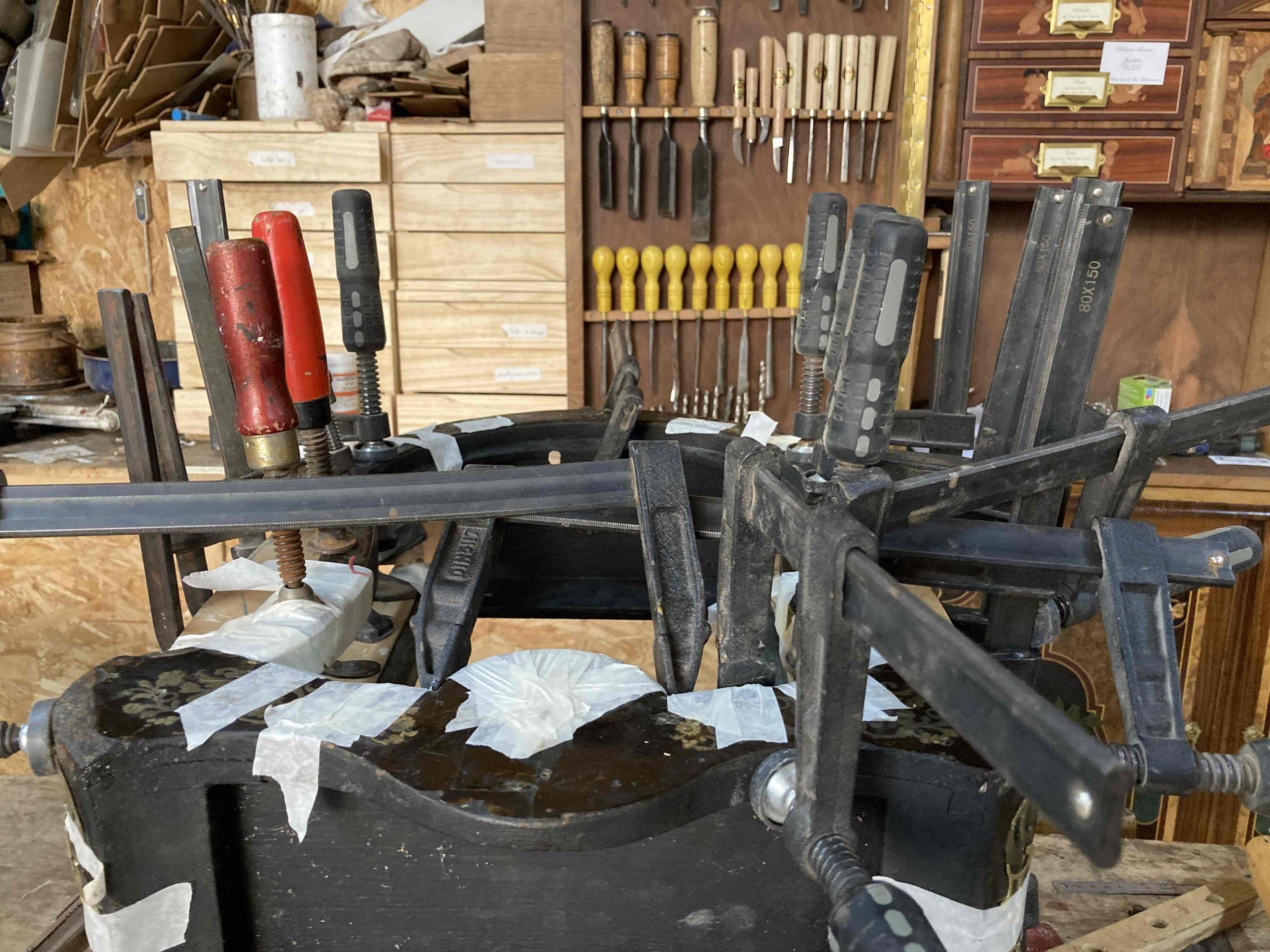
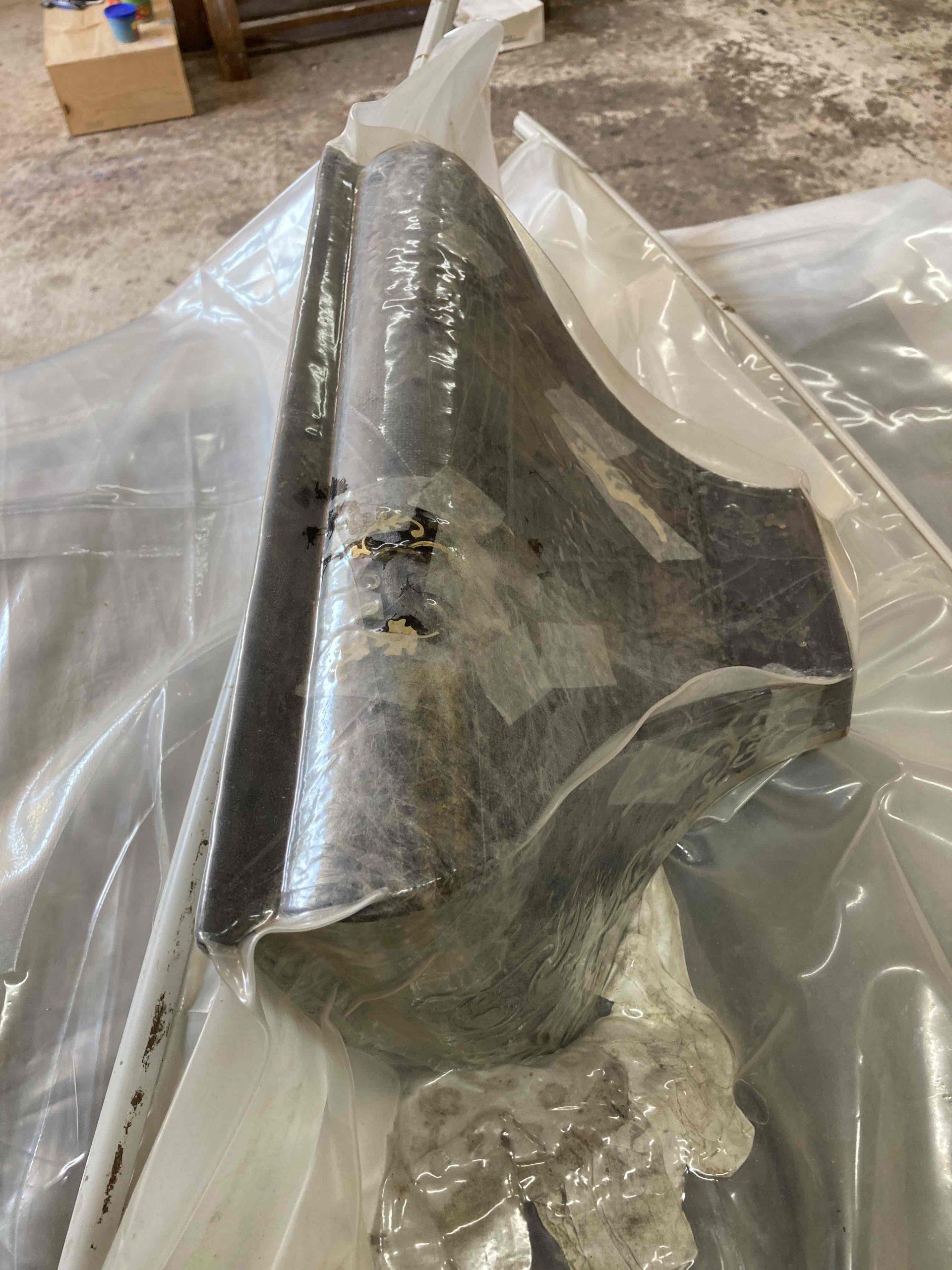
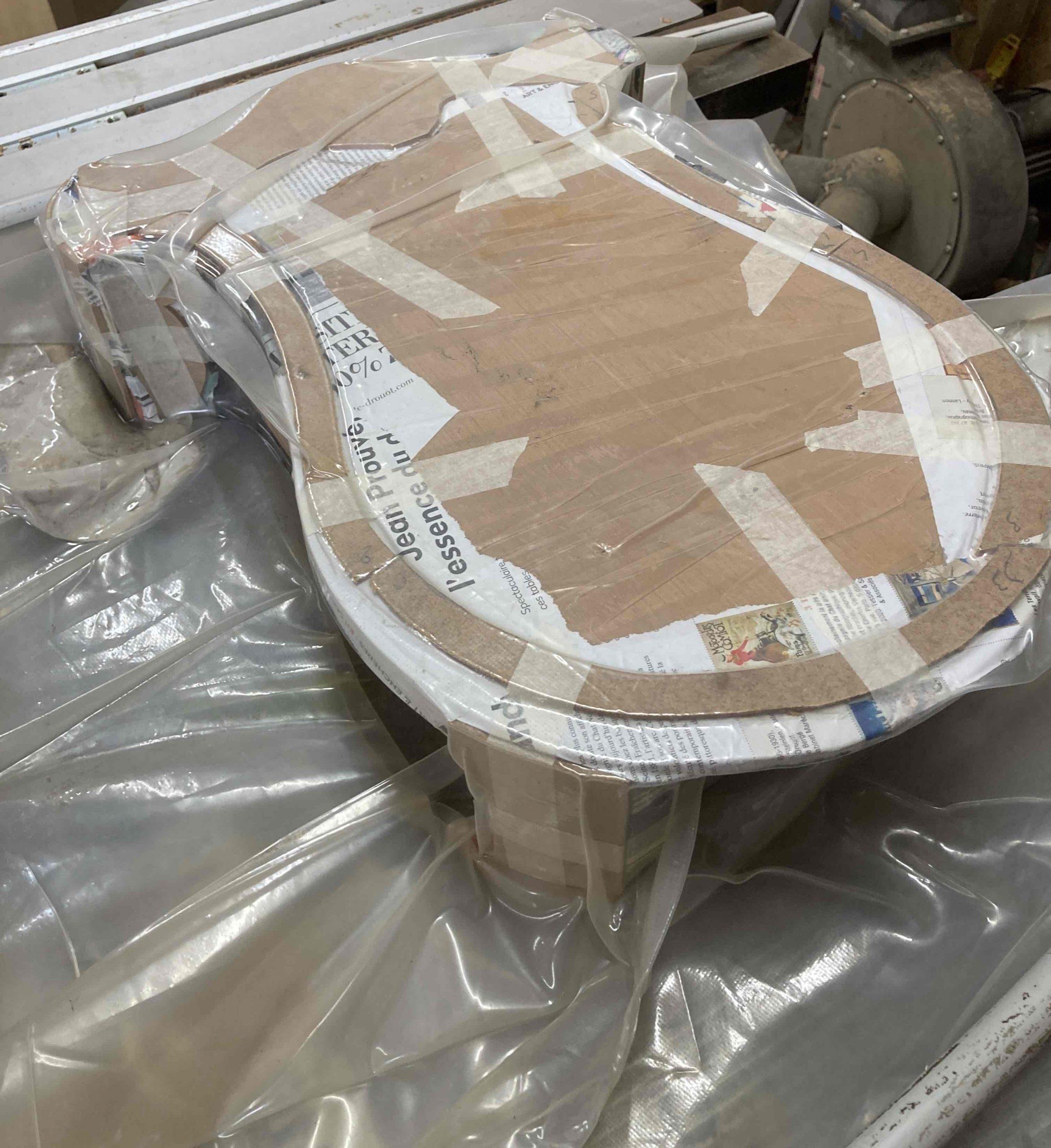
Fortunately for me, after a bit of jigsaw puzzle work, most of the brass elements on the base were back in place. All that remained was to fill in the missing ebony pieces. The missing brass and tortoiseshell pieces on the base and the case were replaced and engraved where necessary. All the marquetry was reattached using vacuum-sealed glue and, where needed, fish glue.
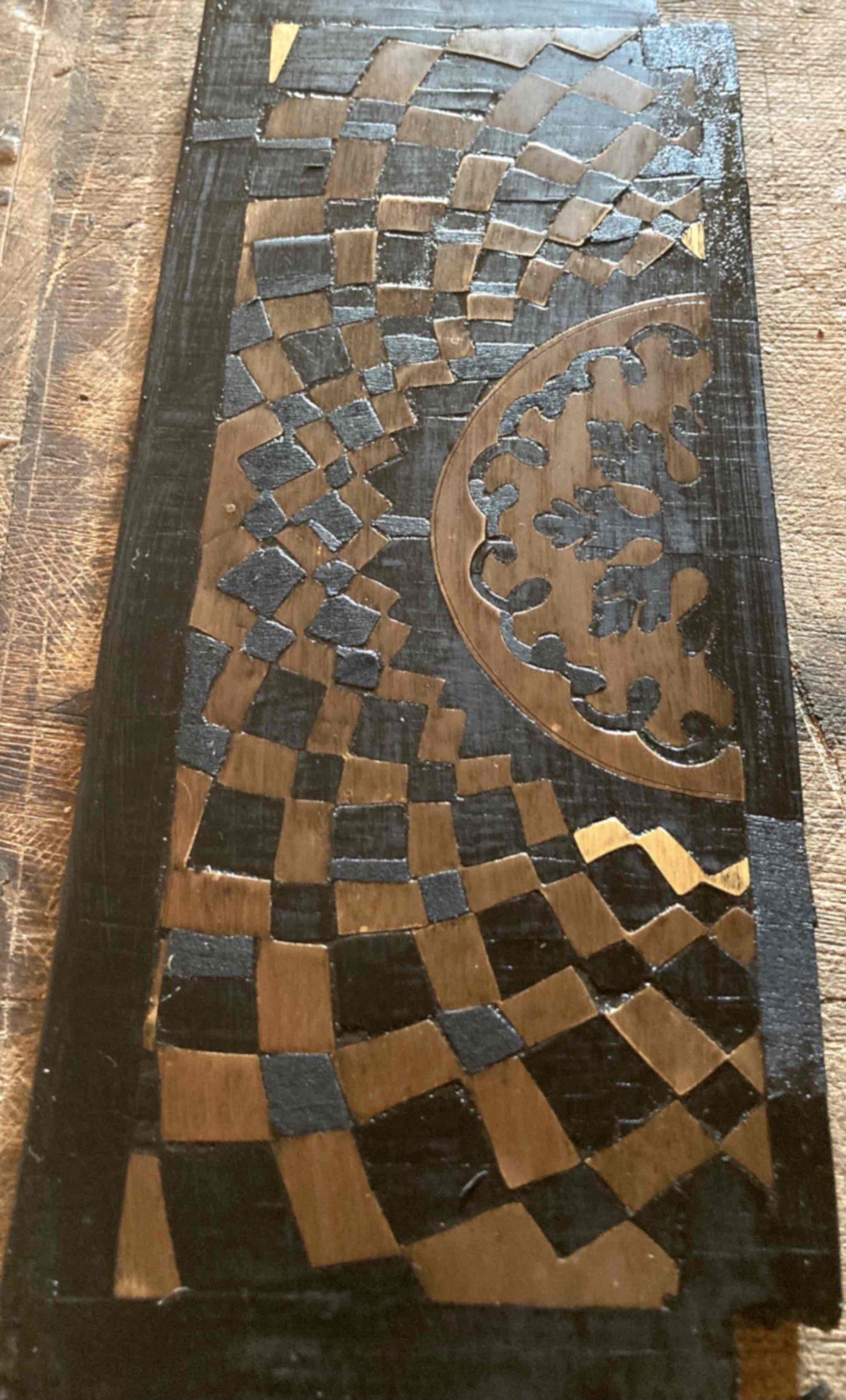
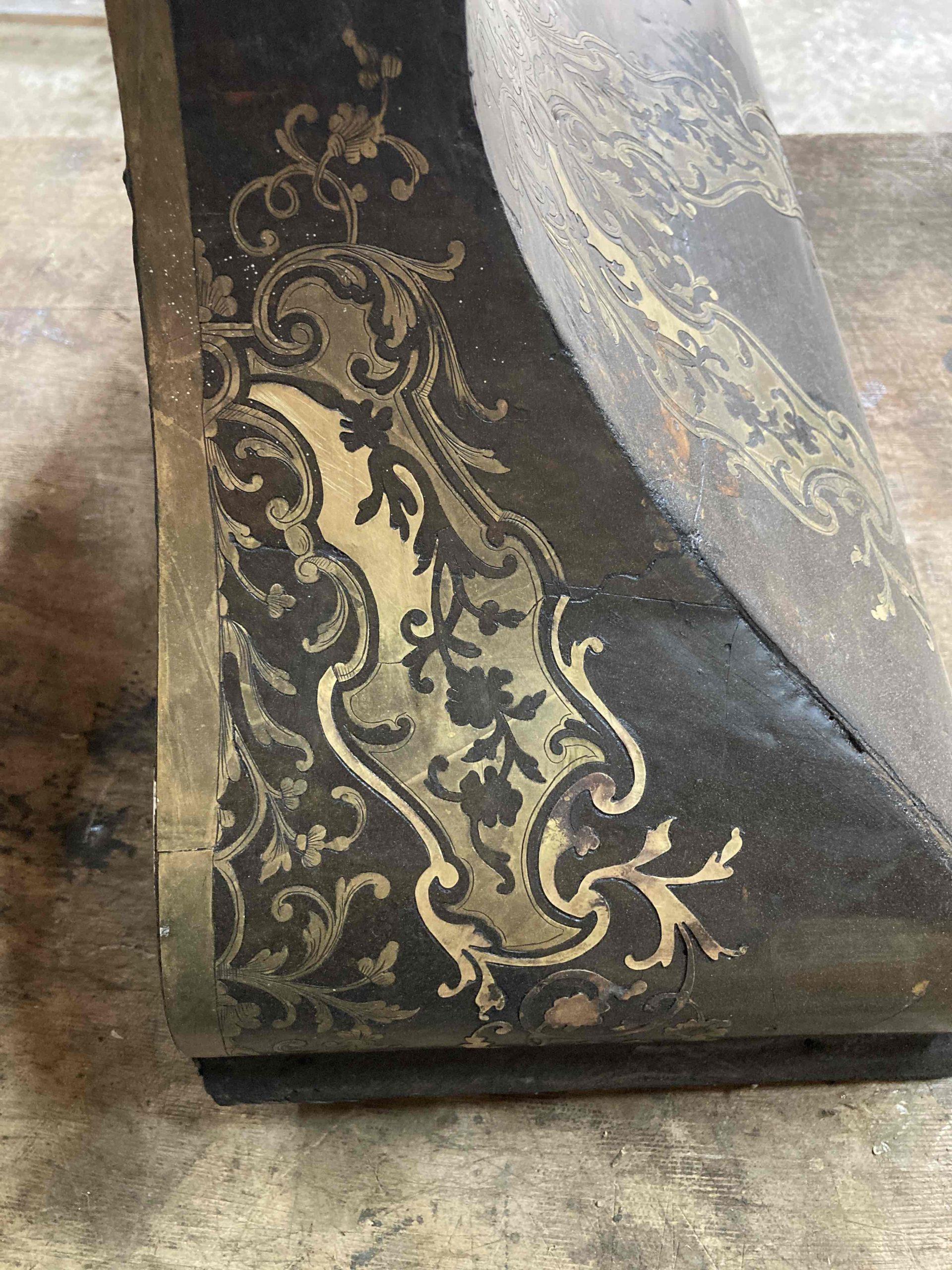
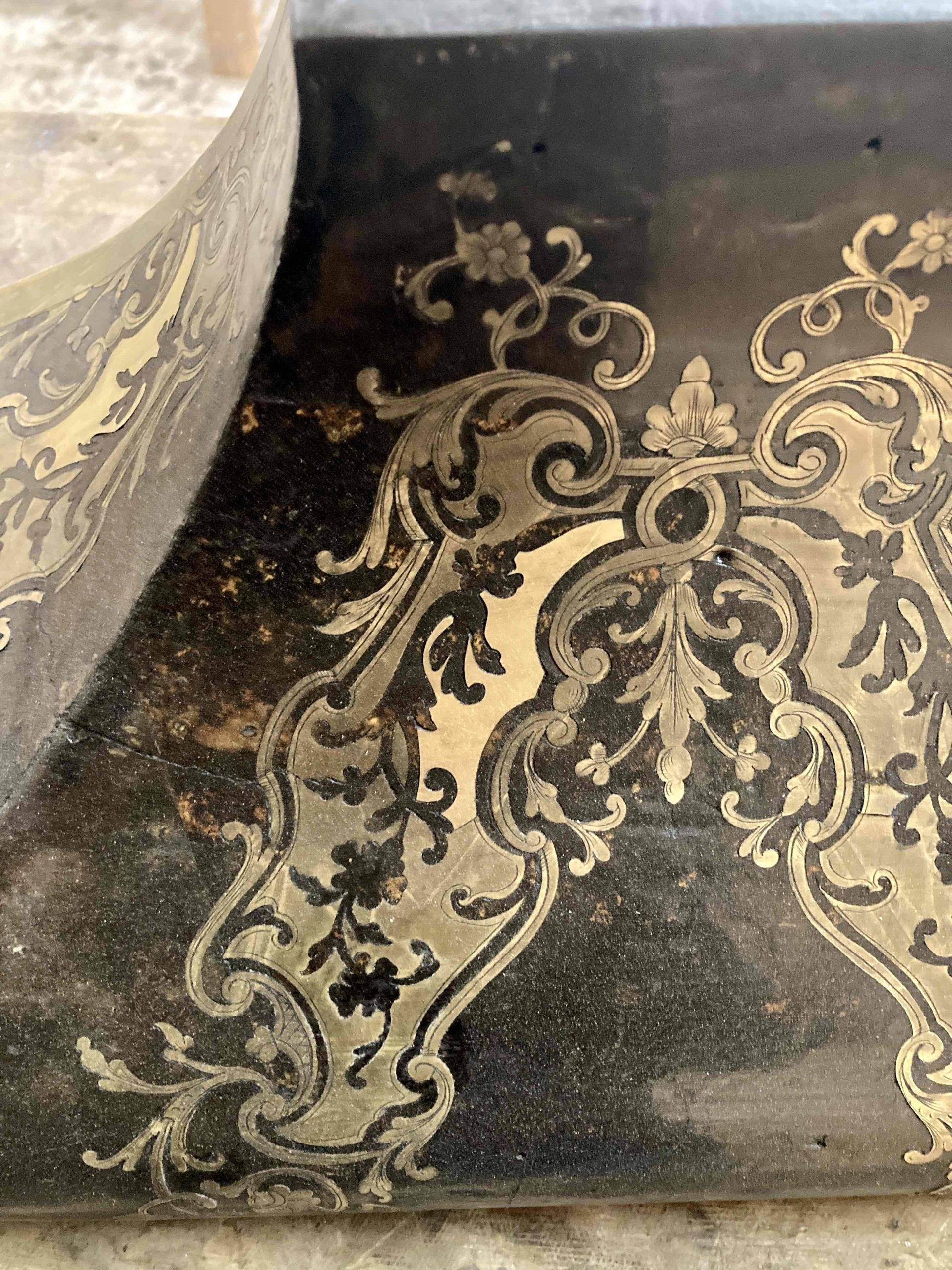
Finally, a sealant was applied, and then the cartel was varnished with a clear pad. The bronze parts were cleaned with demineralized steam.