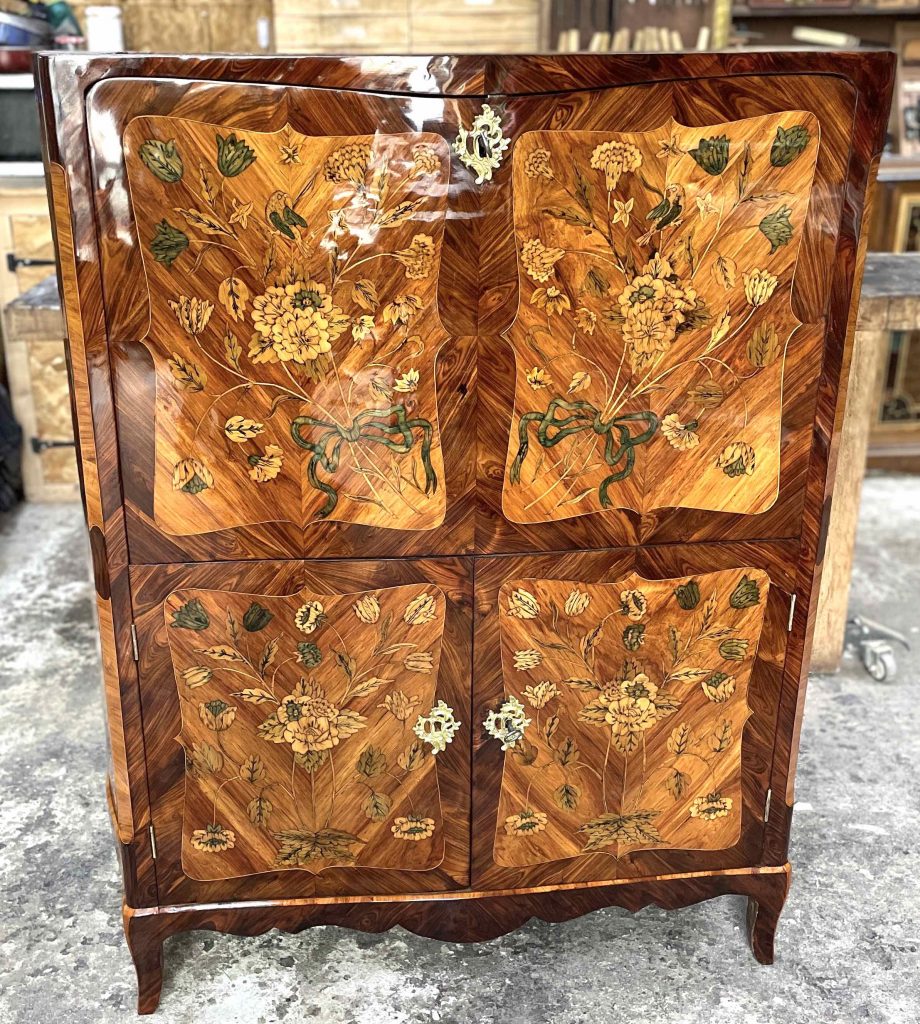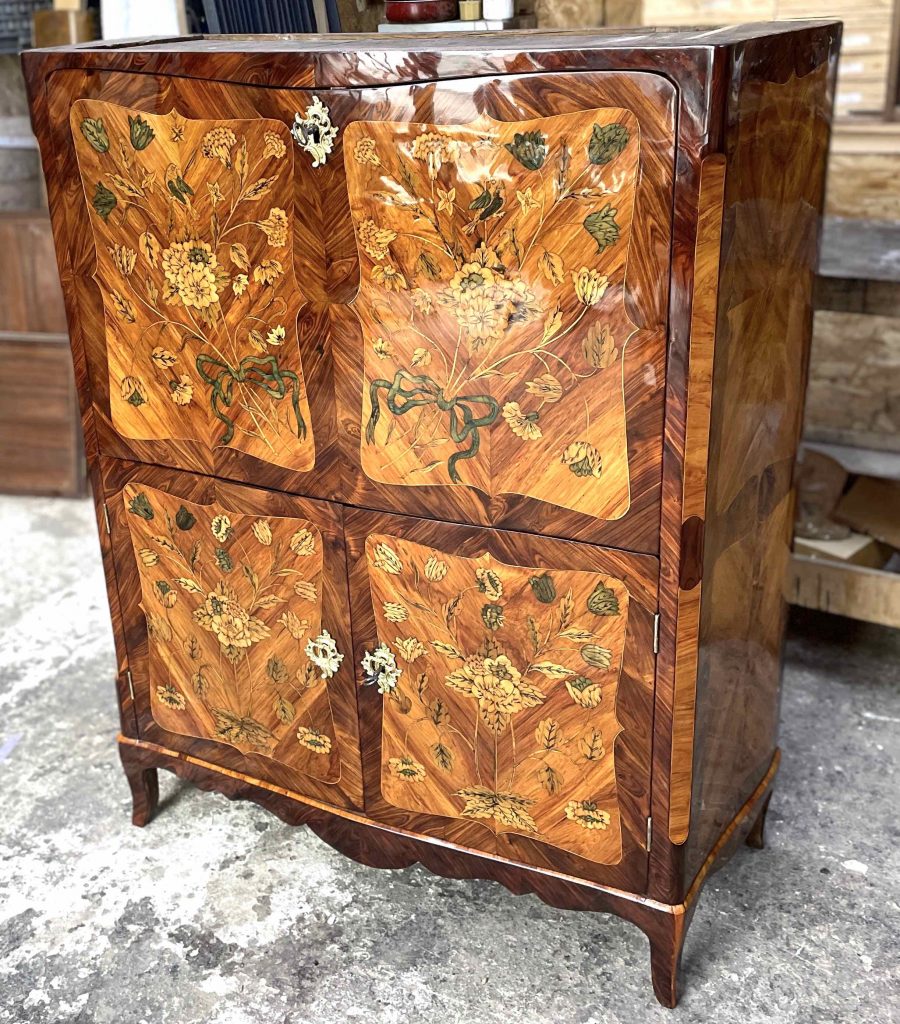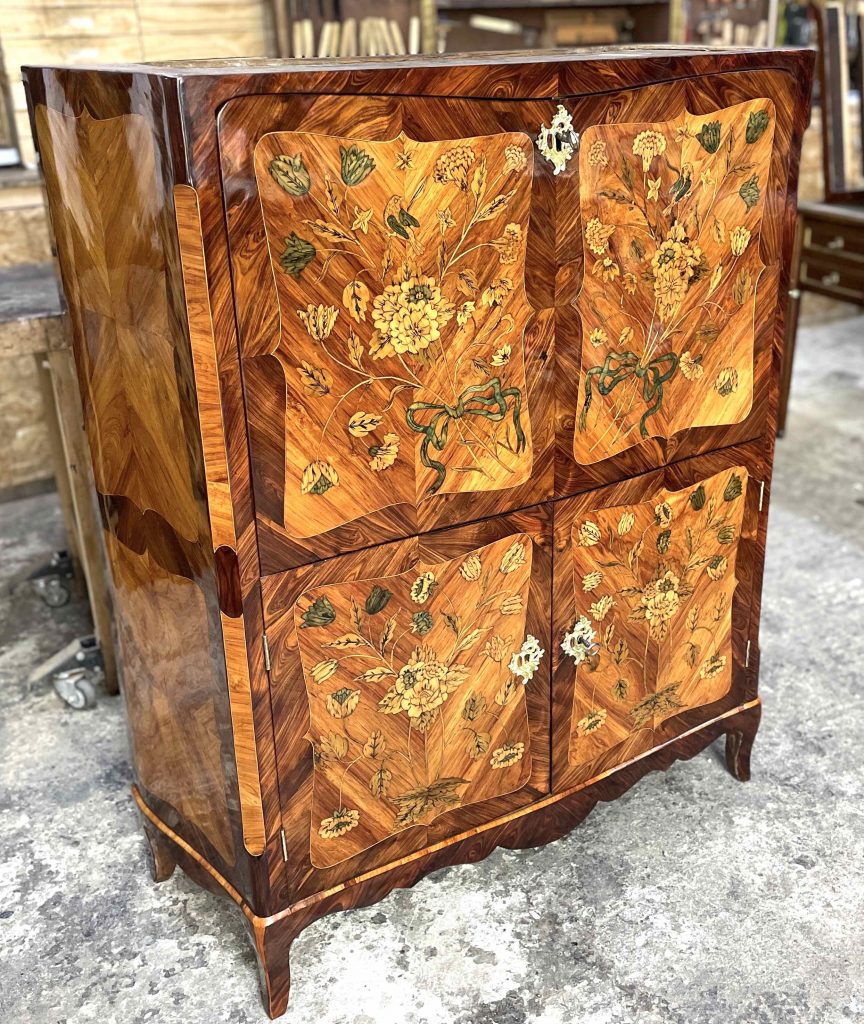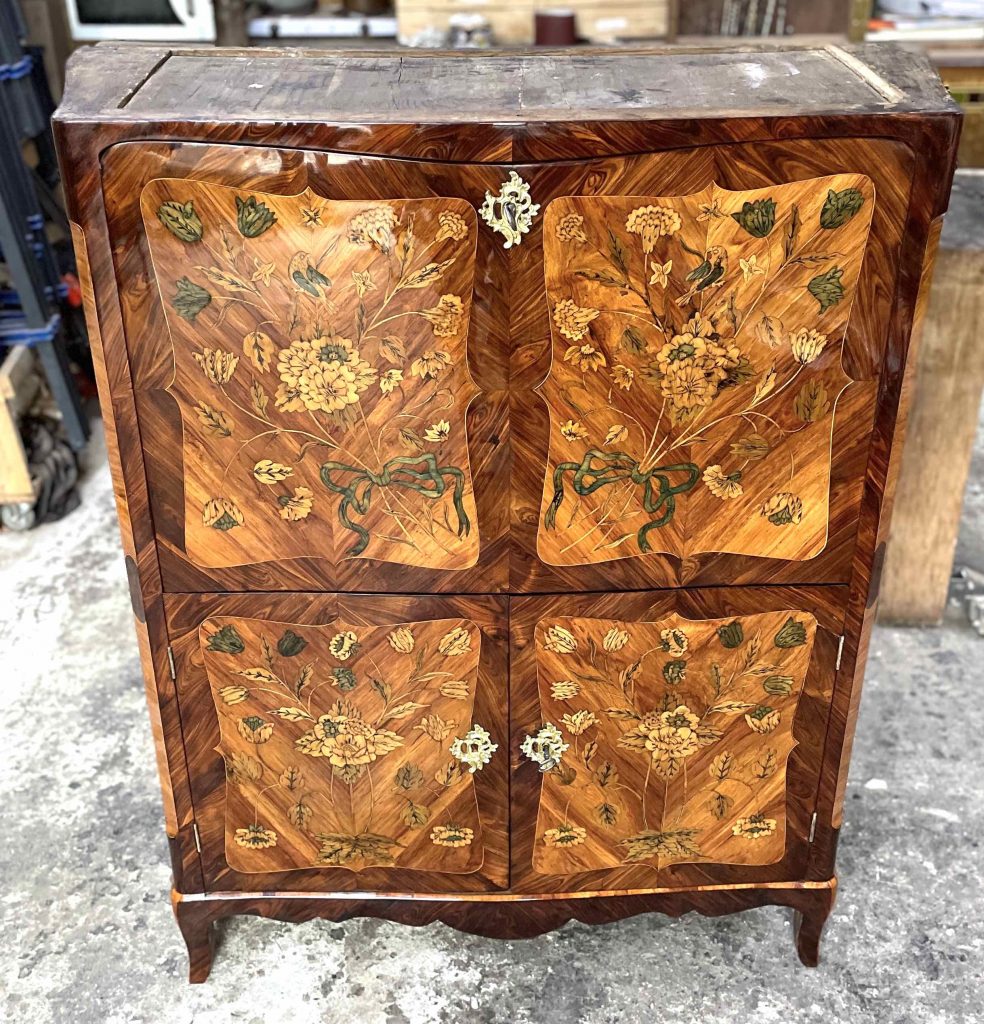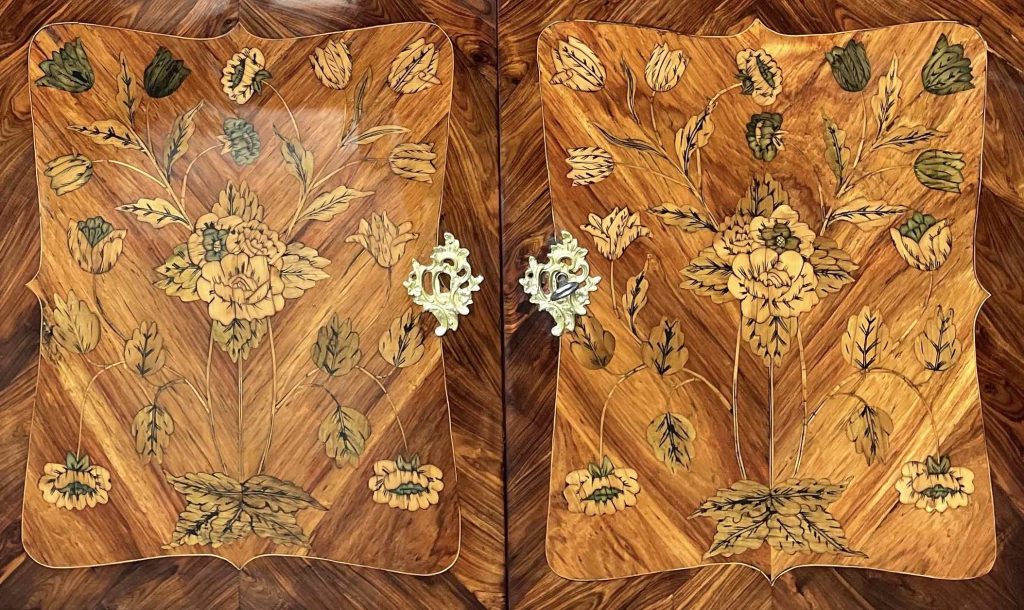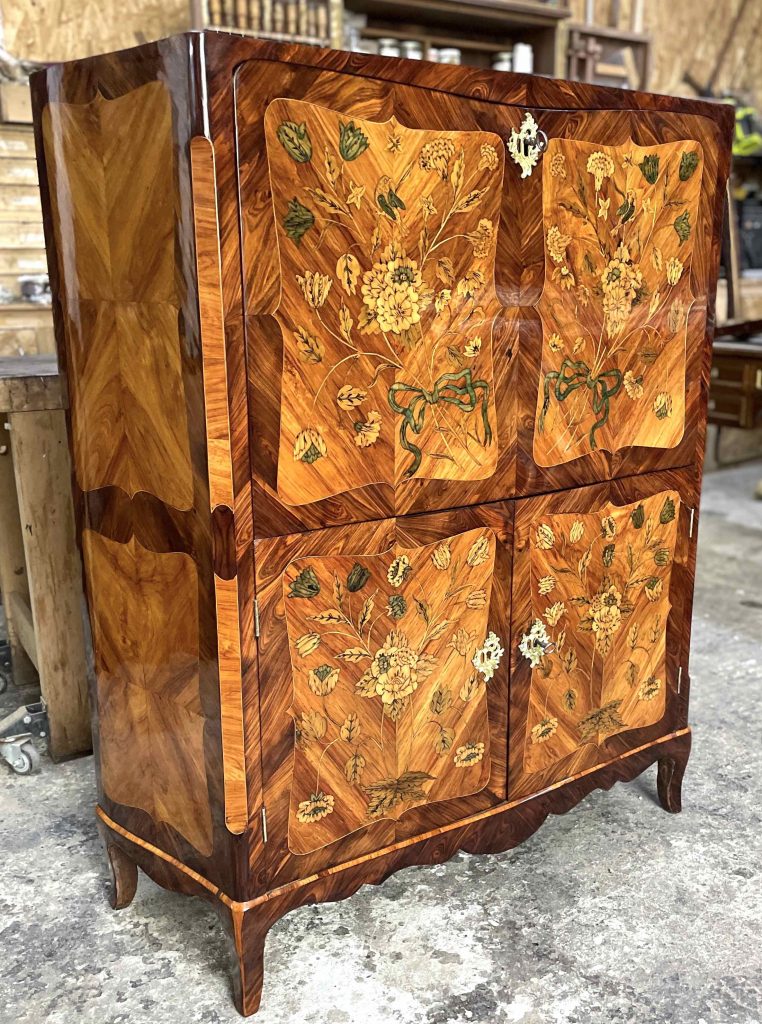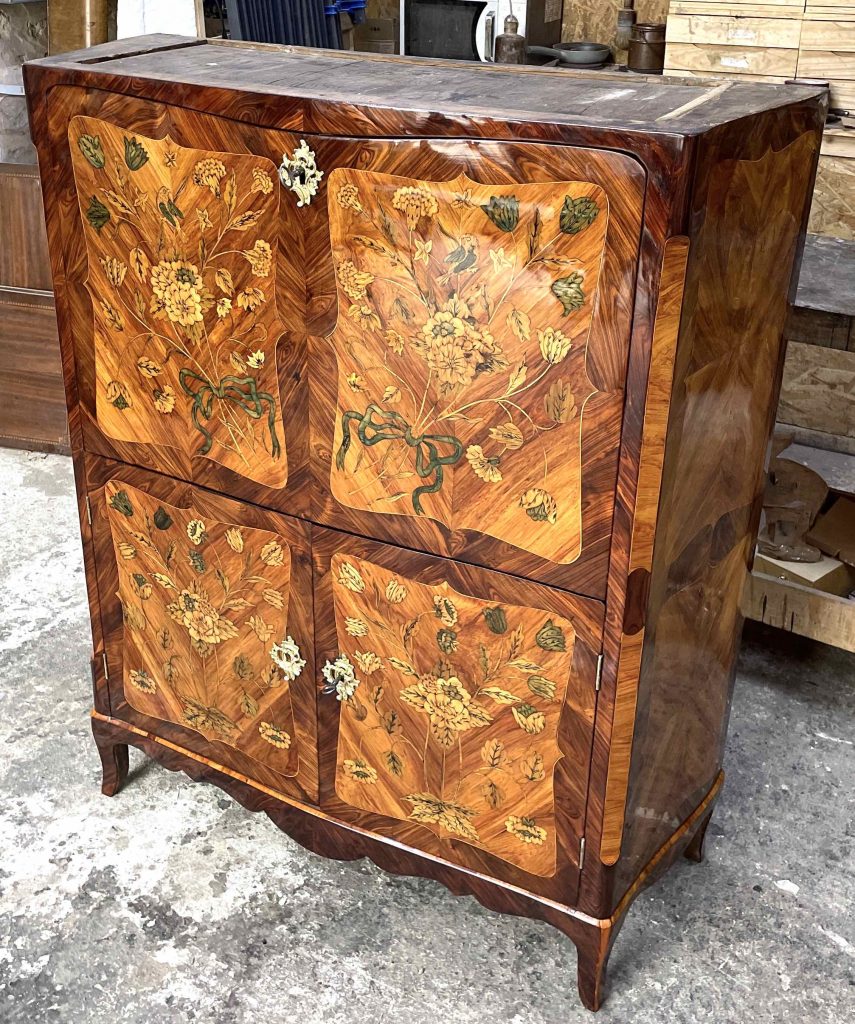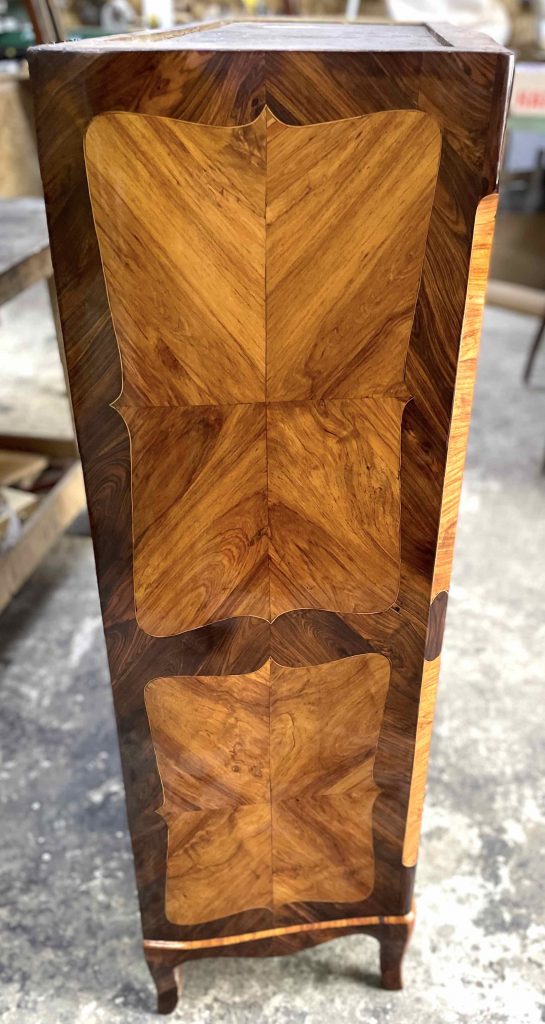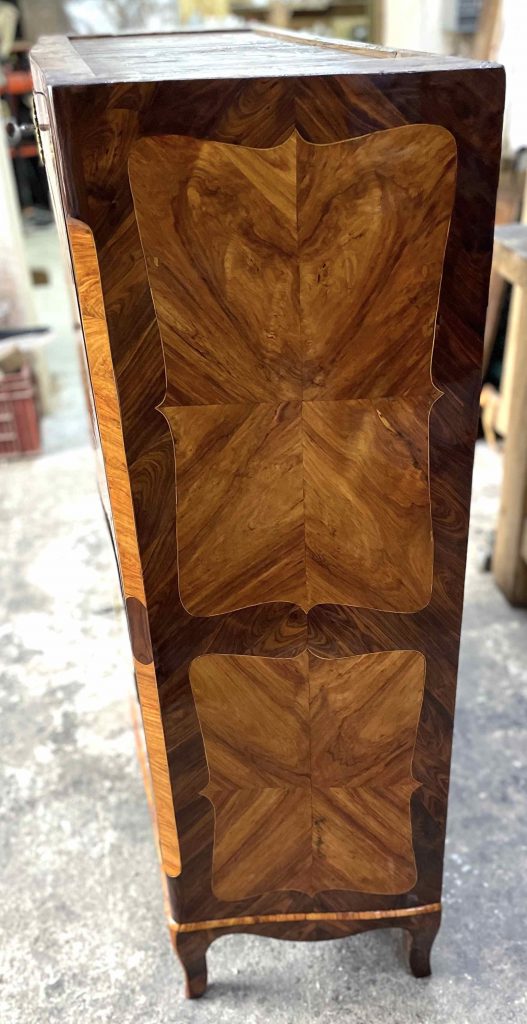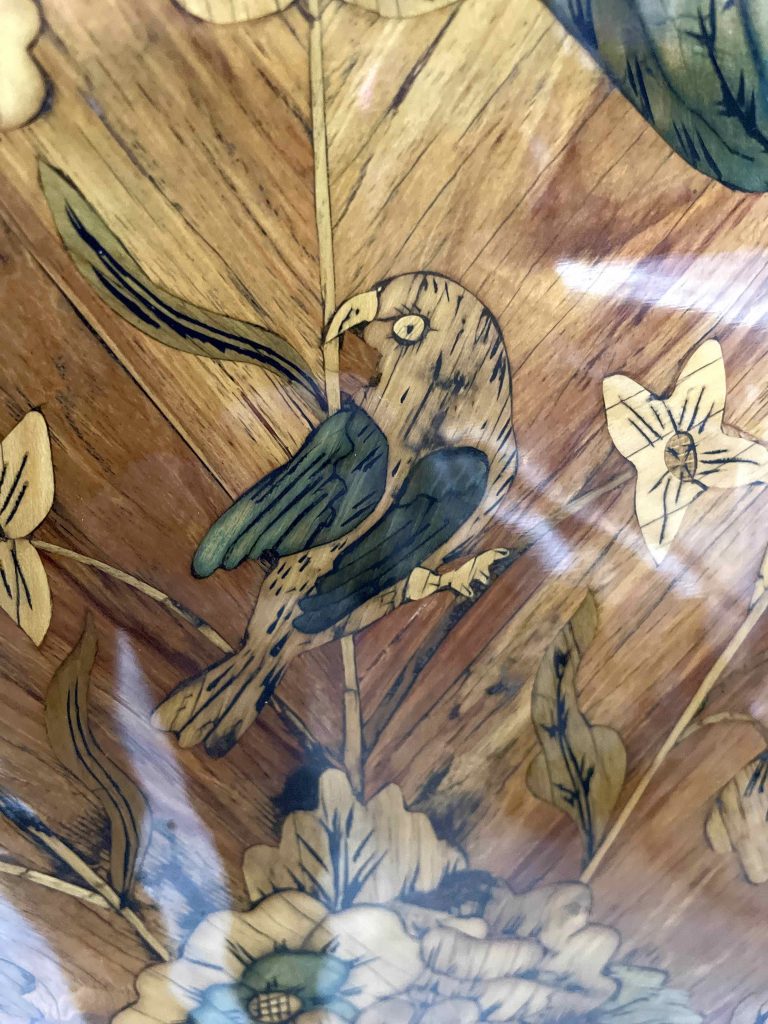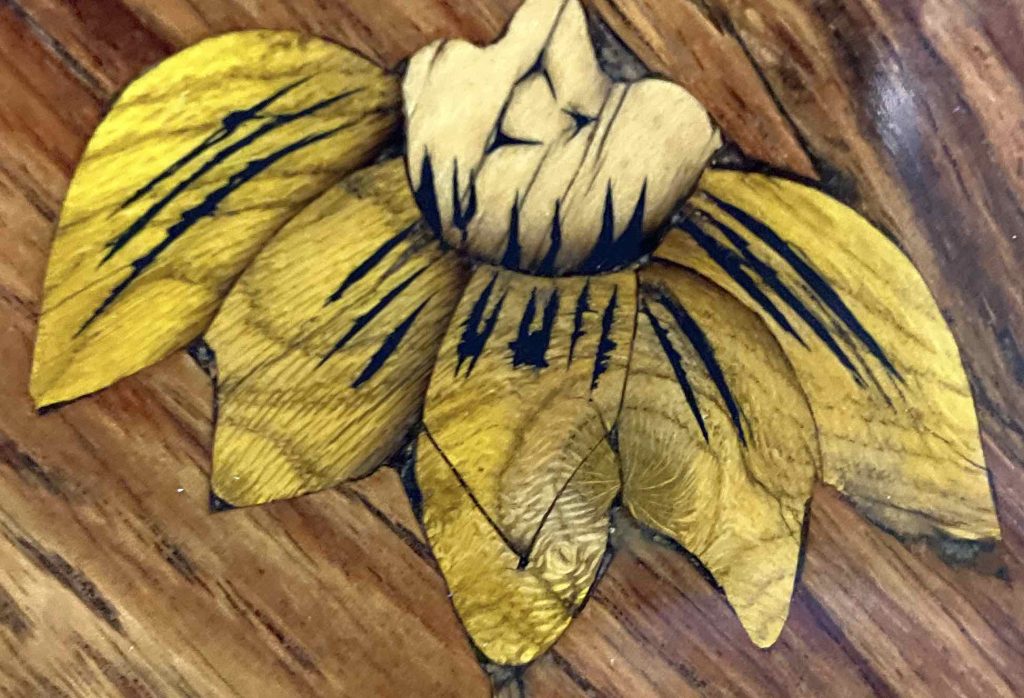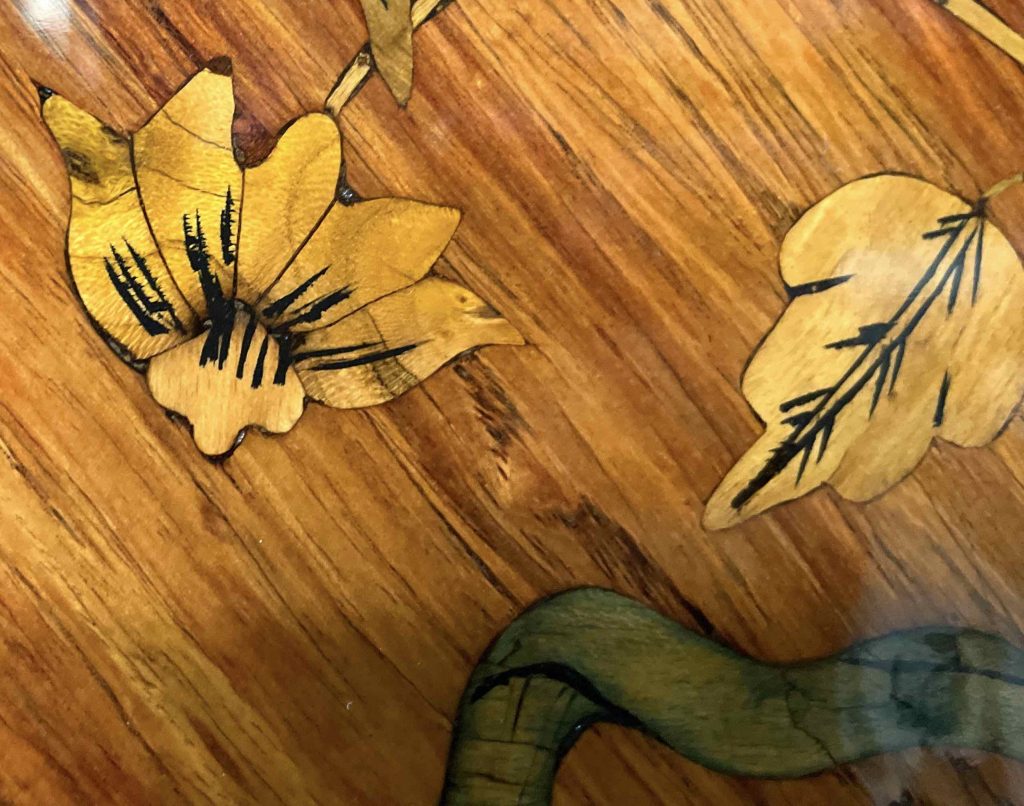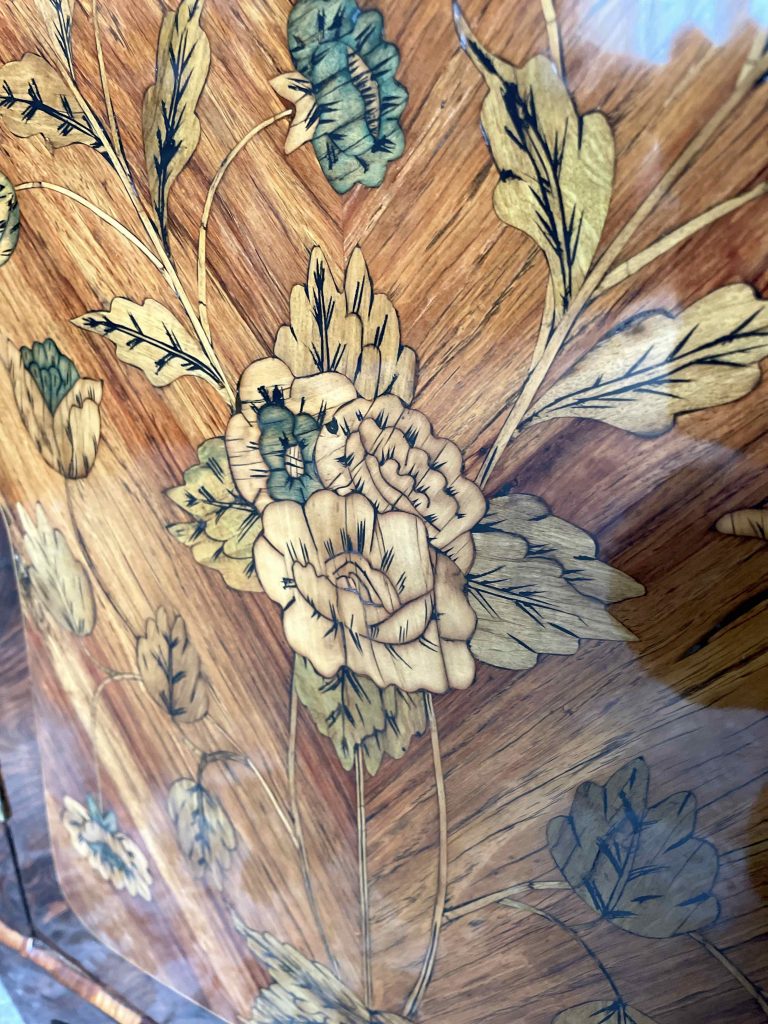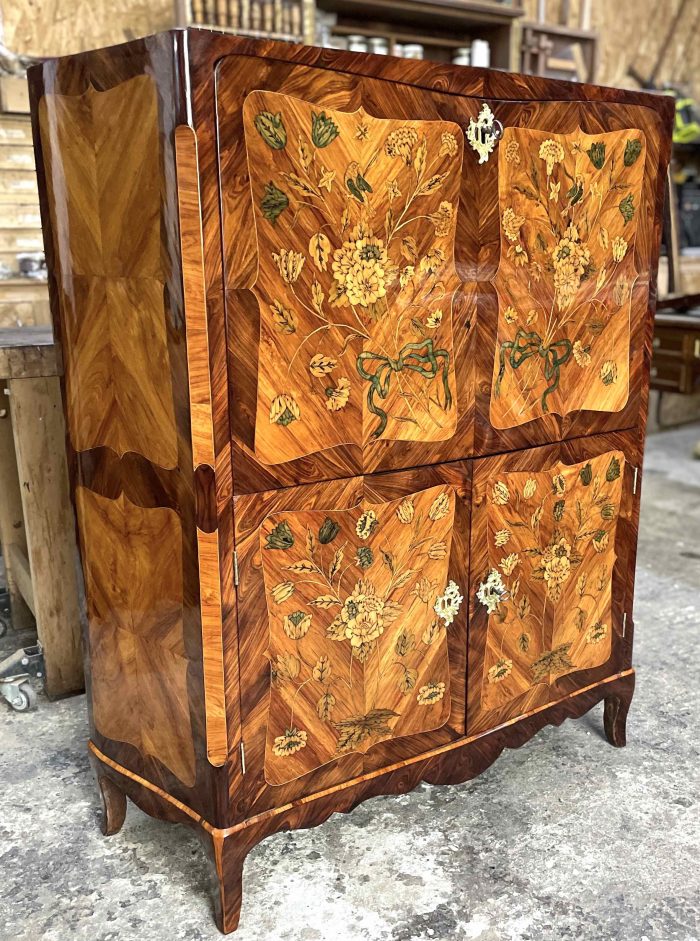
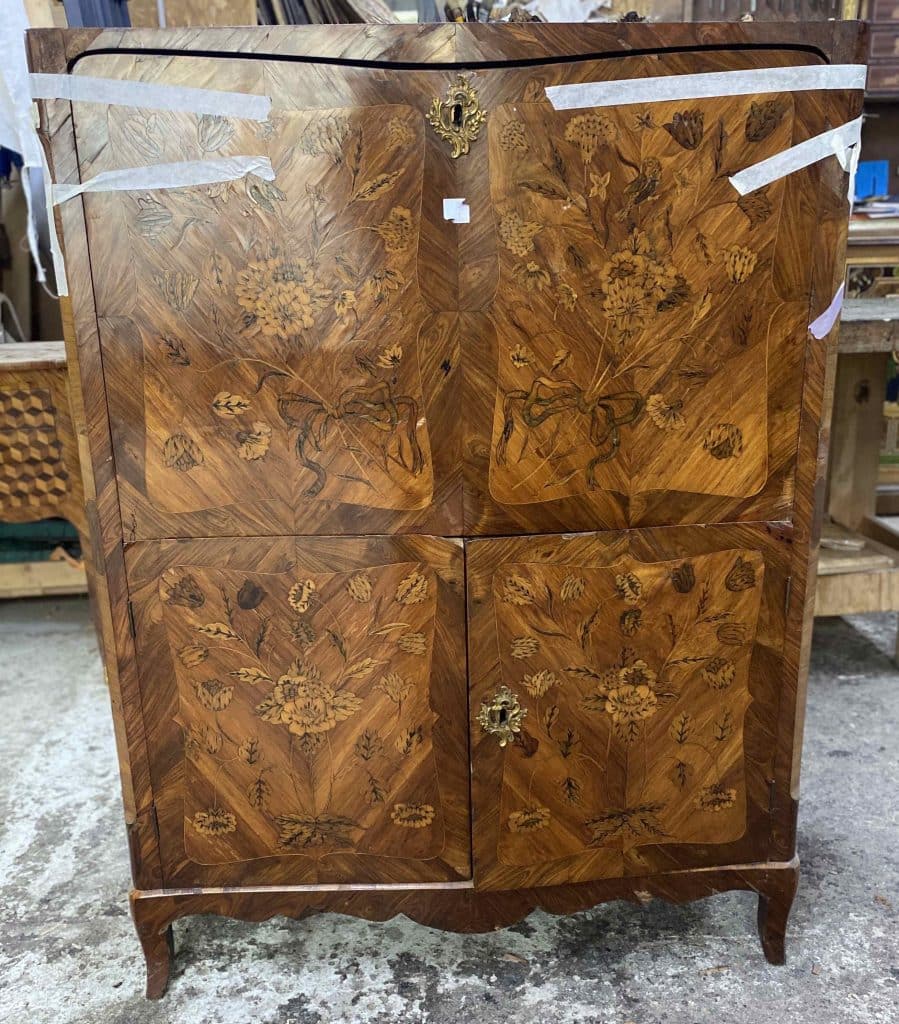
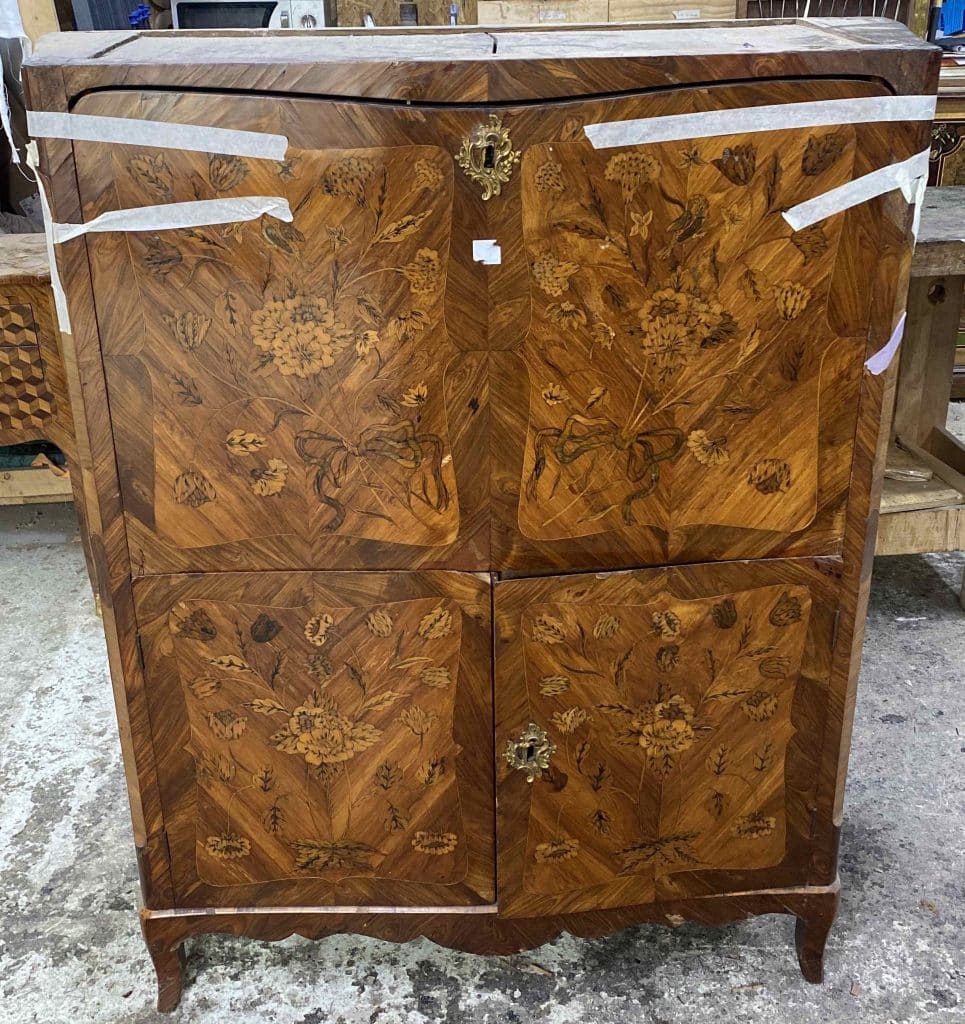
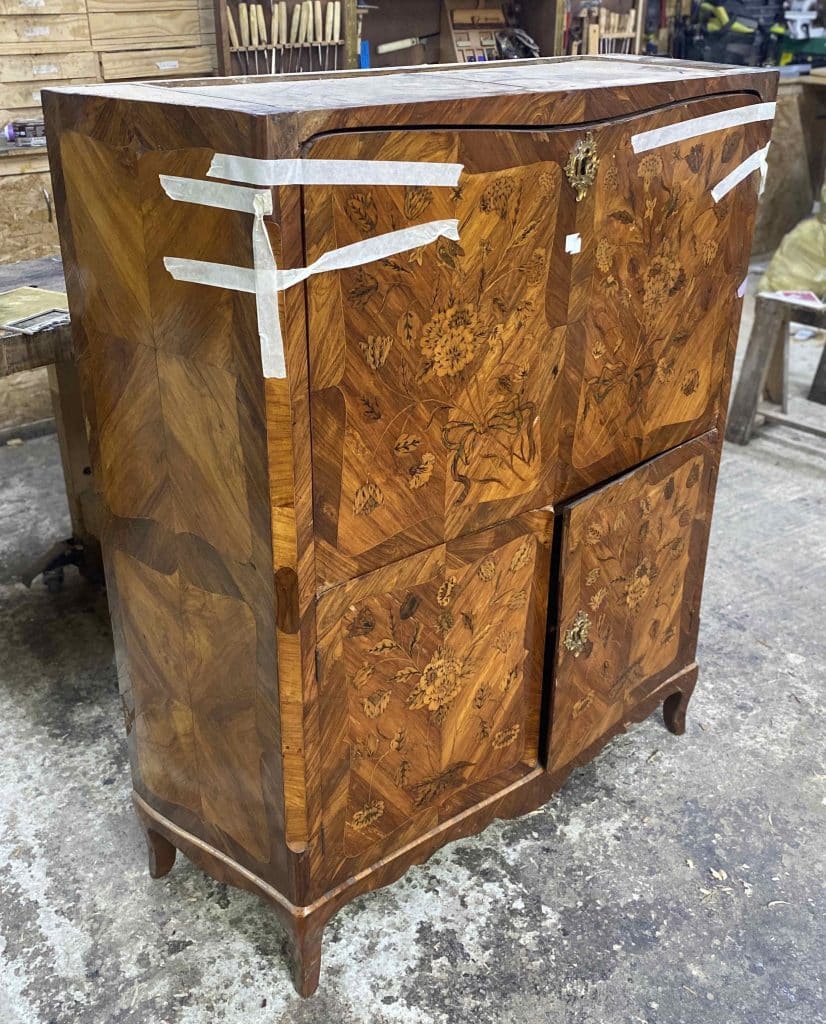
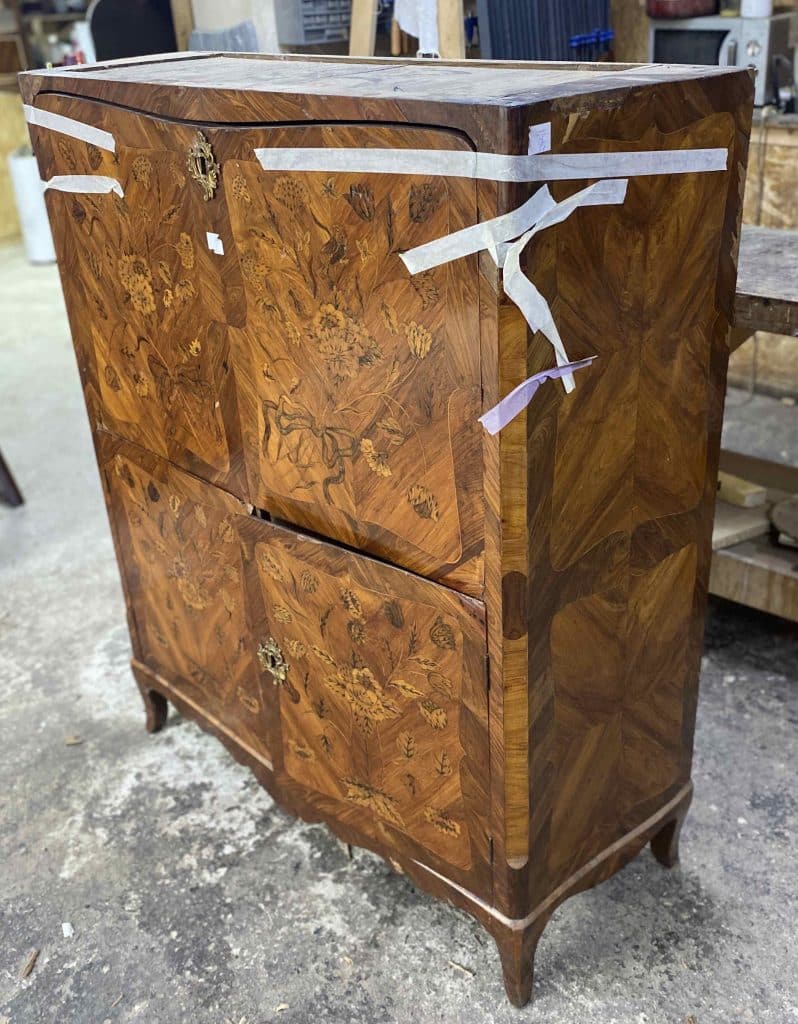
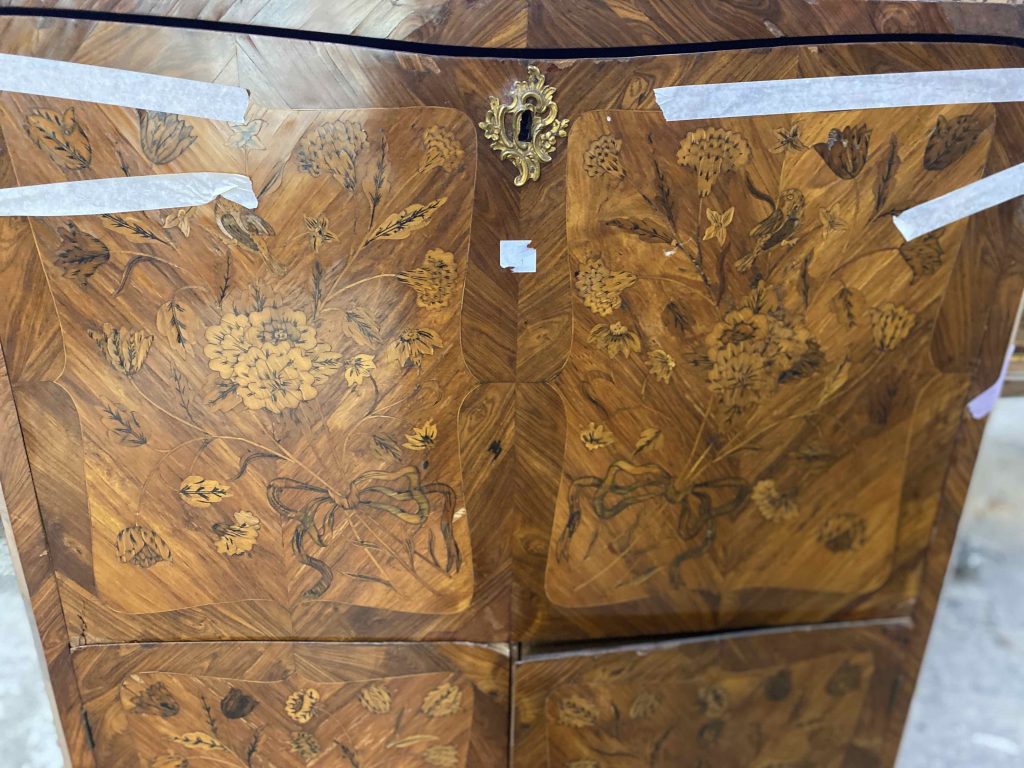
Restoration of a Louis XV period drop-front secretary, also known as a cabinet, stamped by Charles Chevalier, with curved sides and a front without an intermediate rail. Constructed of oak and softwood, it is veneered with marquetry of maple, boxwood, blue-stained maple, holly, hornbeam, and barberry on a rosewood ground framed by violet wood. The drop-front opens with its original three-point lock, revealing a compartment containing seven drawers in four rows and four drawers. This compartment conceals seven secret compartments. The lower section opens with two doors and contains a chest on the left. The remarkable quality of craftsmanship of this piece is noteworthy. Each element is assembled with joinery and fits together perfectly. The compartment is an integral part of the piece, as is the lower shelf, which is dovetailed into the uprights.
A piece of furniture with secrets: The secretary desk?
The first description of a secretary appears in 1704 in the Trévoux Dictionary like "a kind of raised table or desk, shaped like a lectern, in which there are several lockable drawers where important papers are kept." Its function is therefore to secure documents. There are three types: tall cabinet, split-front, or cylinder. A newcomer appeared at the end of the 18th century: the cabinet secretary. Cabinet secretaries come in two types: two-door or chest-of-drawers with drawers.
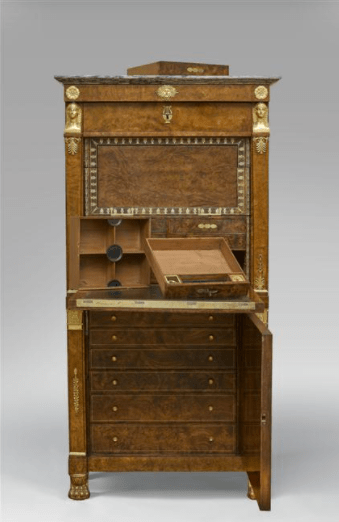
Besides their function of protecting documents with a lock, they can also contain one or more secrets, or even many more. This is the case of the secretary executed by Martin Guillaume Biennais.
Drop-front secretary desk © RMN-Grand Palais (Museum of the Castles of Malmaison and Bois-Préau) / Franck Raux
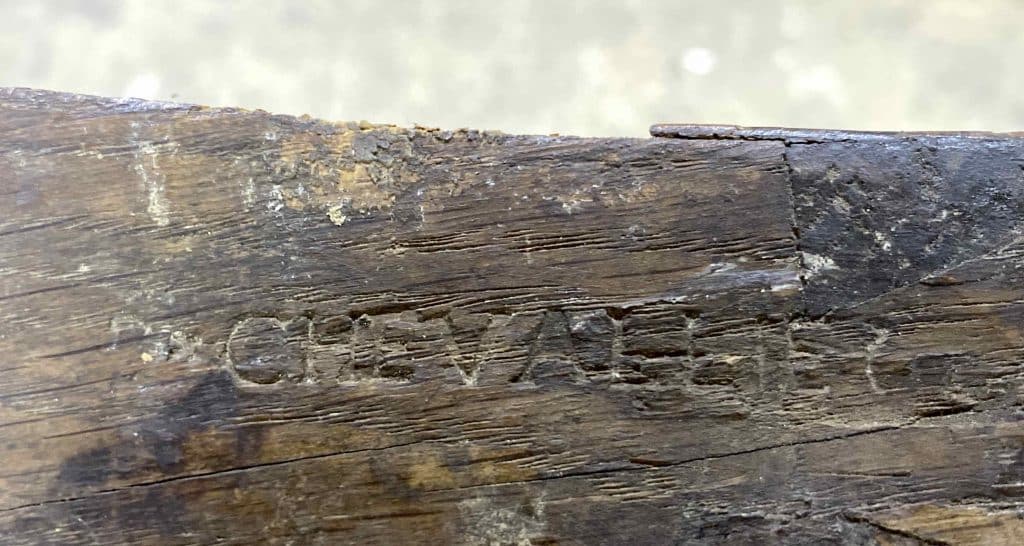
Charles Chevalier
Charles, son of Mathieu Chevalier, a master cabinetmaker living in the Faubourg Saint-Antoine, near Rue Saint-Nicolas, was born in 1703. He was the youngest of three brothers: Jean-Baptiste I, Jean-François, and Jean-Mathieu I (all cabinetmakers), and four sisters: Anne, wife of the master varnisher. François Lamy, Marie Antoinette, Suzanne wife of Jean-Charles Saunier and Jeanne.
On January 27, 1737, he married Jeanne-Madeleine Coulon, daughter of the cabinetmaker Gaspard Coulon. Shortly after, he left the workshop of his elder brother, Jean-Mathieu I, to set up shop on Rue du Bac and obtained his master craftsman's certificate in 1738.
Charles made the cabinetmaking business established by his father and enriched by his brothers over the years profitable. Like his brother, Charles made furniture of the latest style, as the appraisal mentions a "commode and matching corner cabinets in the antique style with Aleppo breccia marble".
Like many of his contemporaries, he acted as a modern entrepreneur, striving to meet ever-increasing demand while simultaneously orchestrating his production and consolidating his markets. The Coulon, Saunier, and Criaerd families, all cabinetmakers from related families, contributed to his business, as did the founder Dupuis, the gilder Jounnelet, the cabinetmakers Louis Noël Malle and Marcret, and the marble worker Adam.
Even more remarkable was his clientele, which included the elite of the Faubourg Saint-Germain: the Viscounts of Rochechouart, of Poligniac, and of La Rochefoucauld, the Countess of Laubépine, the Marquises of Usson de Bonnac, of Montmoreau, of Souches or of Cassini, etc.
After his death on February 3, 1771, his colleague Antoine-Mathieu Criaerd took over his workshop on rue du Bac.
BIBLIOGRAPHY
- French Furniture of the 18th Century – Pierre Kjellberg – Les Editions de l'Amateur – 2007
- Cabinetmakers of the 18th Century – Count François de Salverte – Art and History Editions – 1967
- The art and craft of French master cabinetmakers in the 18th century – Jean Nicolay – Pygmalion edition – 1985
- The stamp/The Art Object – Calin Demetrescu – Pg 66-79 – April 1999
State of affairs report
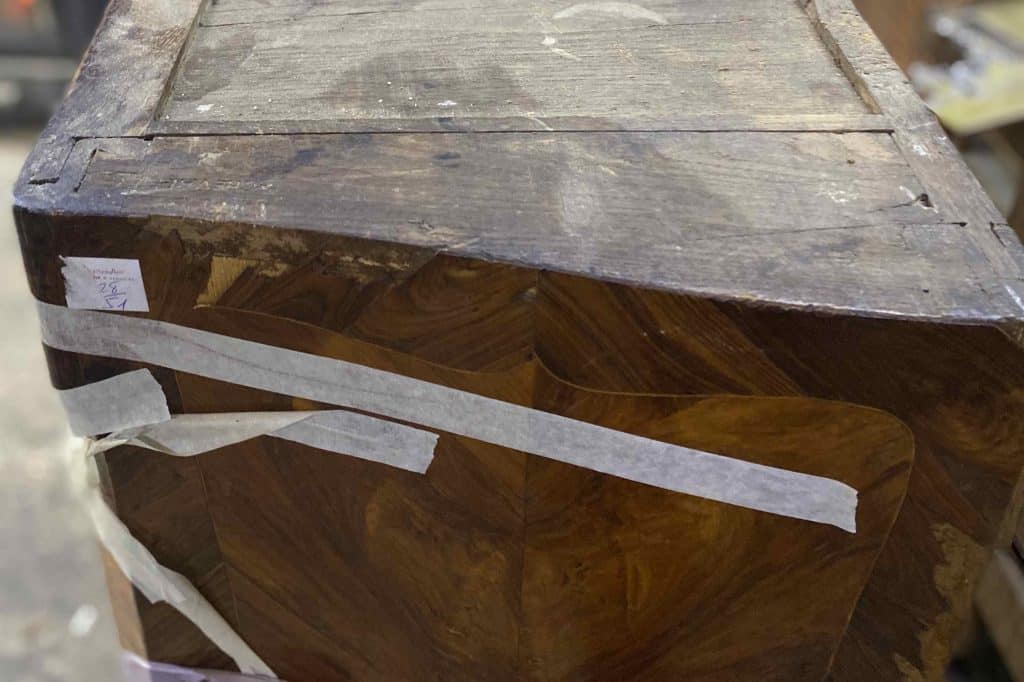
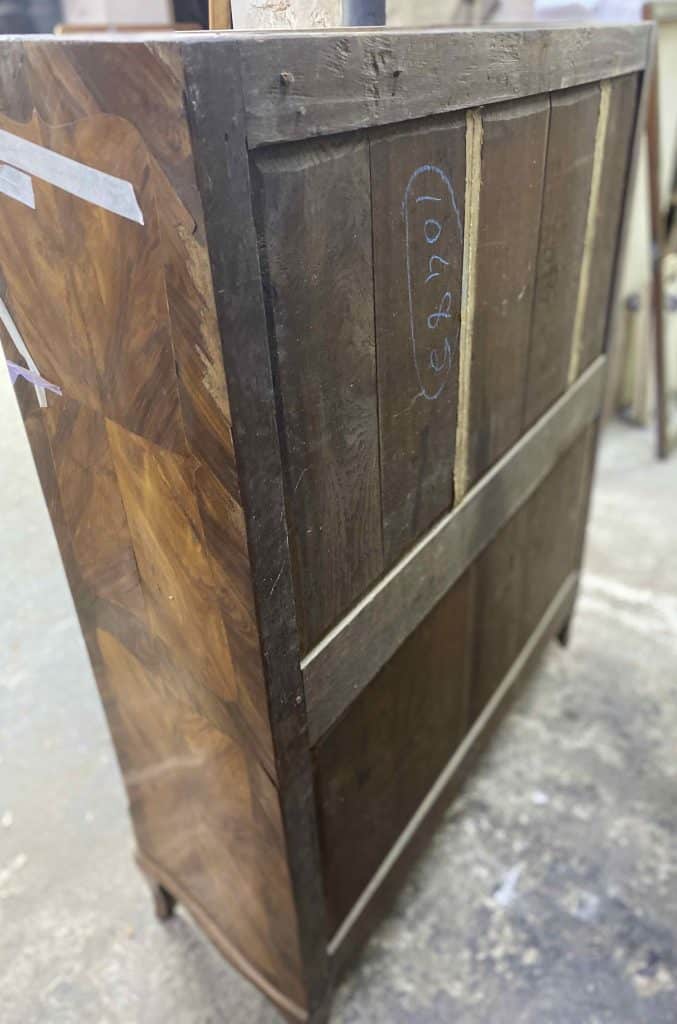
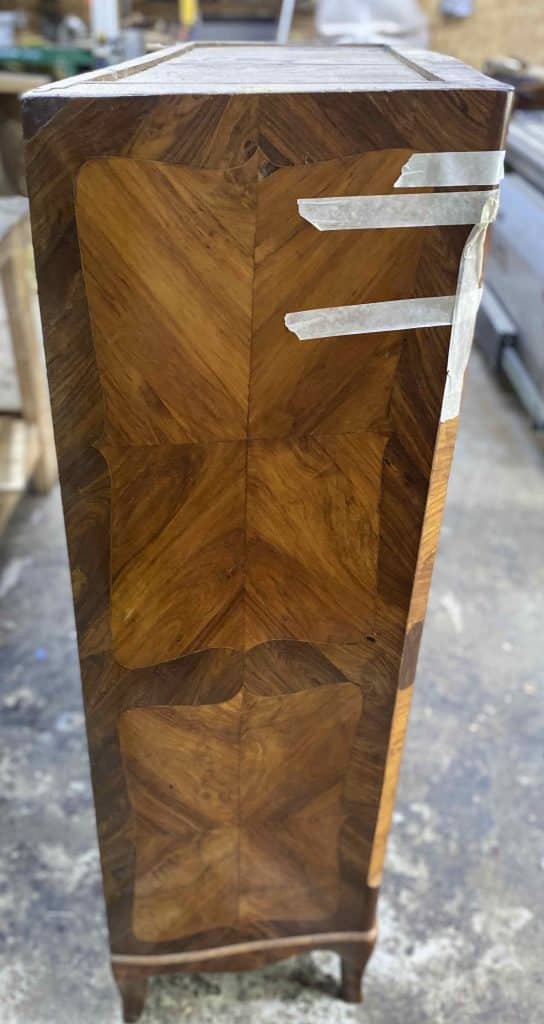
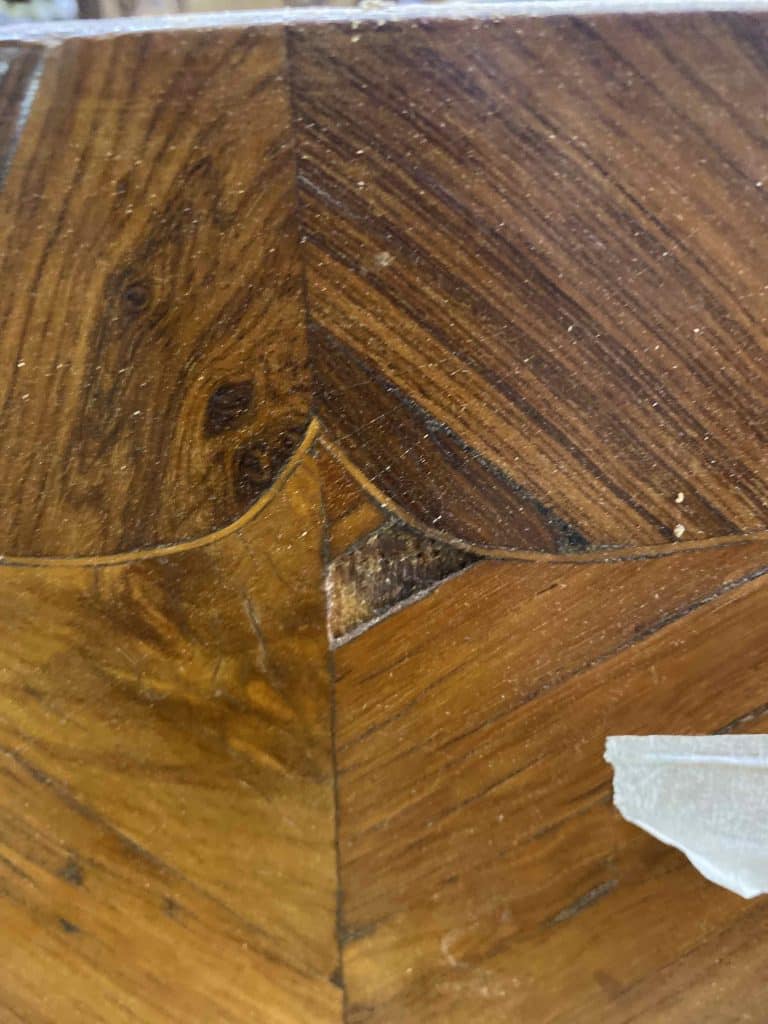
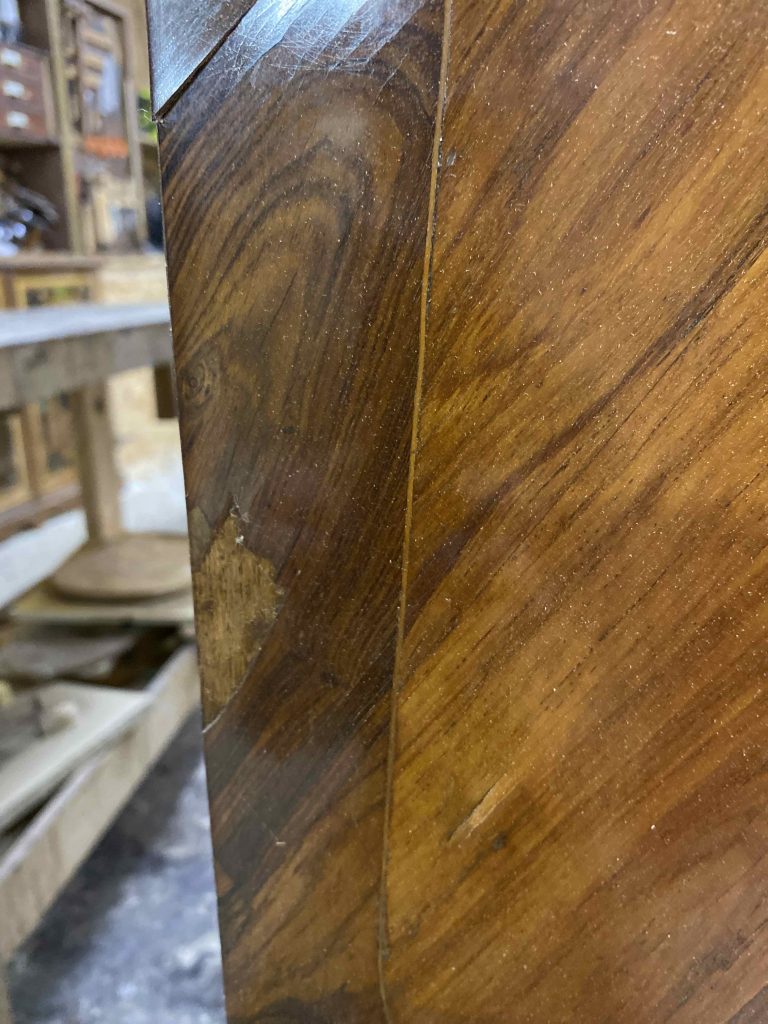
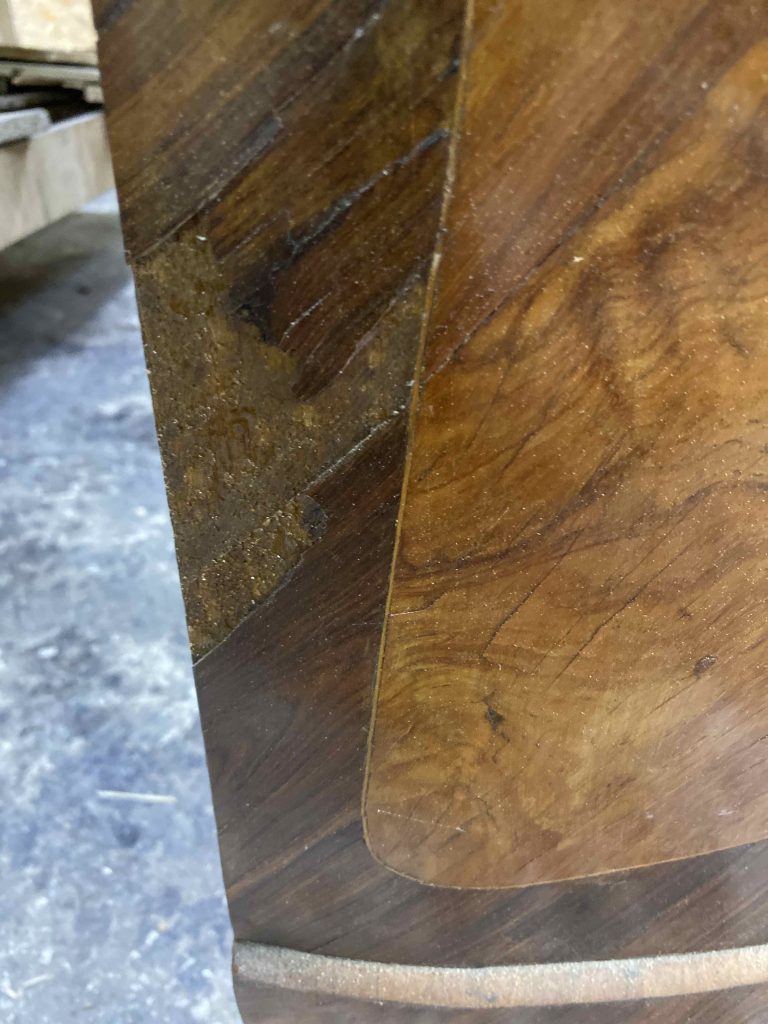
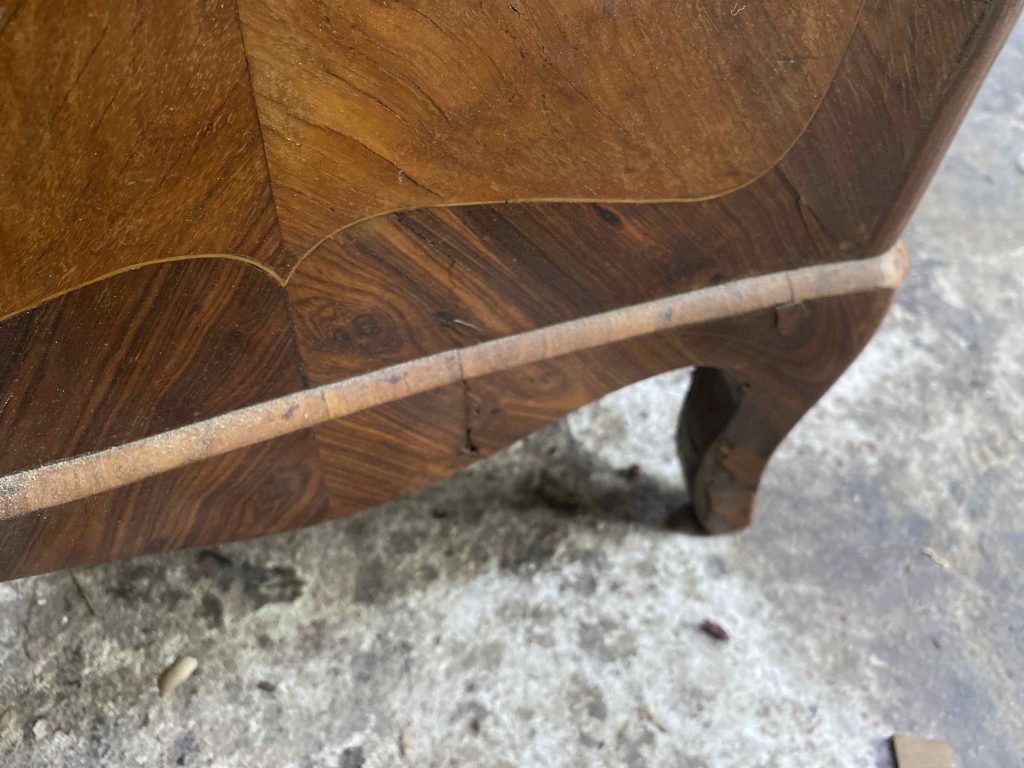
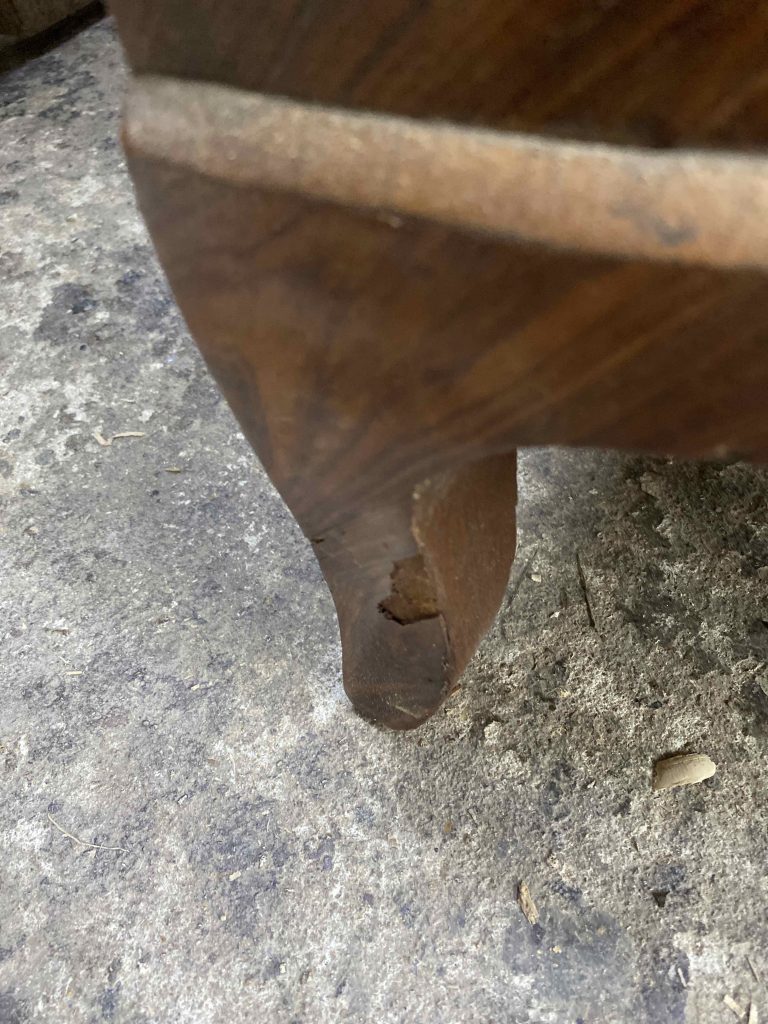
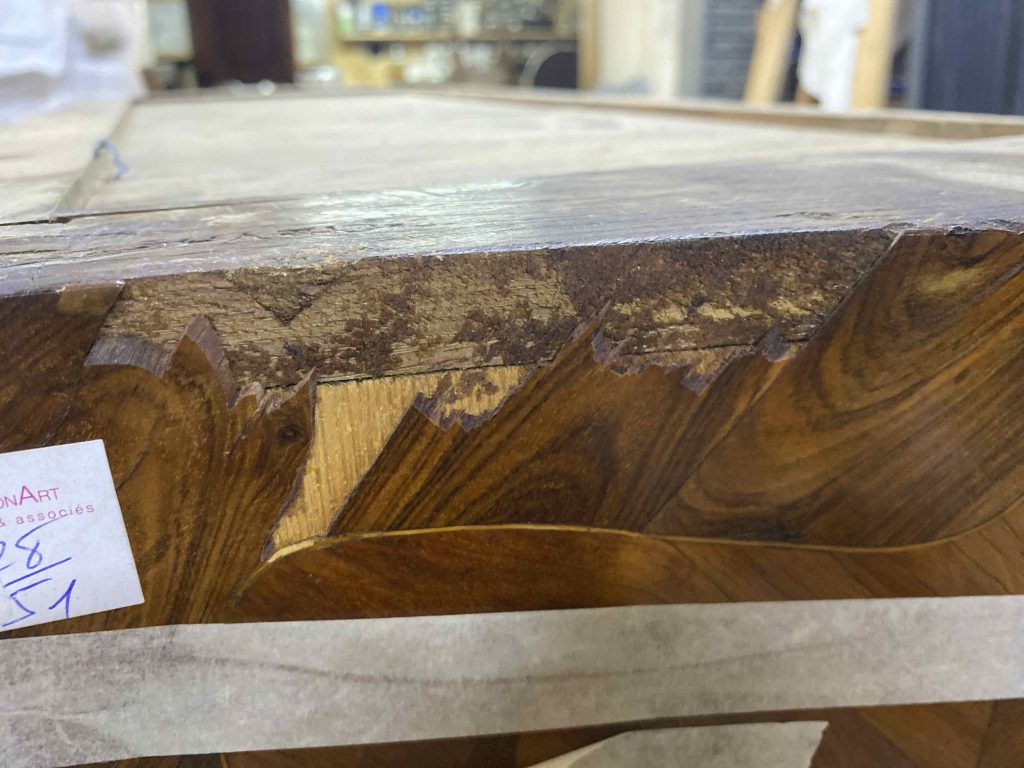
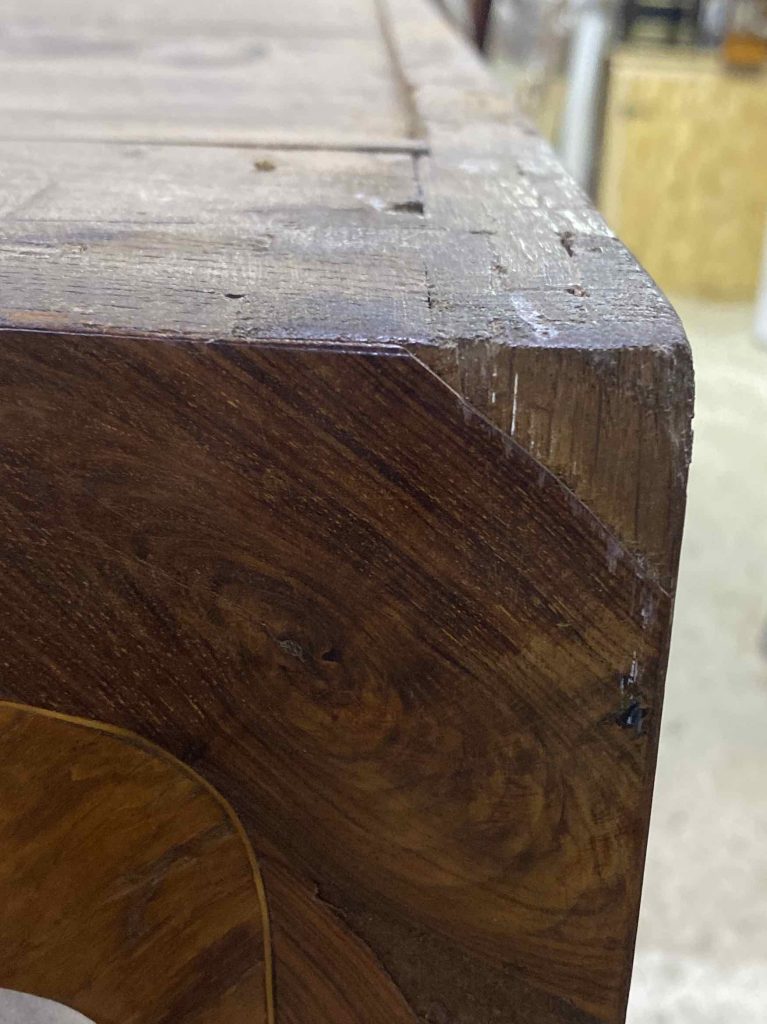
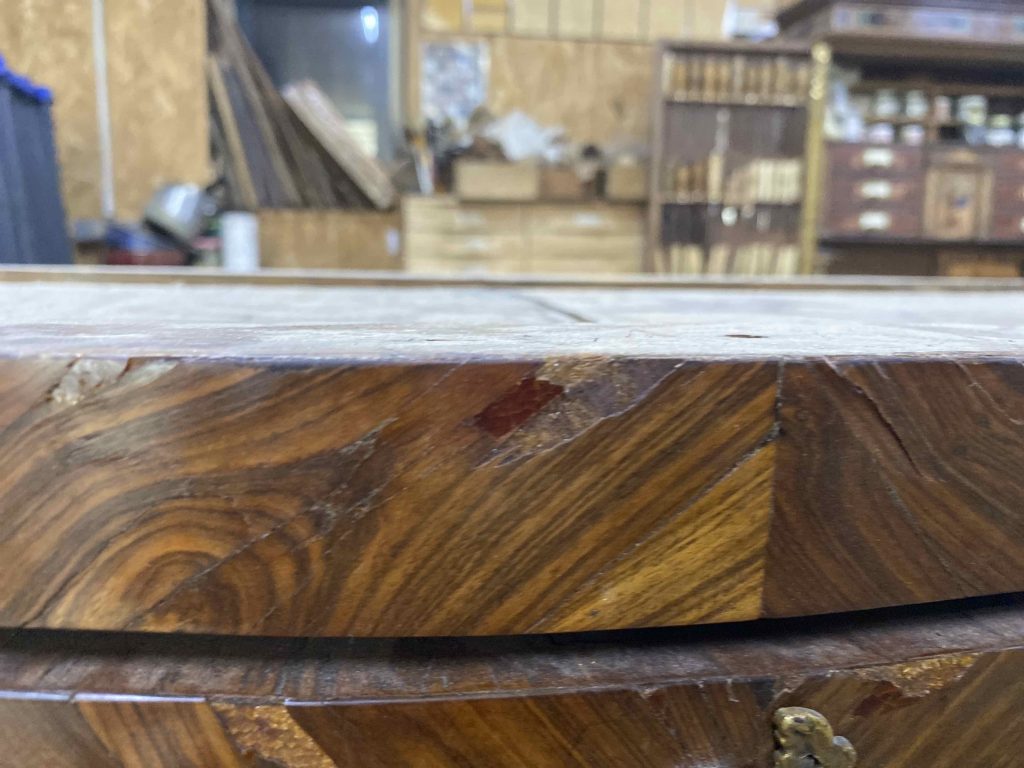
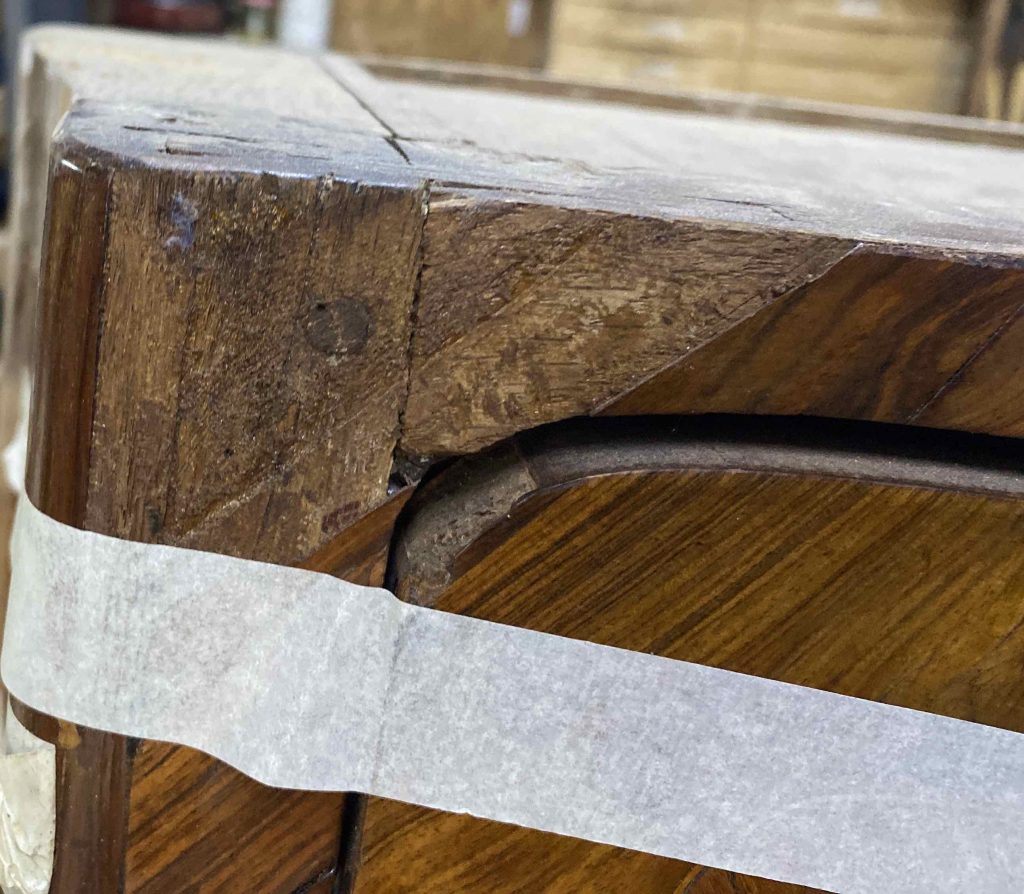
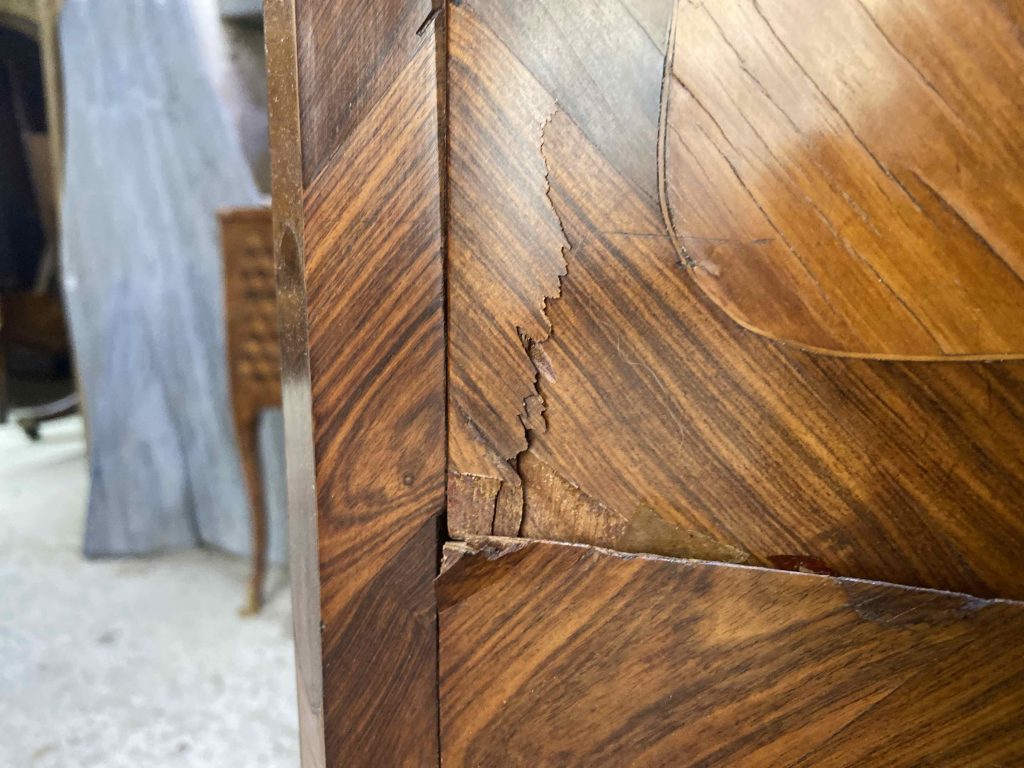
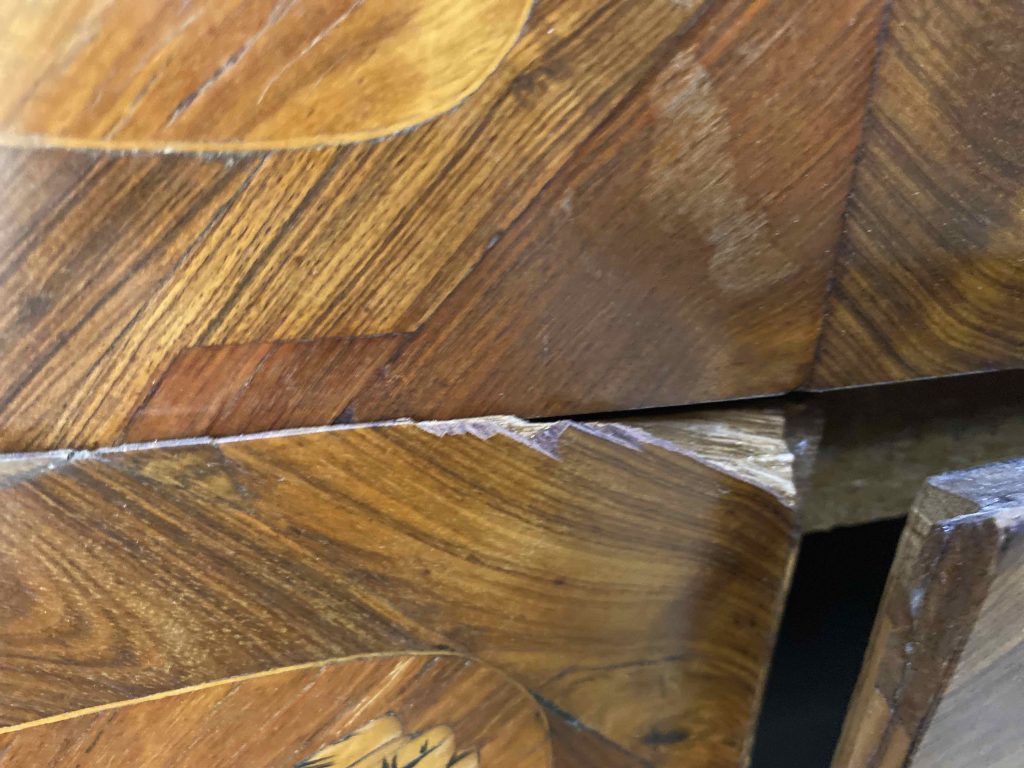
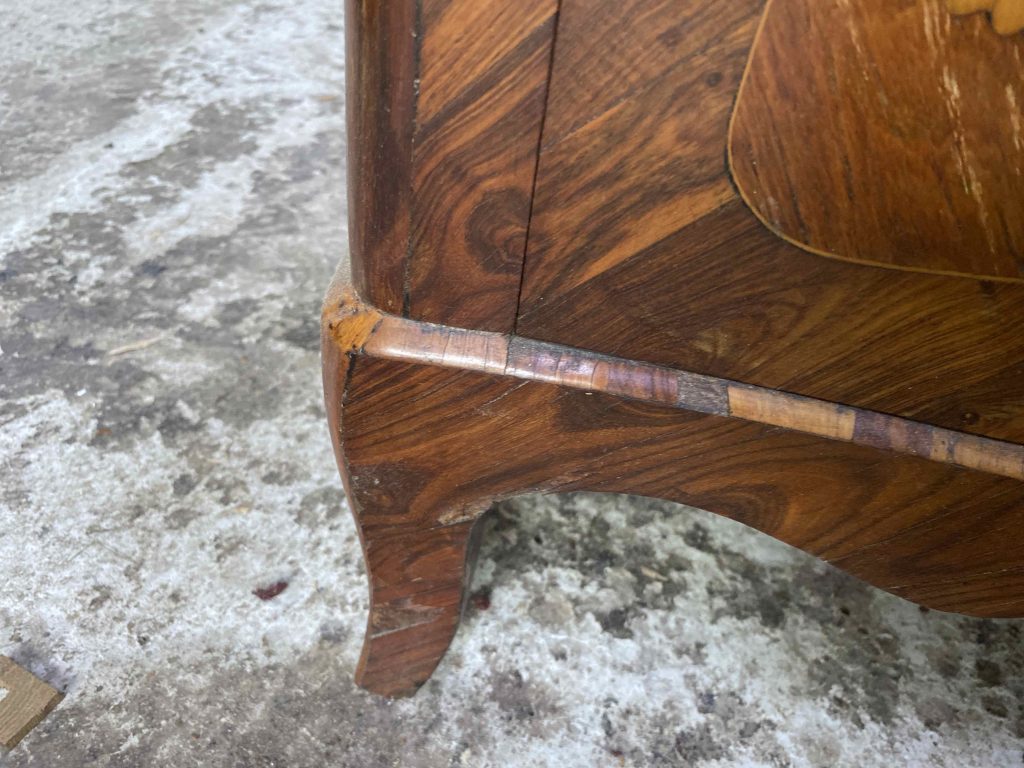
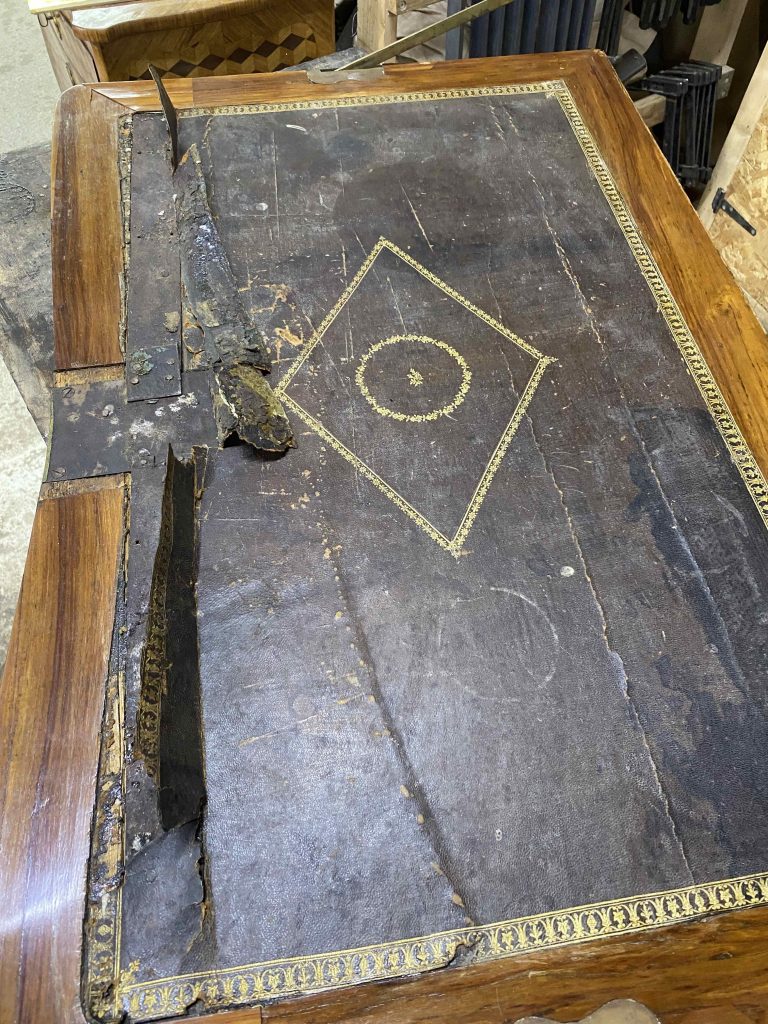
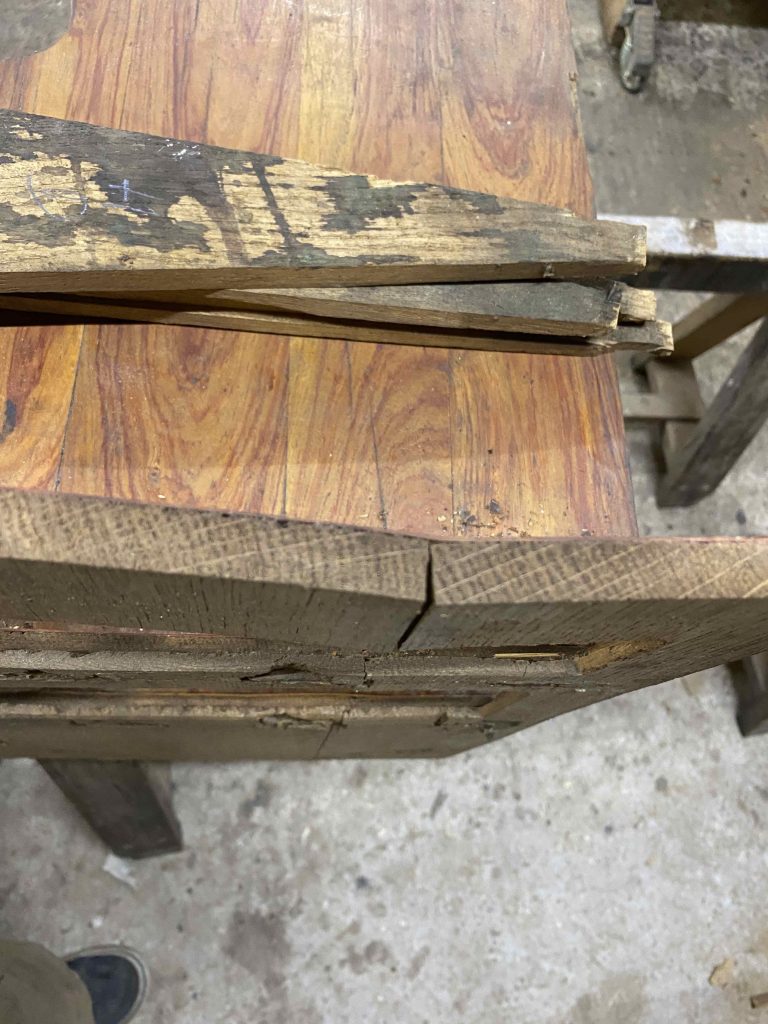
This secretary desk arrived at the workshop in rather poor condition. The frame was wobbly, the joints were broken or heavily decorated. There were numerous missing violet wood veneers. The hinges of the drop-front were broken and non-functional. The drop-front lock needed servicing, and all the panels were detached.
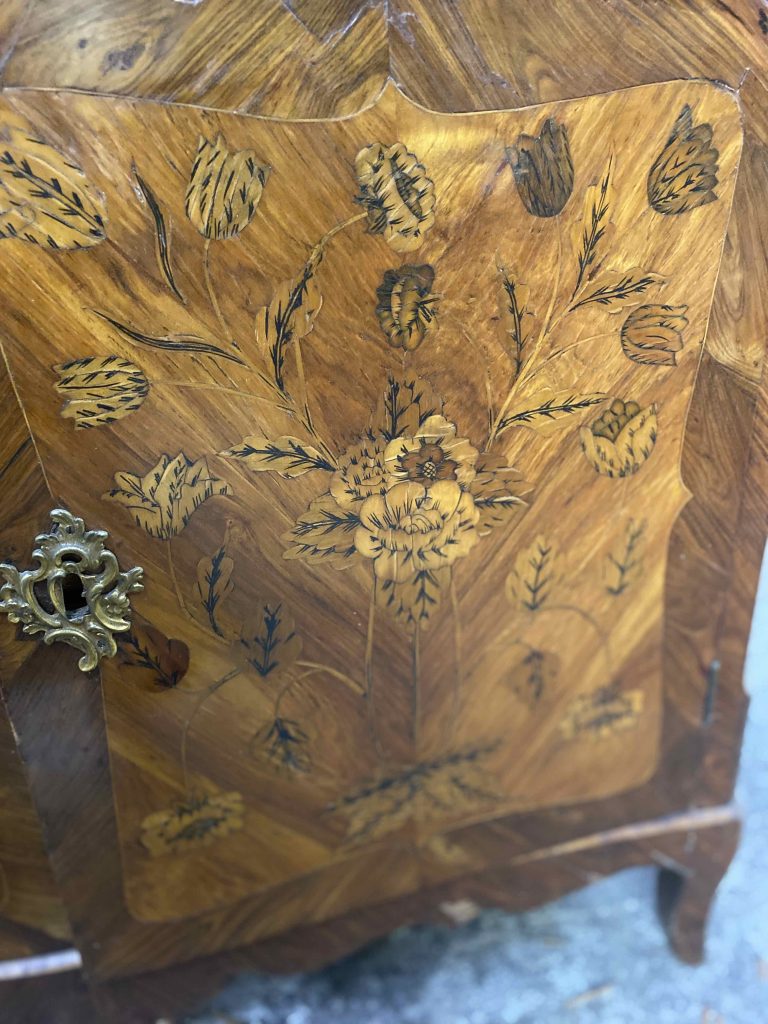
In contrast, the marquetry on the facade was in very good condition with extremely well-preserved engraving.
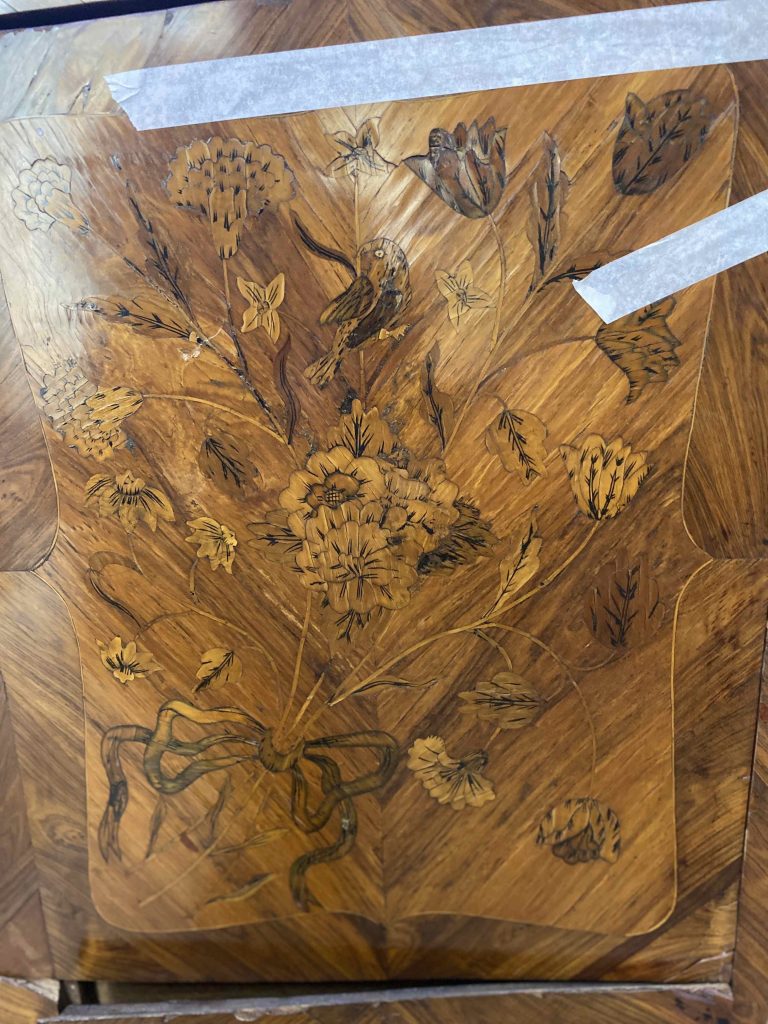
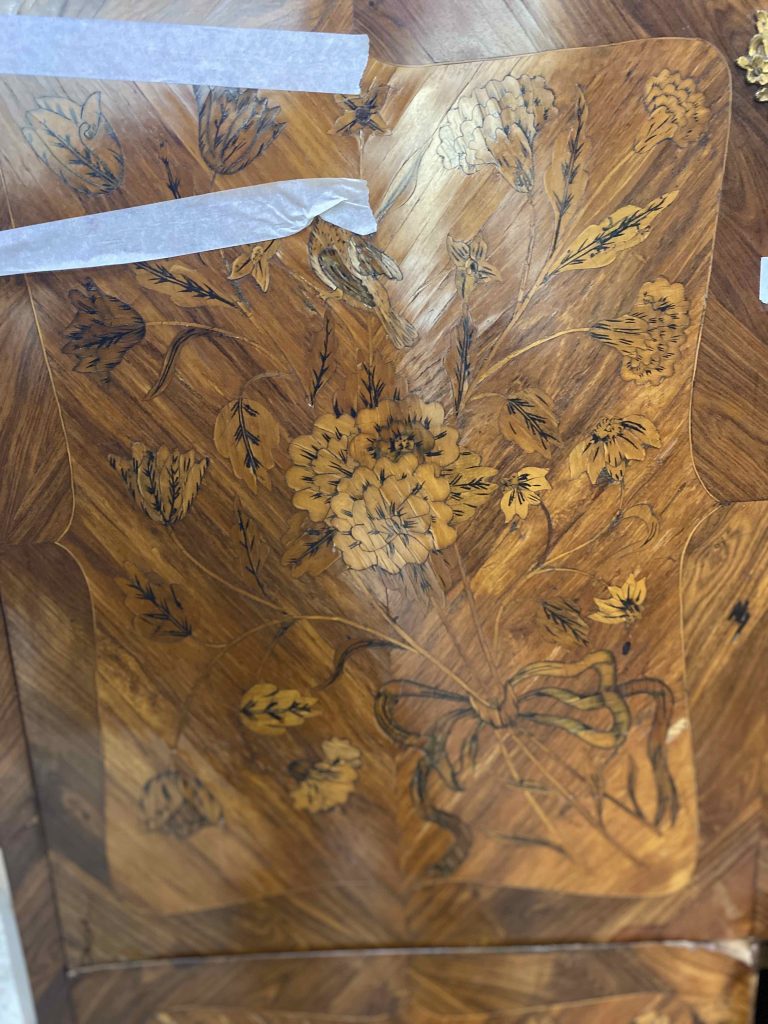
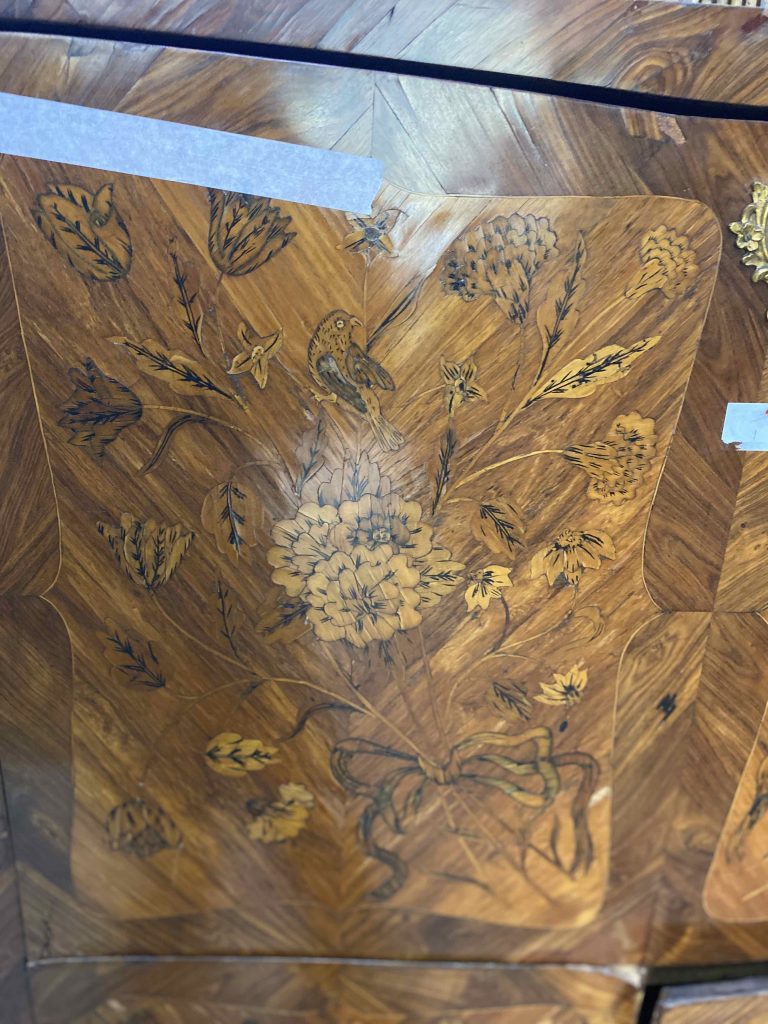
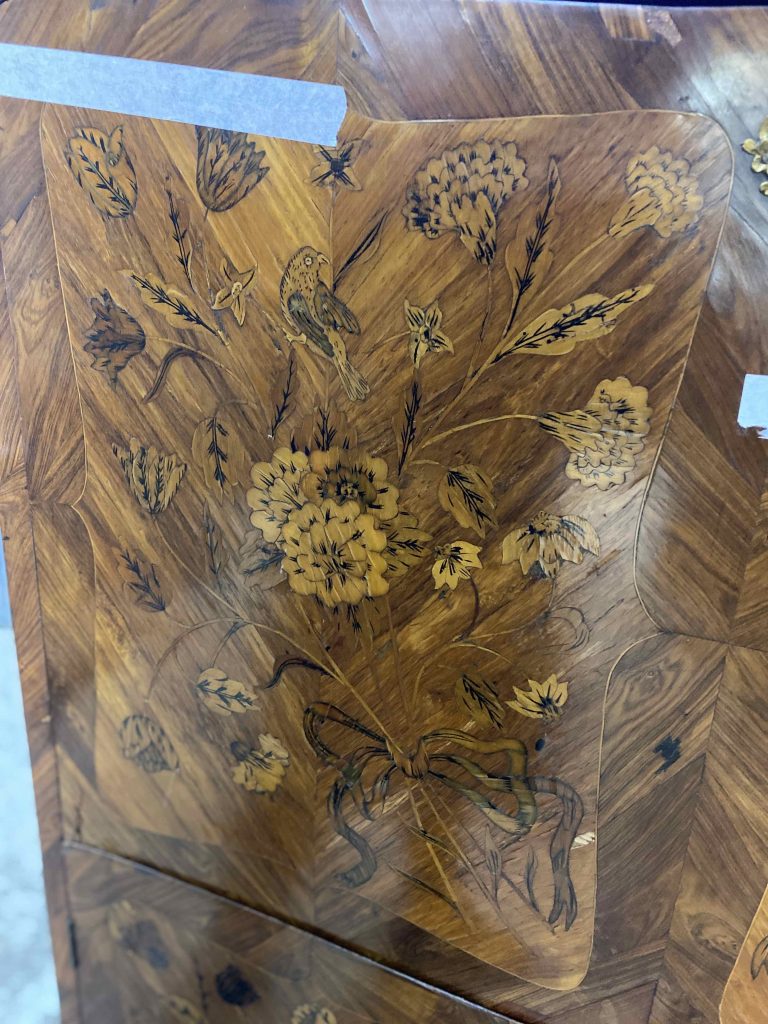
The Restoration
The restoration work consisted of replacing the missing veneer with new, sawn violet wood veneer, which was scraped, sanded, oxidized, and cut to the correct thickness as a backing before being glued back in place with hot glue. All veneered surfaces were rehydrated under vacuum by infiltration of glue and the placement of a shaped shim with a slight application of heat.
All the locksmithing and pivoting elements of the flap and leaves have been restored to good working order and adjusted.
The old varnish was then thinned and reapplied with a colorless French polish. Between coats, the blue tint was enhanced to approximate the original brilliance of the marquetry.
The bronzes were cleaned with steam.