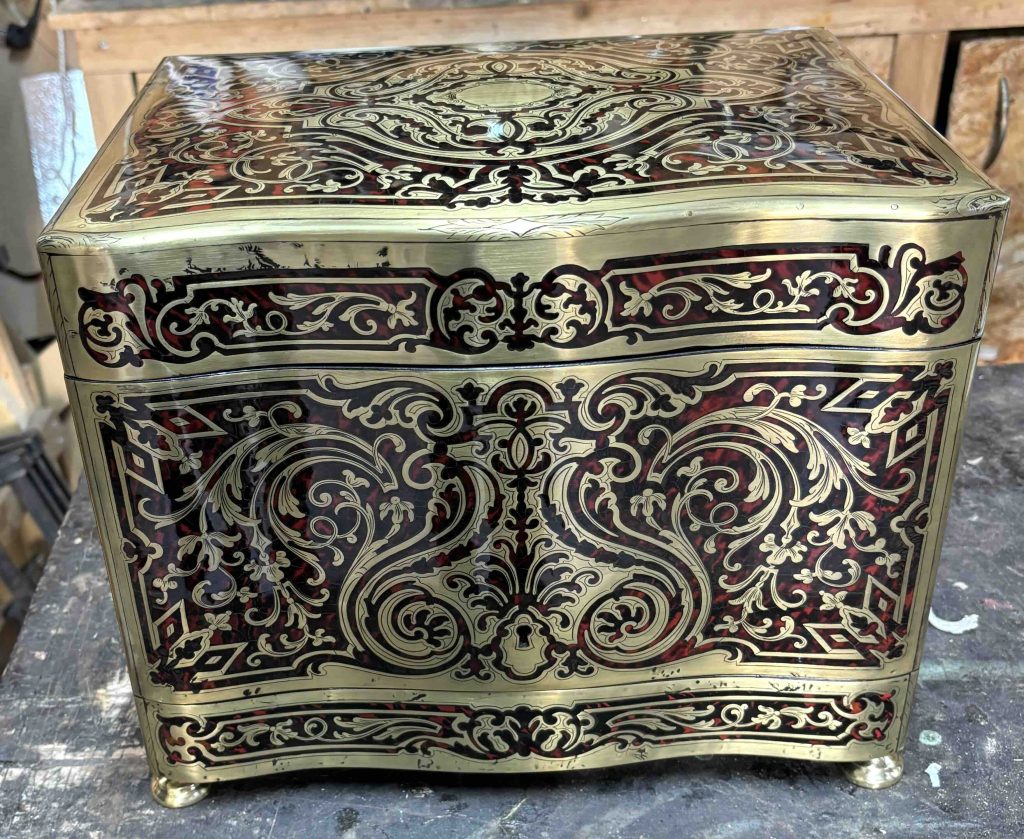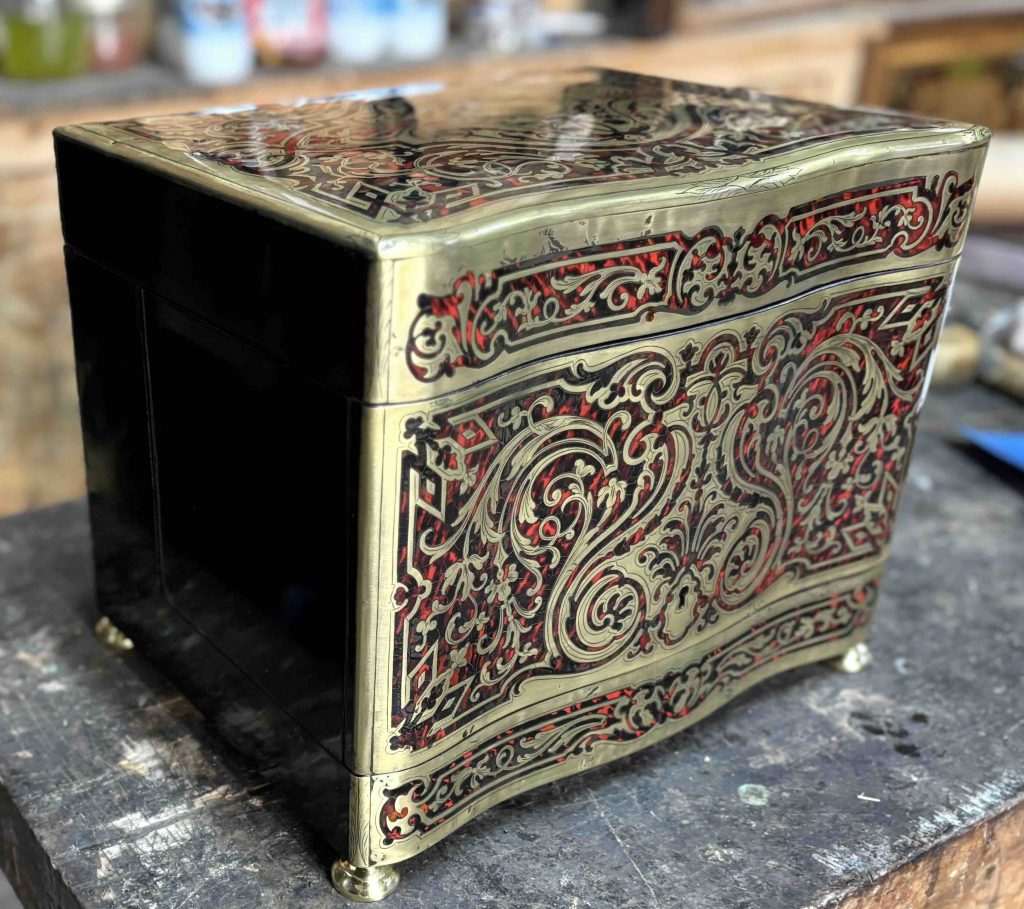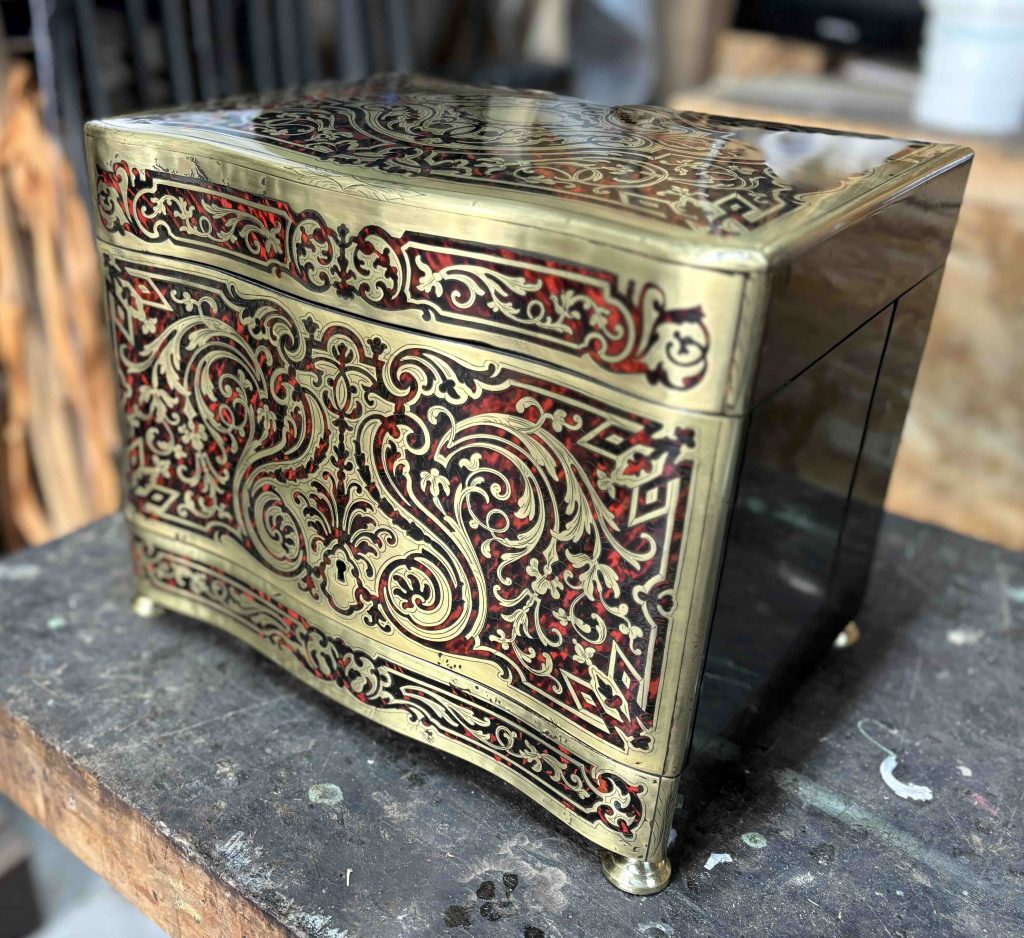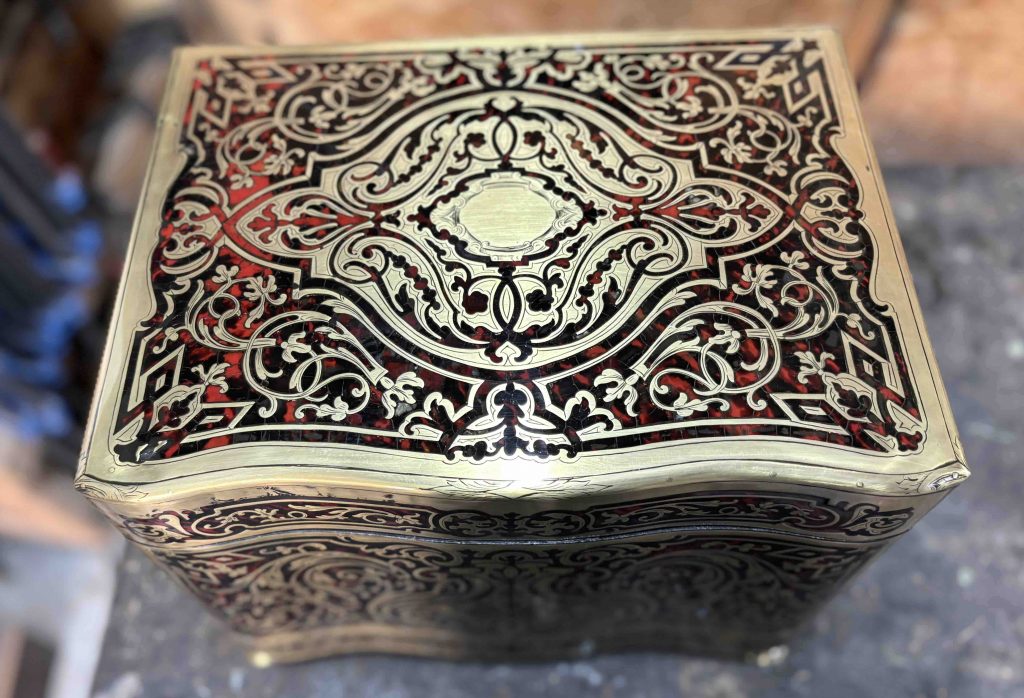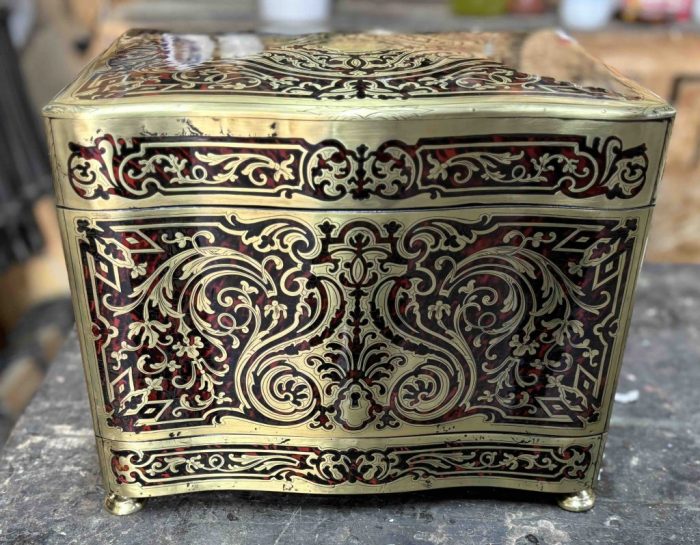
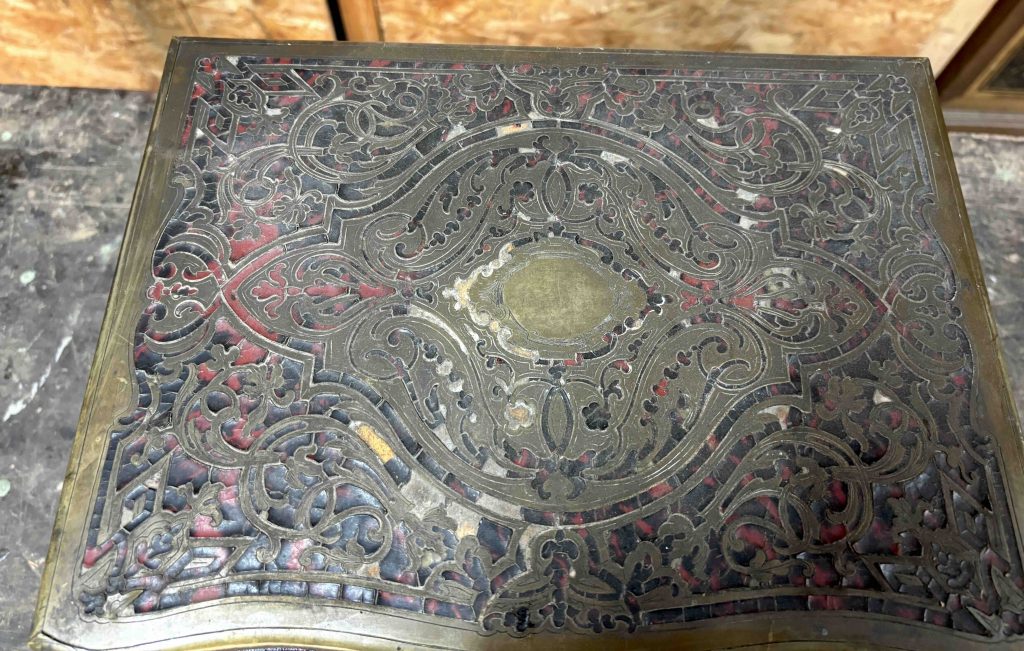
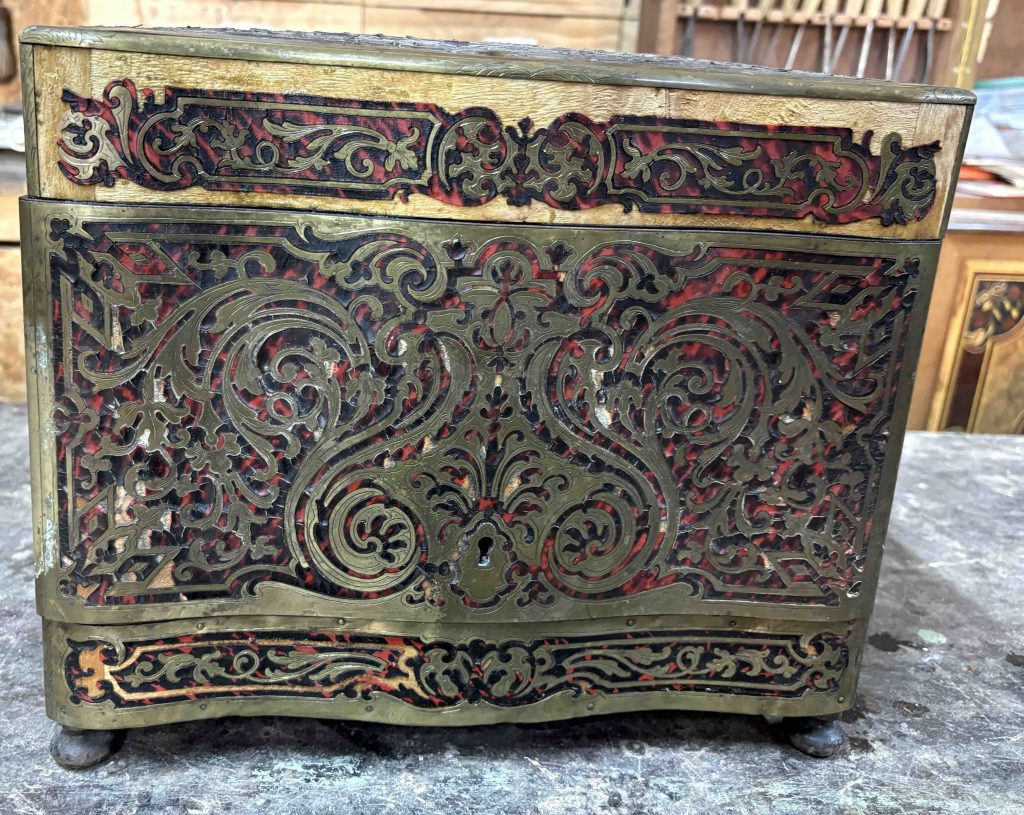
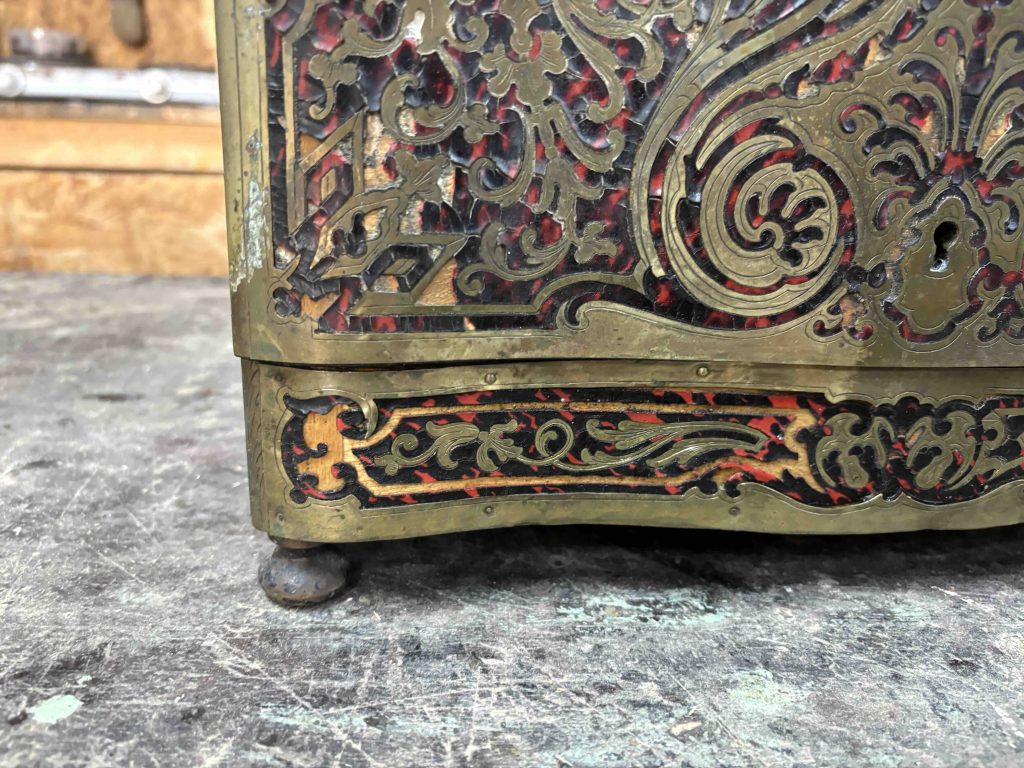
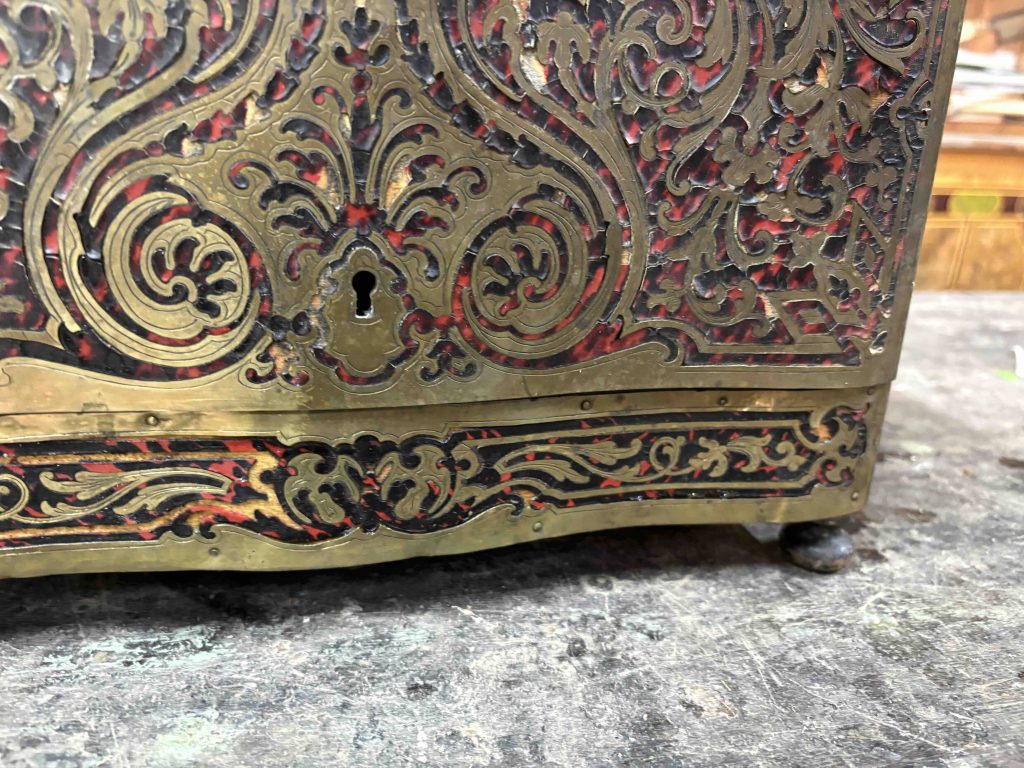
Restoration of a Napoleon III liquor cabinet in tortoiseshell and brass marquetry.
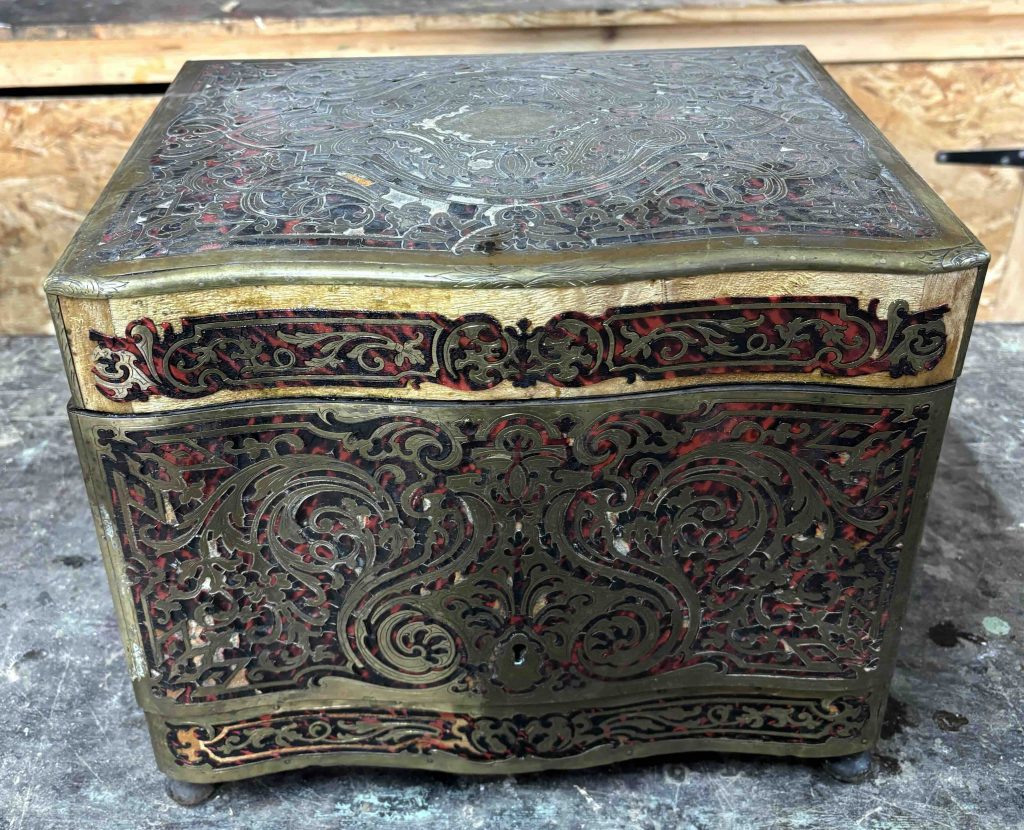
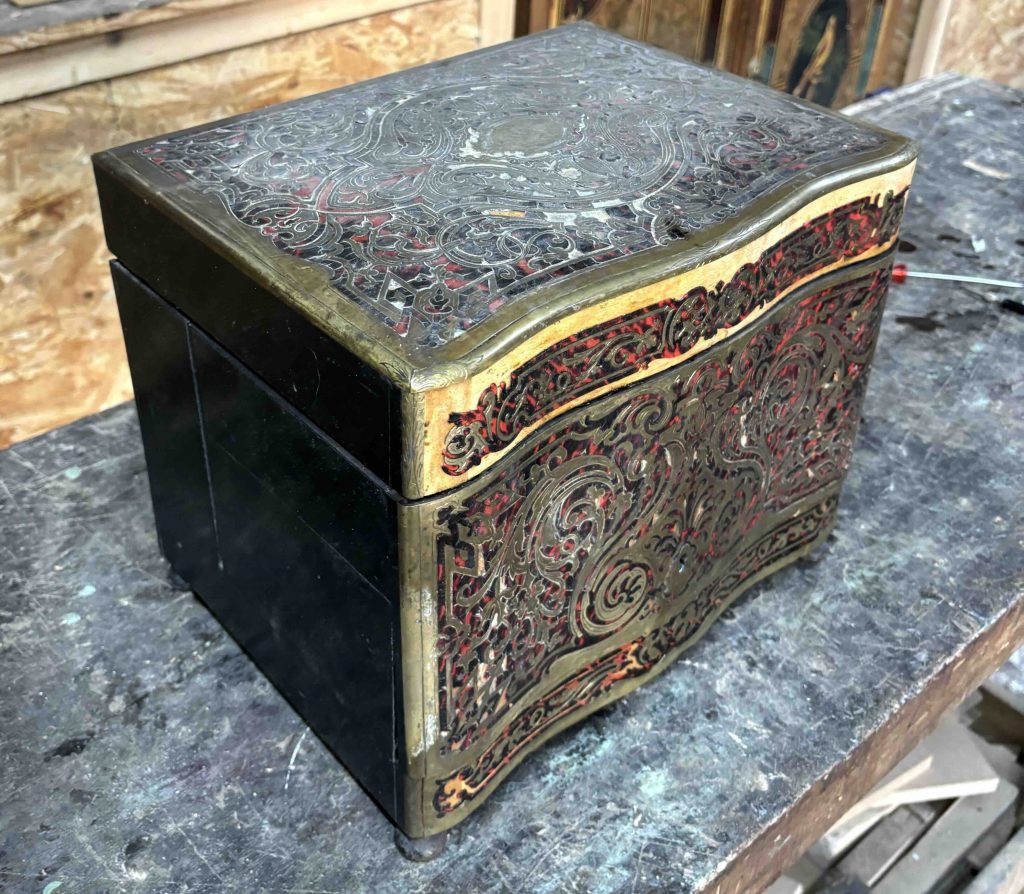
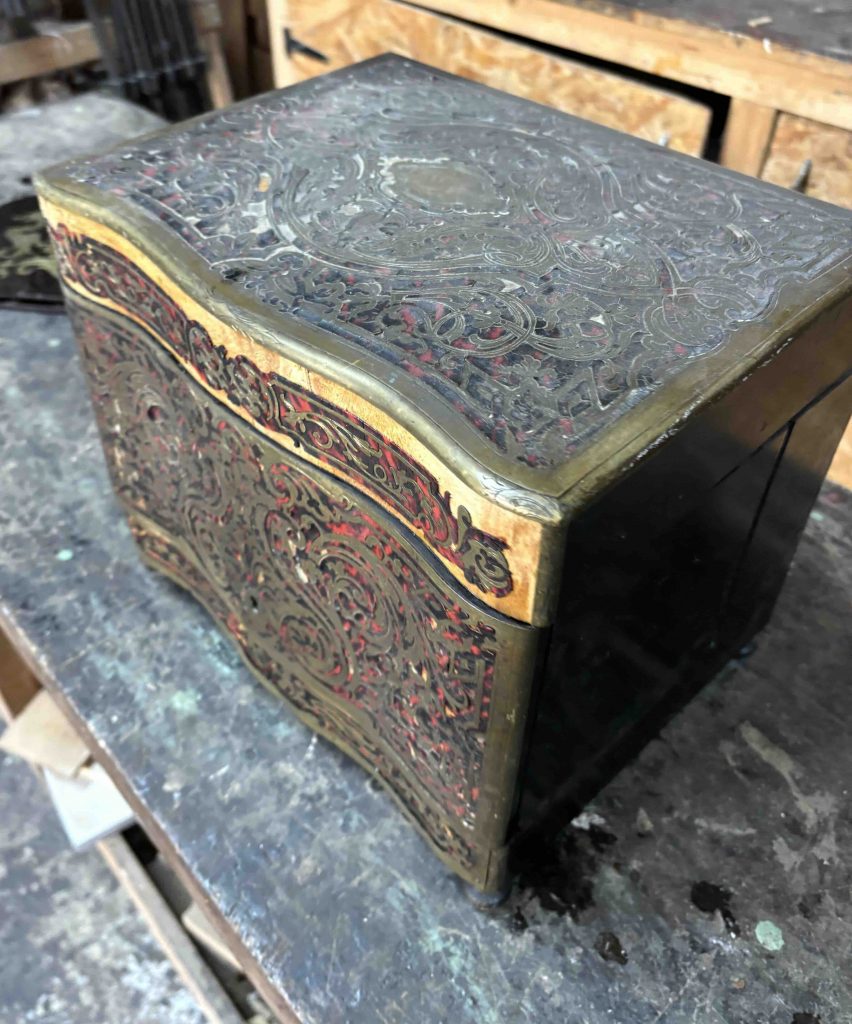
The liquor cellar
An elegant and ingenious piece of furniture, it first appeared at the end of the 18th century. Initially designed to accompany long carriage journeys, it allowed for the easy transport and consumption of liqueurs. Its true rise in popularity, however, occurred in the 19th century, a period during which it became a symbol of refinement and the French art of living.
This piece of furniture takes the form of a box, called a "caisson," whose sides open to create a display case. The interior reveals a complete set of glasses and decanters, often made of fine materials such as exquisitely crafted crystal (cut, gilded, or enameled). Some liquor cabinets are equipped with locks or ingenious mechanisms. They are generally placed in living rooms, on mantelpieces, chests of drawers, or game tables, thus contributing to the convivial atmosphere and the presentation of the tasting experience.
The rise of the liqueur cellar is intrinsically linked to the evolution of alcohol consumption practices in France and Europe. At that time, the consumption of diverse alcoholic beverages, such as sweet wines, brandies, cognac, and fruit and herbal liqueurs, was common. Until the 1840s, liqueur production was primarily artisanal, based on the maceration of fruit and brandy. Sweet flavors, particularly popular with female customers, were then predominant. The gradual industrialization of the 19th century fostered the development of the liqueur trade, which gradually became integrated into the consumption habits of the middle class. The emergence of major brands and the codification of consumption practices resulted in a male preference for strong spirits and a greater female consumption of sweet liqueurs.
In this socio-economic context, the liquor cabinet became an essential decorative and functional element of bourgeois interiors. Its aesthetic evolved significantly over the course of the century. During the Restoration period, sobriety of form prevailed. The Empire period, however, marked a turning point towards more elaborate and sophisticated decoration. Craftsmen demonstrated remarkable creativity by using precious woods, complex marquetry such as Boulle marquetry, as well as bronze ornaments and original shapes. Some liquor cabinets even incorporated sophisticated mechanical devices, such as elaborate opening systems or musical boxes, testifying to the technological innovation of the era.
One of the most remarkable features of a liquor cabinet is its glassware, often of exceptional quality, made of crystal by renowned manufacturers such as Baccarat or Saint-Louis. The glasses and carafes can be cut, twisted, gilded with fine gold, and sometimes colored under the influence of Bohemian crystal.
The liquor cabinet thus transcends its utilitarian function to embody the luxury, conviviality and artisanal know-how of the 19th century, while reflecting the evolution of social practices and preferences in terms of alcohol consumption.