
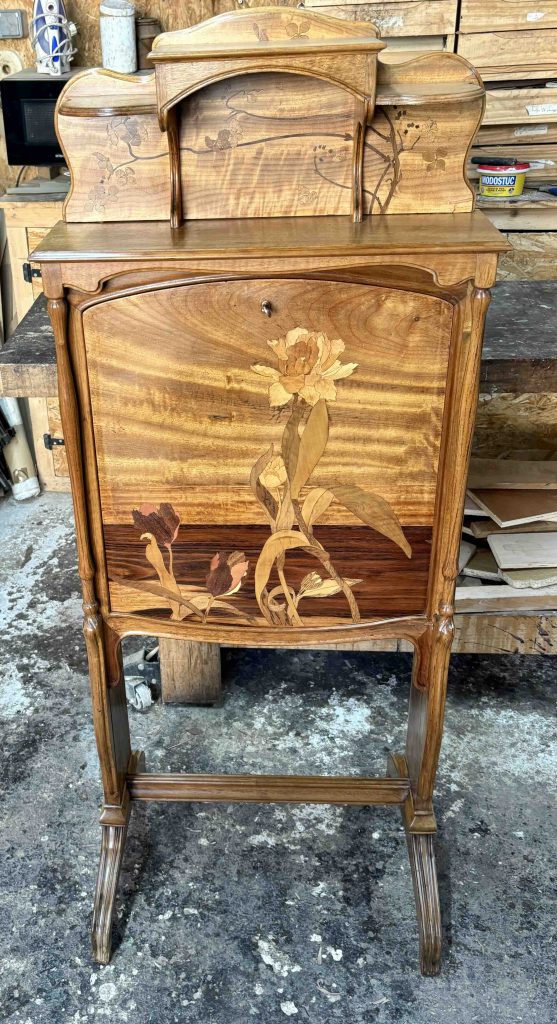
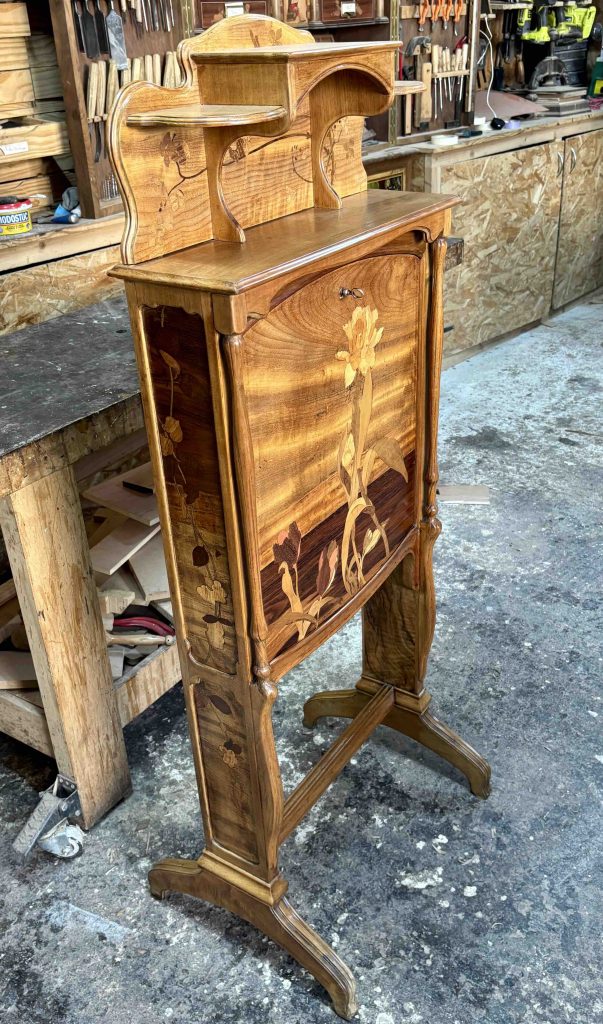
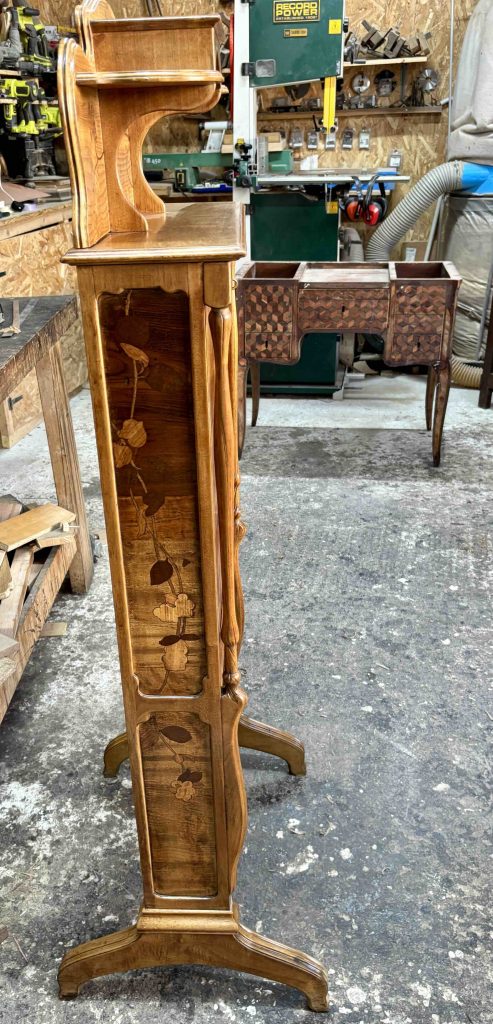
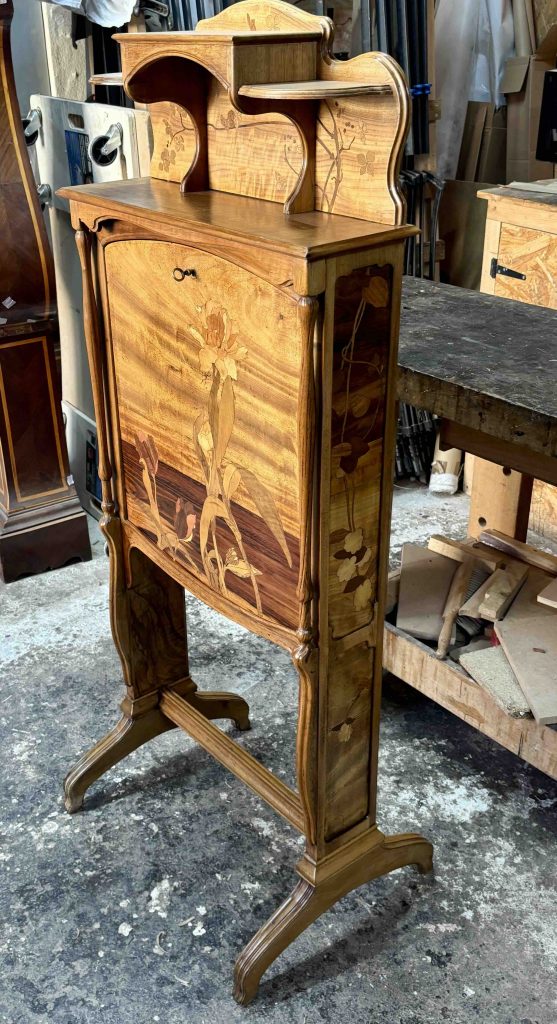
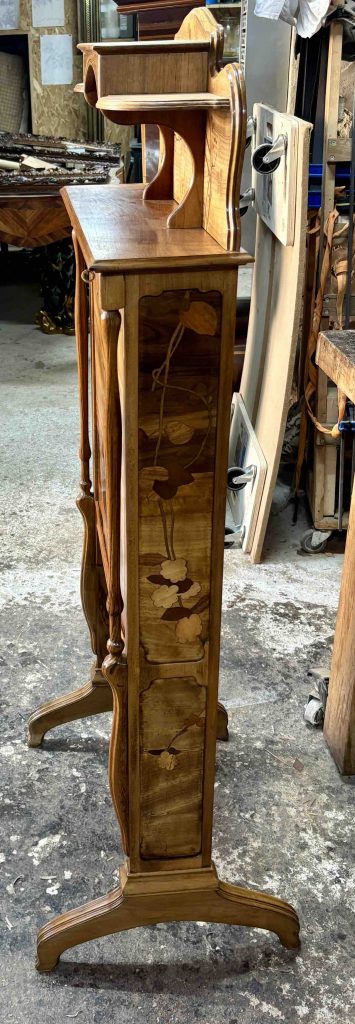
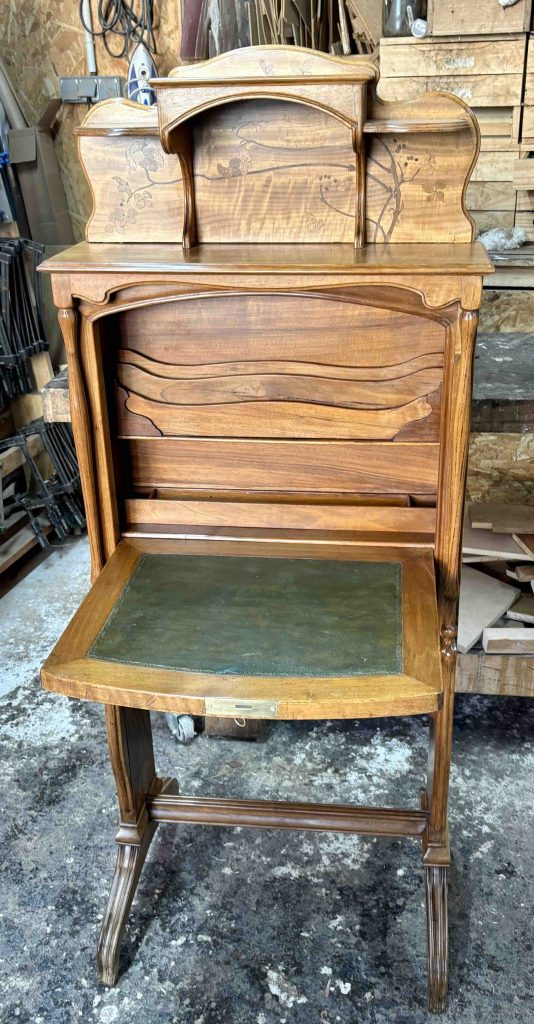
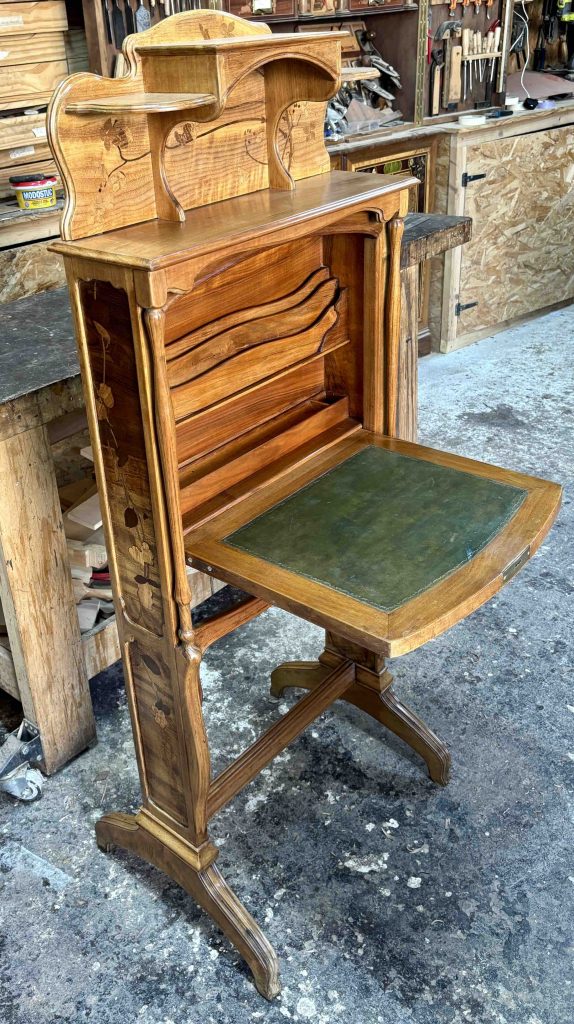
Congratulations to Léo, an intern, who, within our workshop, carried out his first restoration on a lady's secretary, also known as a "billet doux", adorned with the stamps of Louis Majorelle.
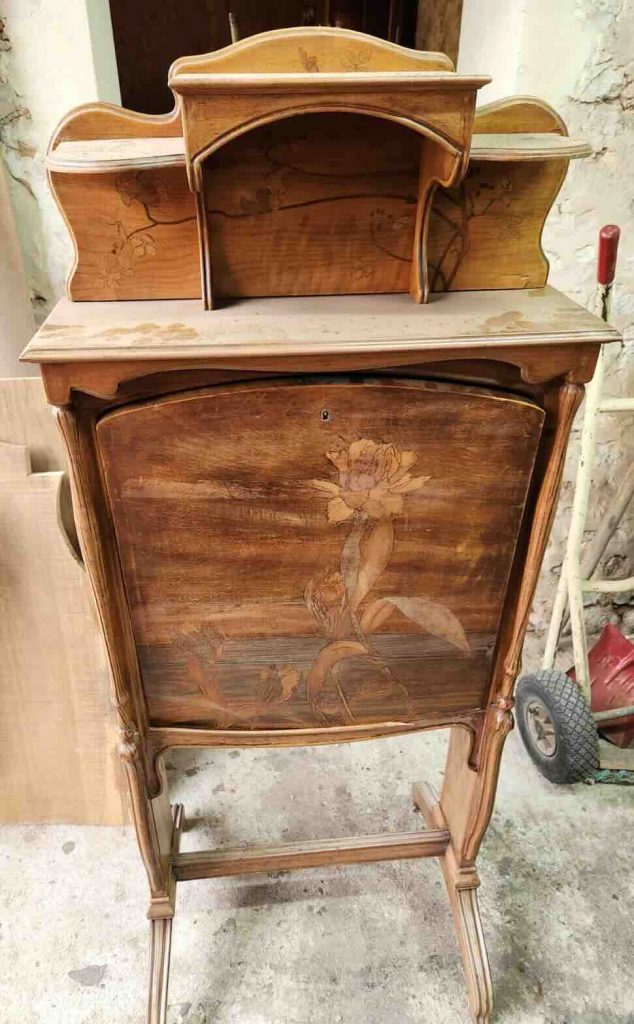
Love note
The love letter writing desk originated in France at the end of the 18th century, developing particularly during the reign of Louis XVI and the Restoration period (late 18th – early 19th century). It is an intimate and refined piece of furniture, designed specifically for correspondence, and often intended for boudoirs or bedrooms. Louis Majorelle, an emblematic figure of the Art Nouveau movement at the beginning of the 20th century, contributed to the rediscovery and popularization of this piece of furniture.
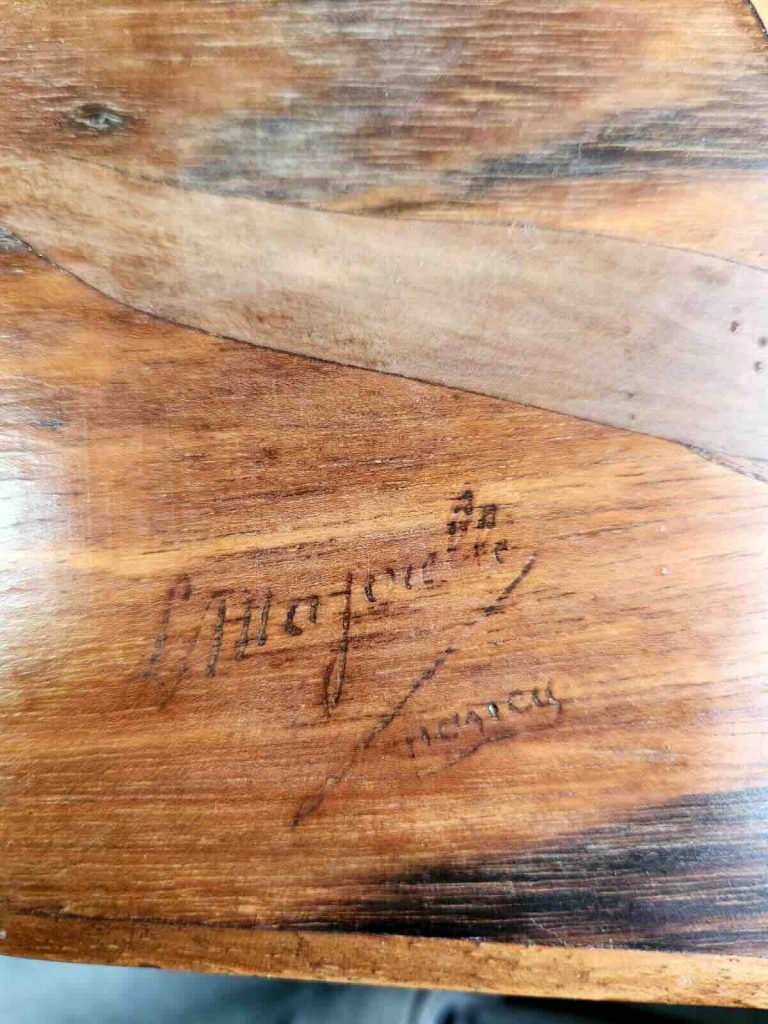
Louis Majorelle

Louis Majorelle was born in September 1859 in Toul and died in January 1926 in Nancy at the age of 66. The son of the renowned furniture designer Auguste Majorelle, he demonstrated an early and keen interest in craftsmanship and drawing. He enrolled at the École des Beaux-Arts in Nancy, where he received formal training before joining Aimé Millet's studio at the École des Beaux-Arts in Paris in 1877. Upon Auguste Majorelle's death, his sons Louis and Jules took over the family business, which at the time specialized in the design and manufacture of furniture and earthenware. After assuming the role of artistic director, Louis Majorelle later decided to open his own shop in Nancy. Even today, he is known for his significant contribution to the Art Nouveau movement in Nancy.
At the beginning of his career, when he took over the family business, Louis Majorelle acquired a solid foundation of knowledge thanks to the training he received from his father's workers. A few years later, he was ready to assume the artistic direction of the company. From then on, Majorelle paid homage to his father's furniture, primarily creating Louis XV style copies that met with immense success. Louis Majorelle exhibited his creations on several occasions and even received a silver medal in the "luxury affordable furniture" category at the 1889 Paris Universal Exposition.
Very quickly, Louis Majorelle managed to break free from these influences and move towards a more personal aesthetic. From the late 1990s onwards, the artist became interested in the work of...’Émile Gallé, Louis Majorelle, the renowned French glassmaker and cabinetmaker, began to embrace the Art Nouveau style. He opted for a fluid, naturalistic, and symbolist aesthetic, incorporating elements such as stemmed plants, water lilies, thistles, and dragonflies, sometimes intertwined. While Louis Majorelle is primarily known for his cabinetmaking, in 1897 he built a workshop specializing in metalwork to create bronzes for his furniture and lighting fixtures. Throughout his career, he also exhibited ceramics and glassware.
Condition assessment and restoration
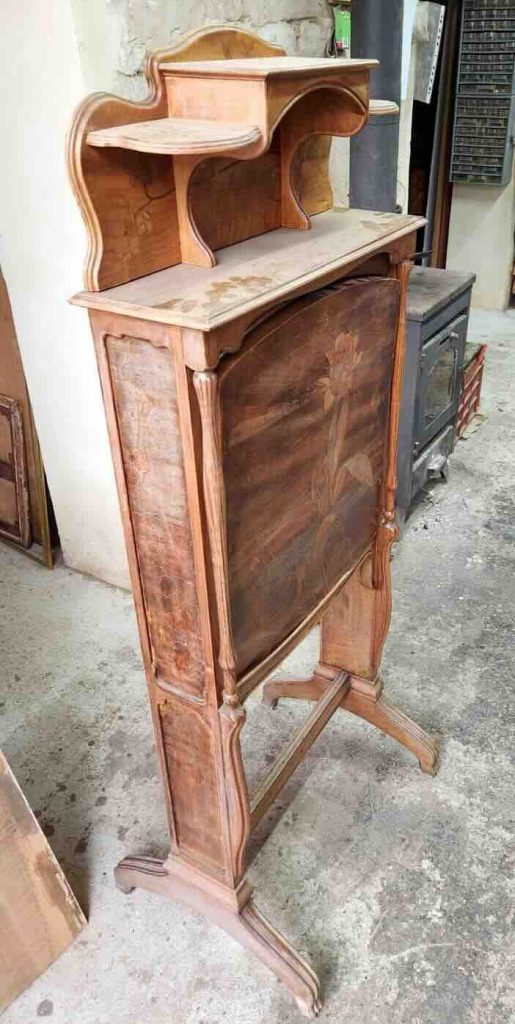
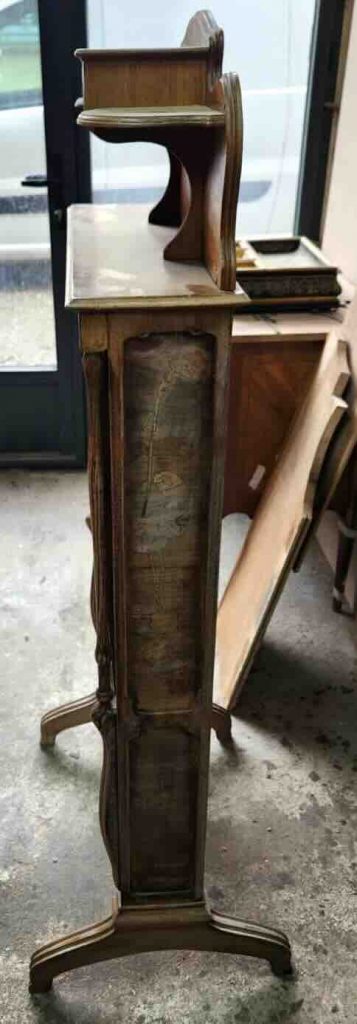
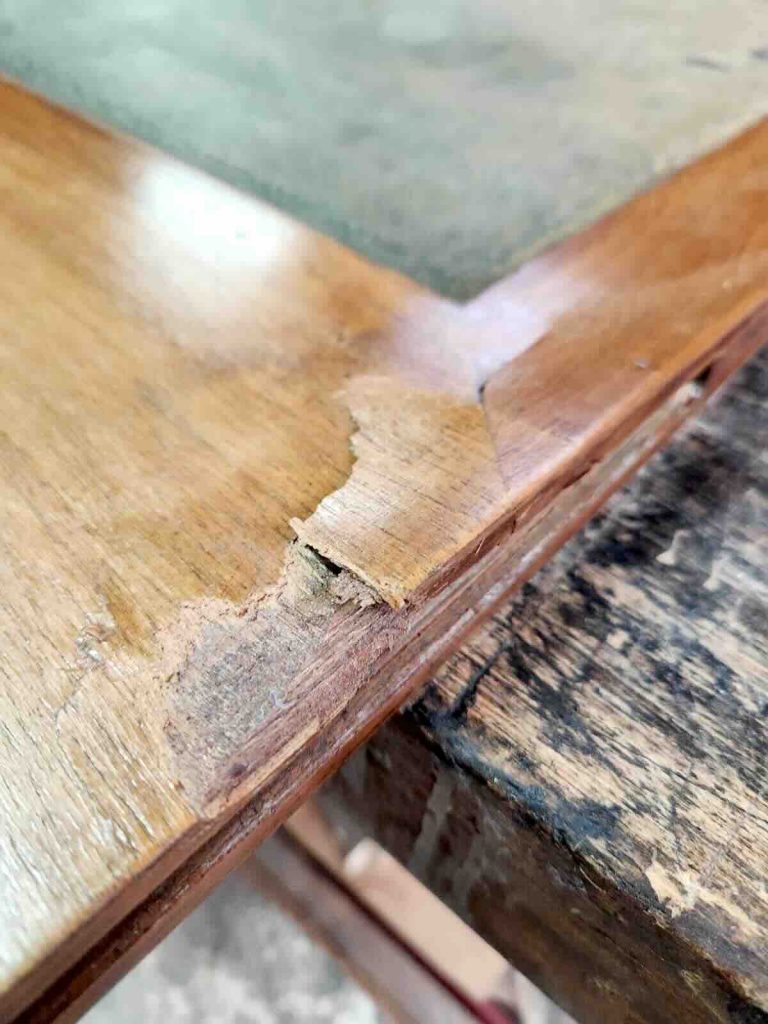
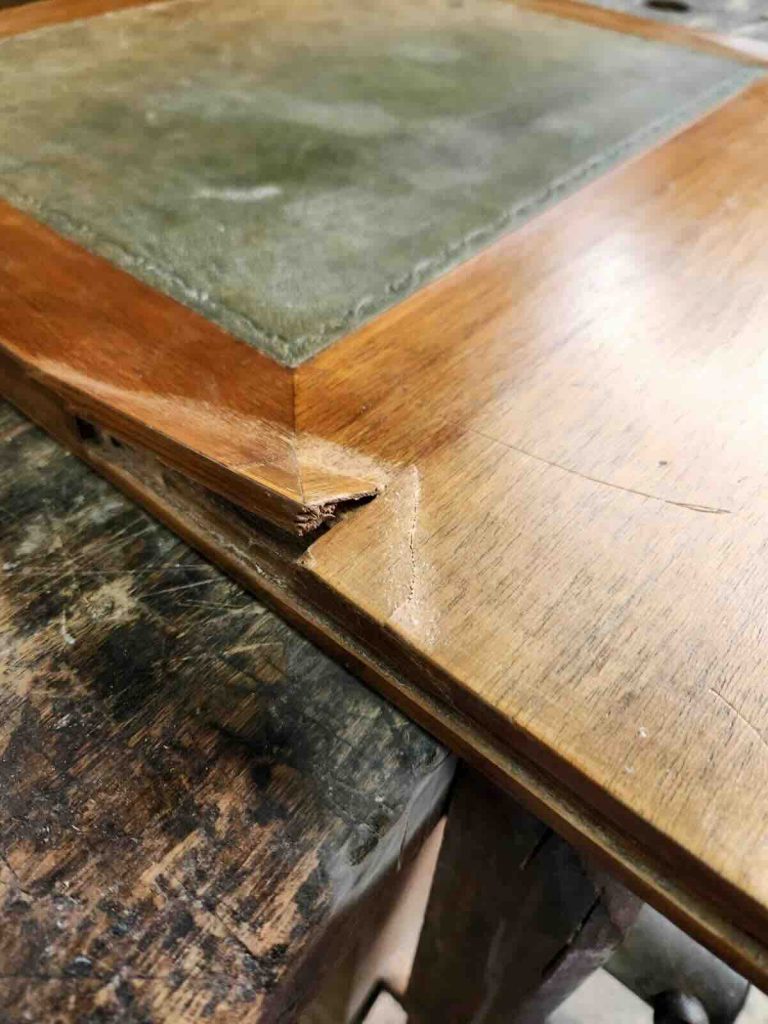
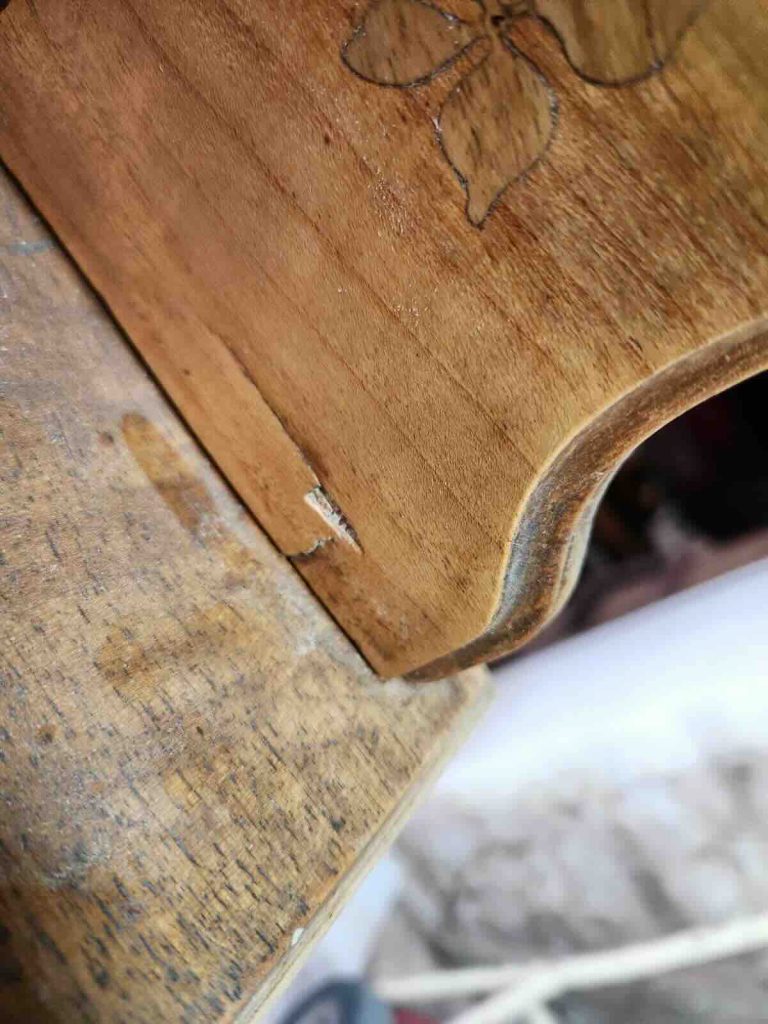
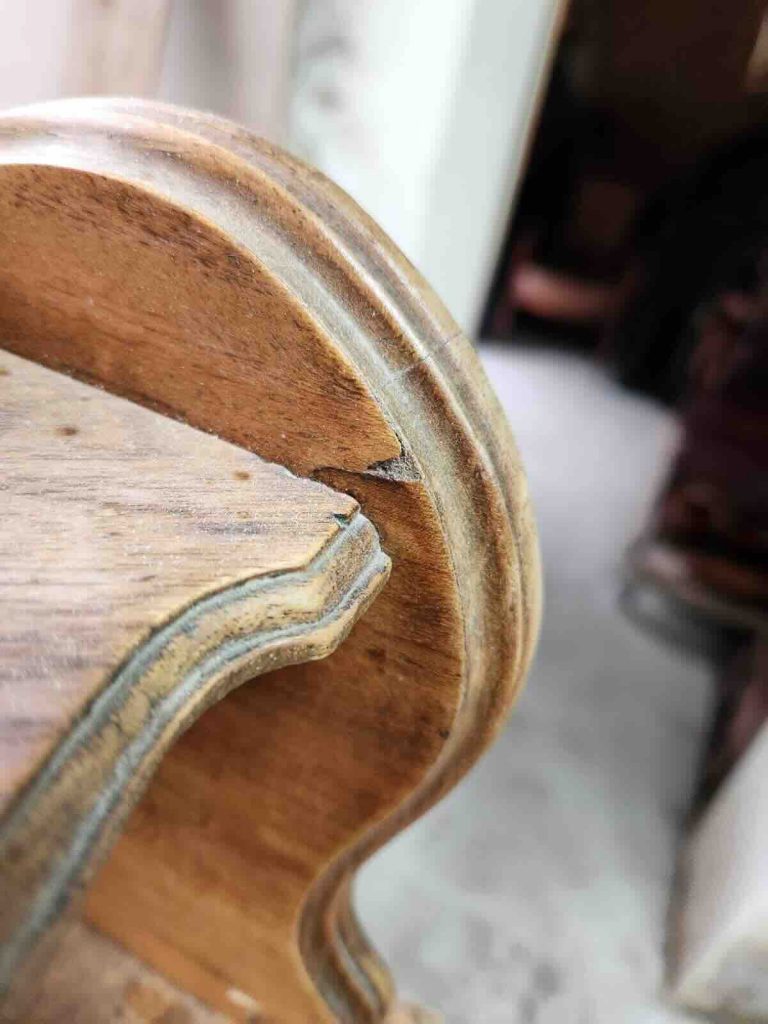
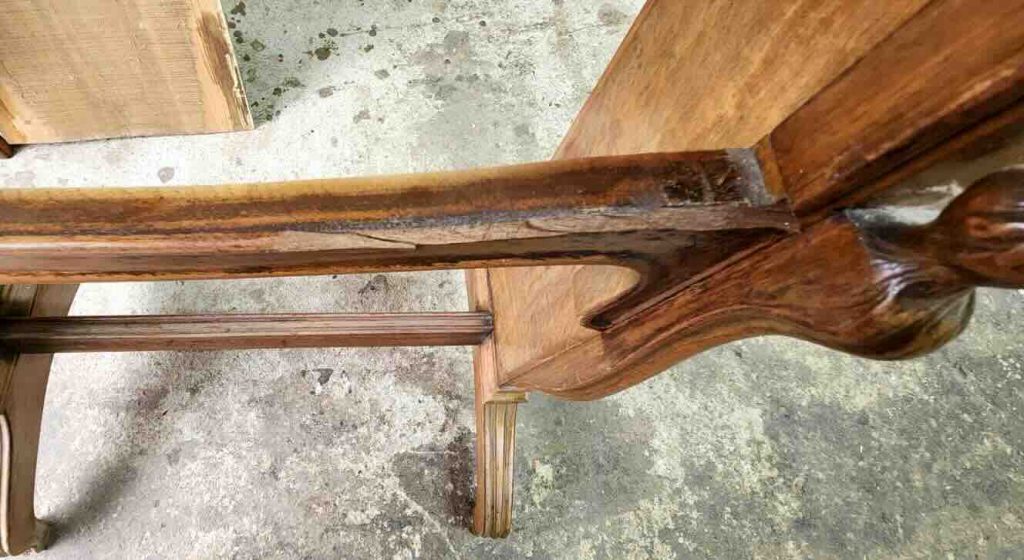
In addition to the general deterioration of the shellac finish, several minor imperfections were noted, including gaps in the veneer, chips at the hinges of the drop-leaf, and the absence of a piece of molding on the rebate of the lower rail. Leo restored the gaps in the veneer by selecting a suitable wood species, ensuring that the grain and texture matched the area. A solid walnut graft was then made, following the curve of the molding on the lower rail. The piece was then stripped and a wax finish was applied.
Magnificent restoration work on an unusual piece of furniture. I would truly love to have your expertise!