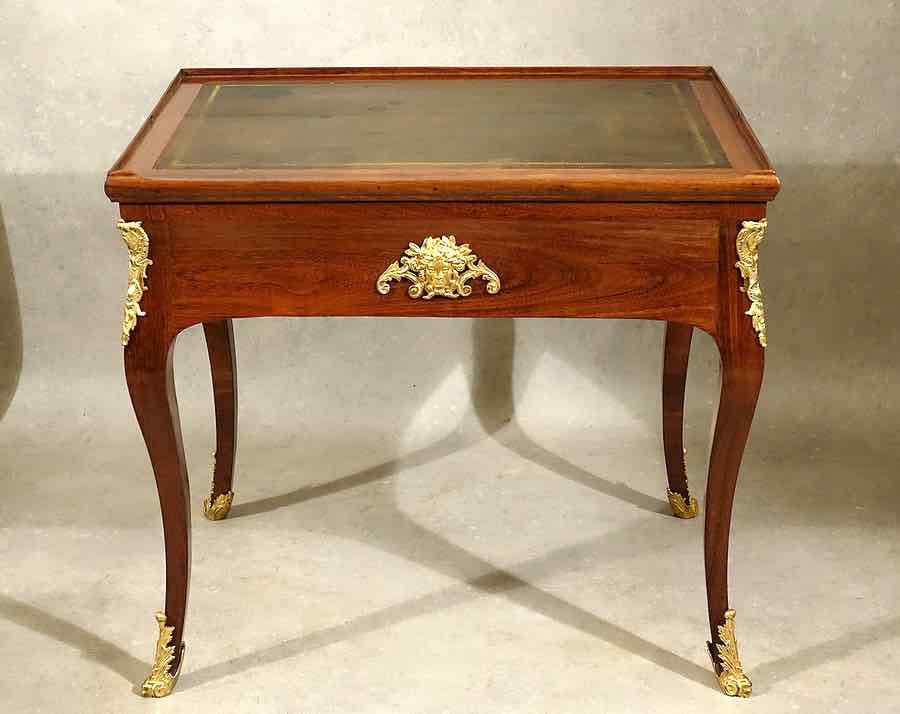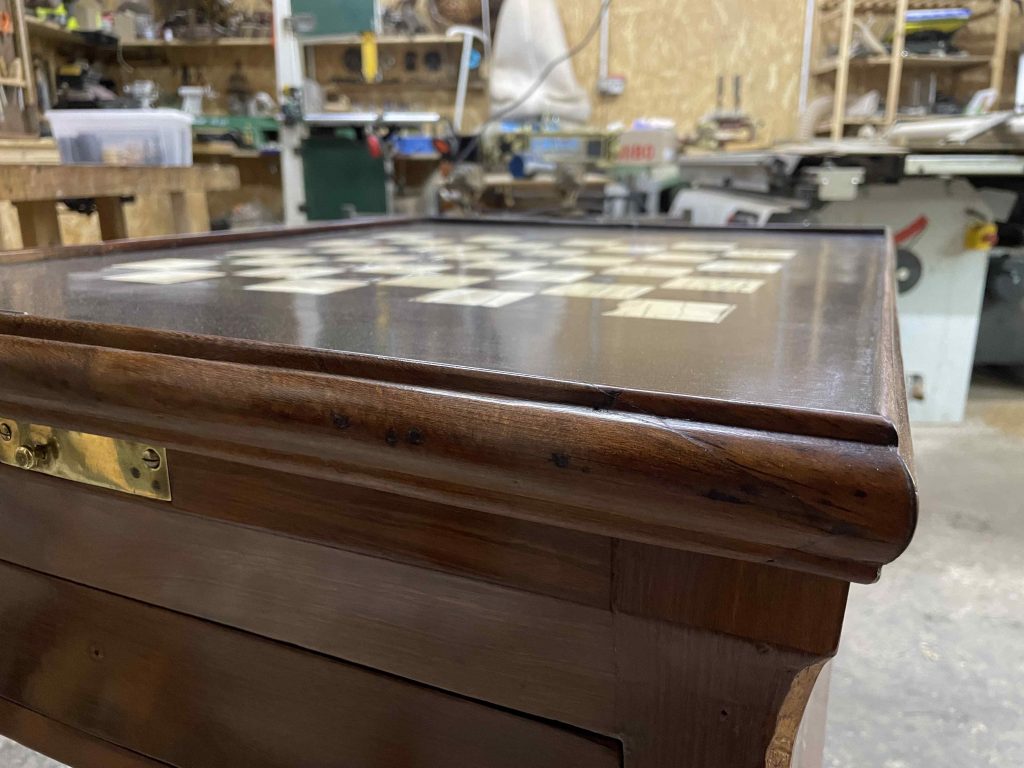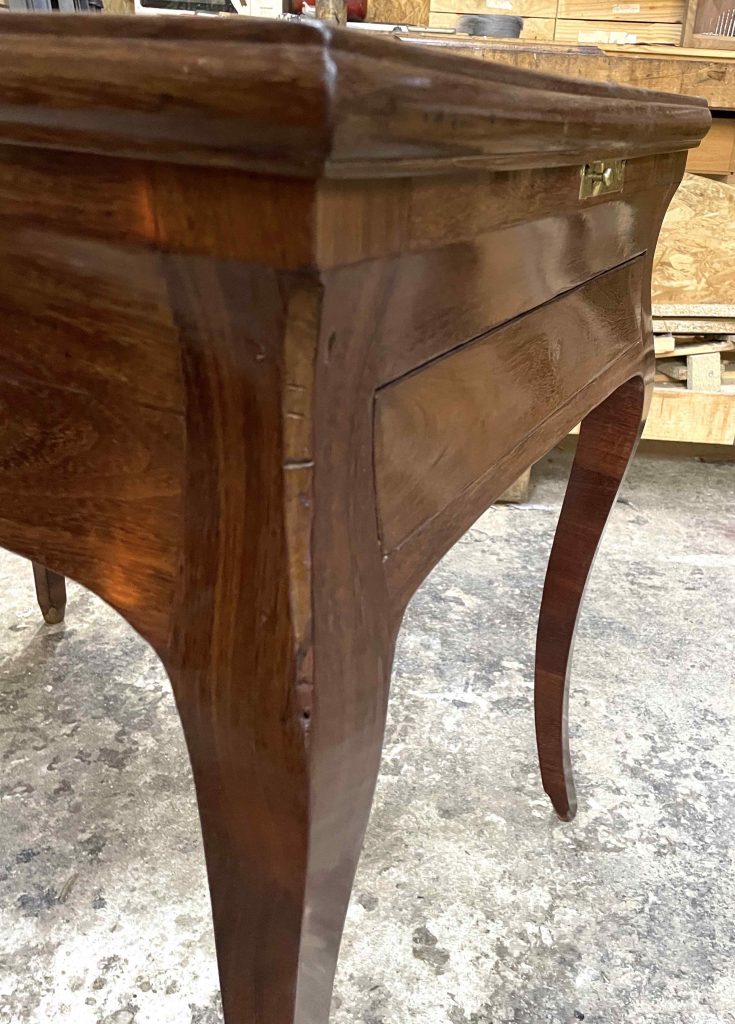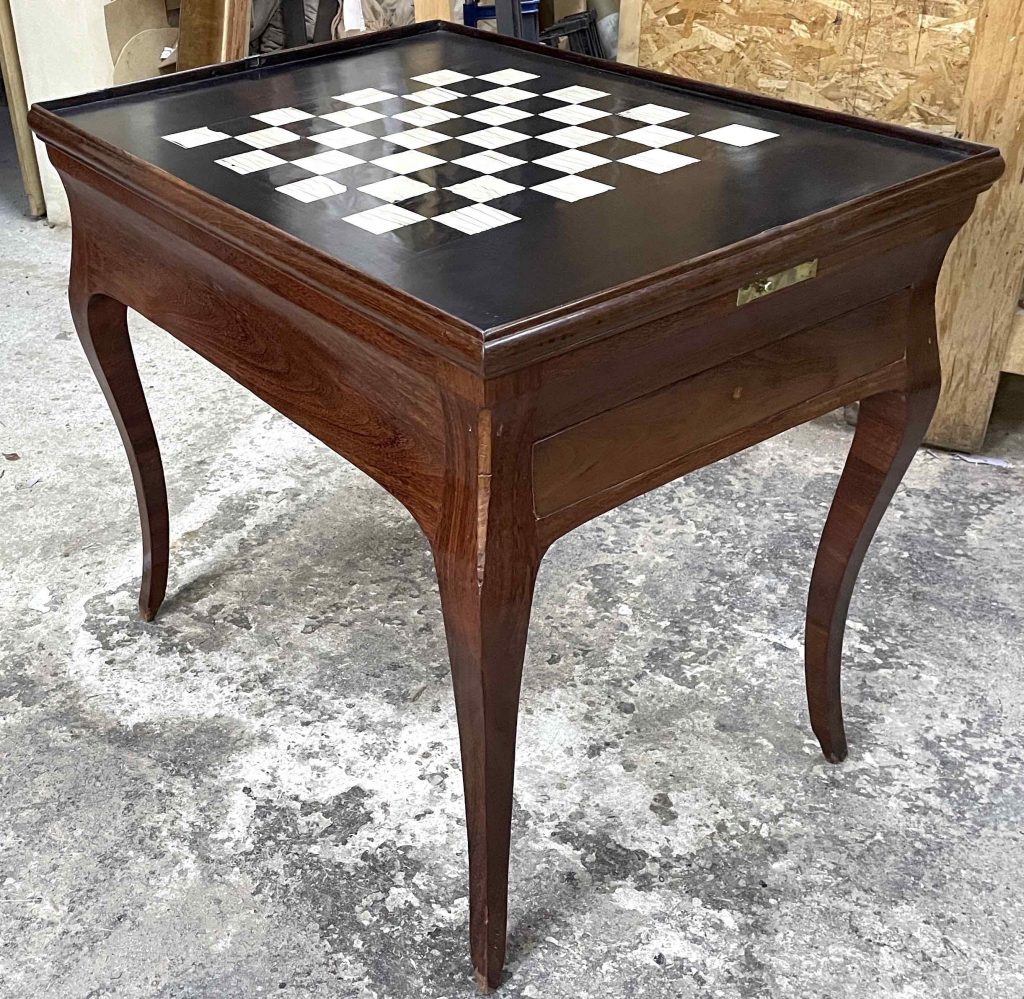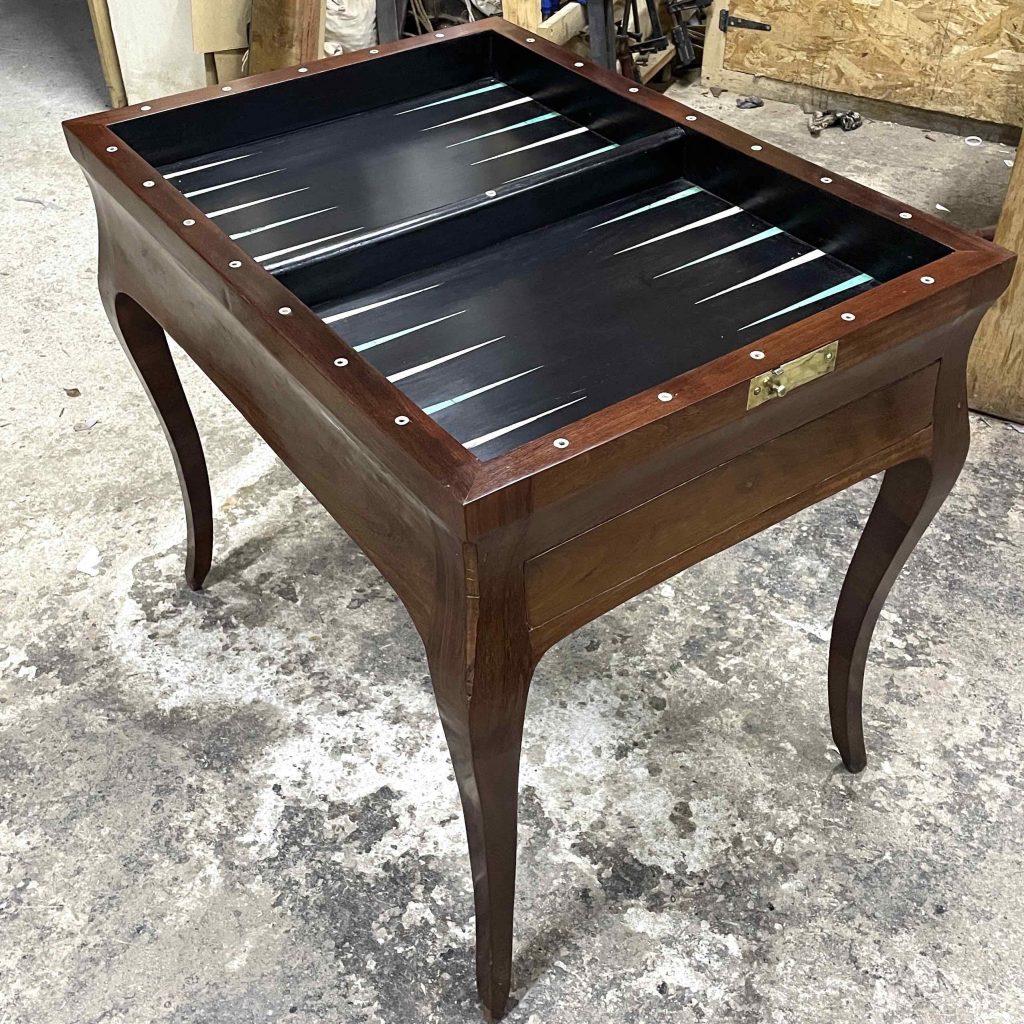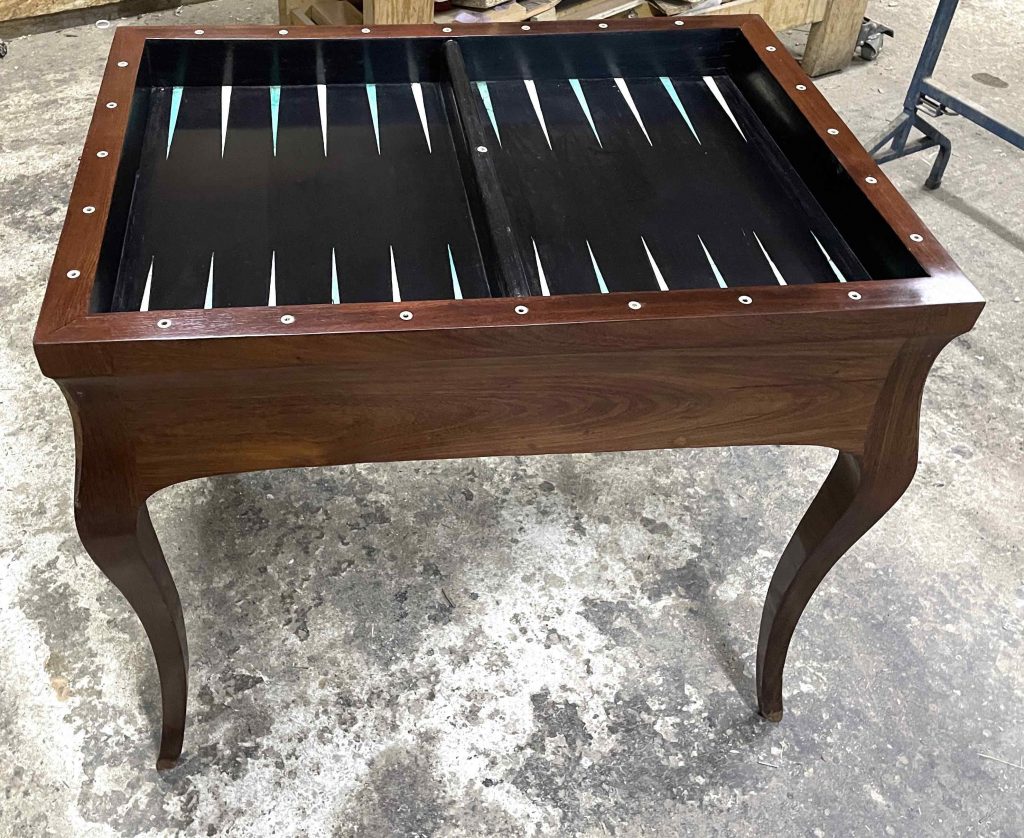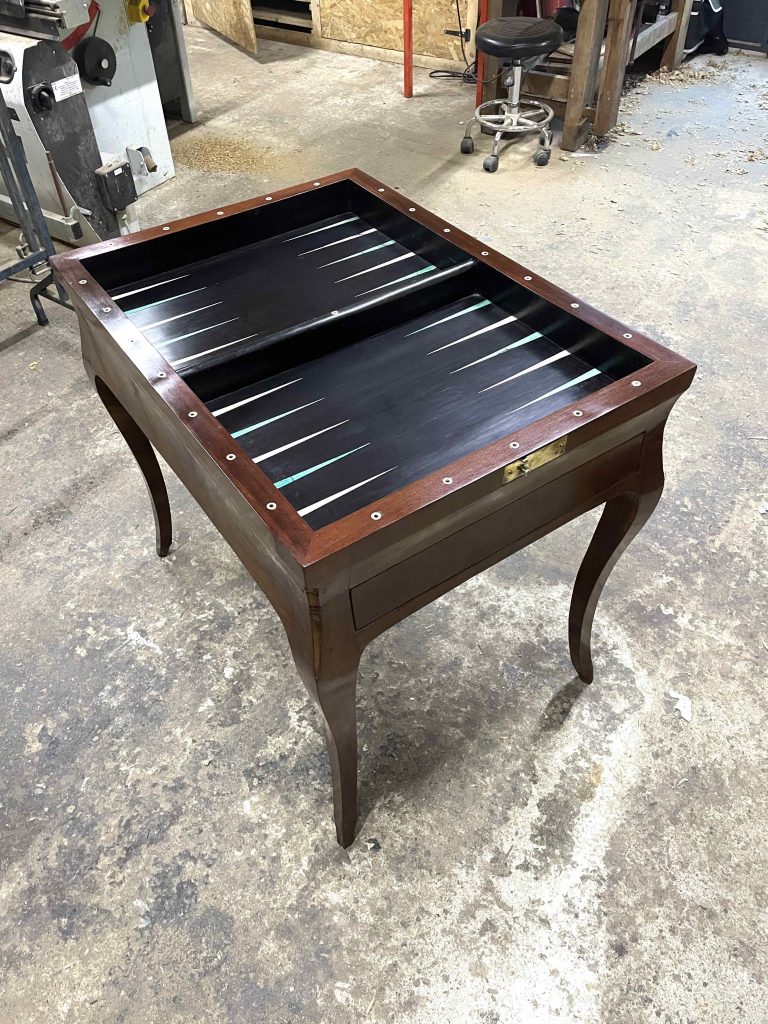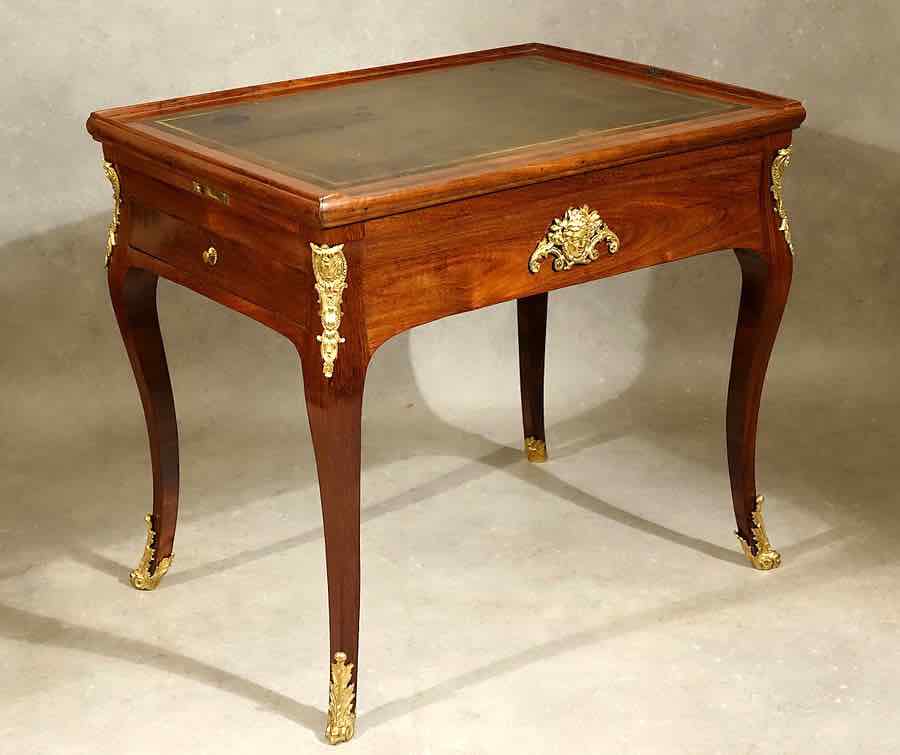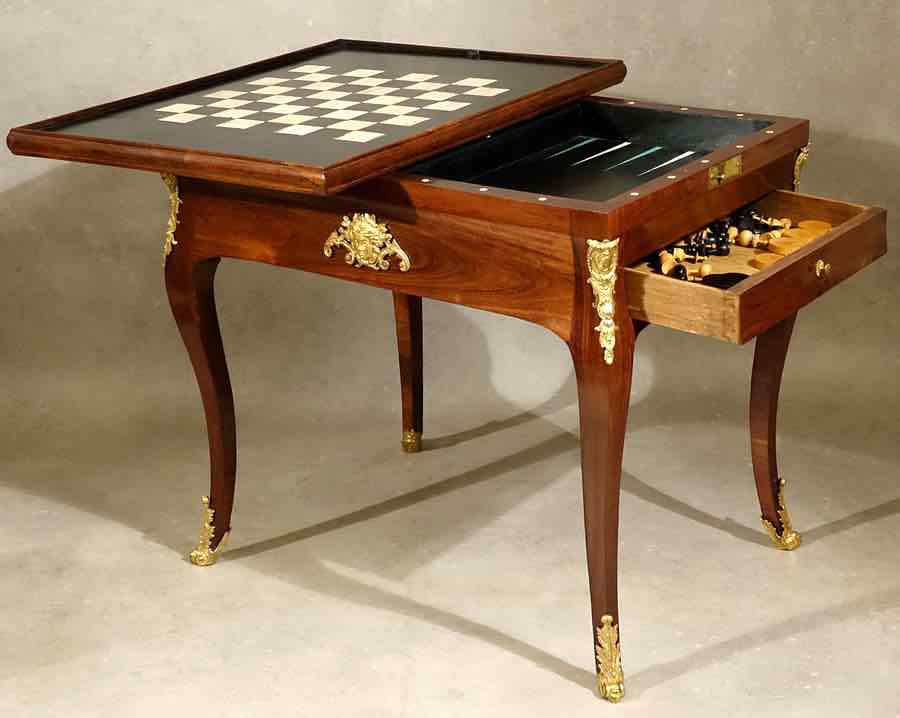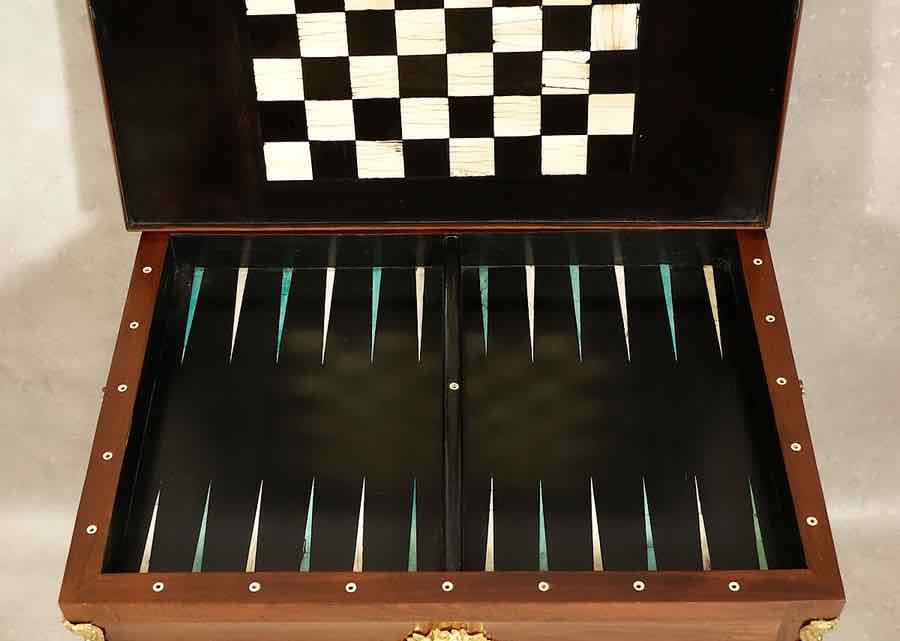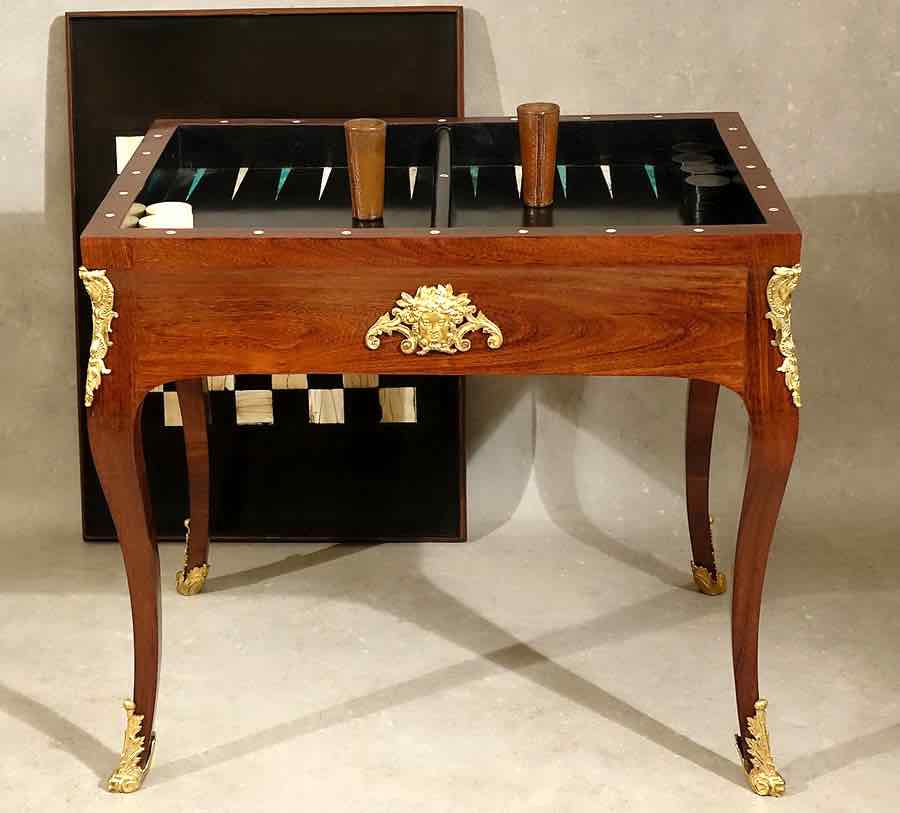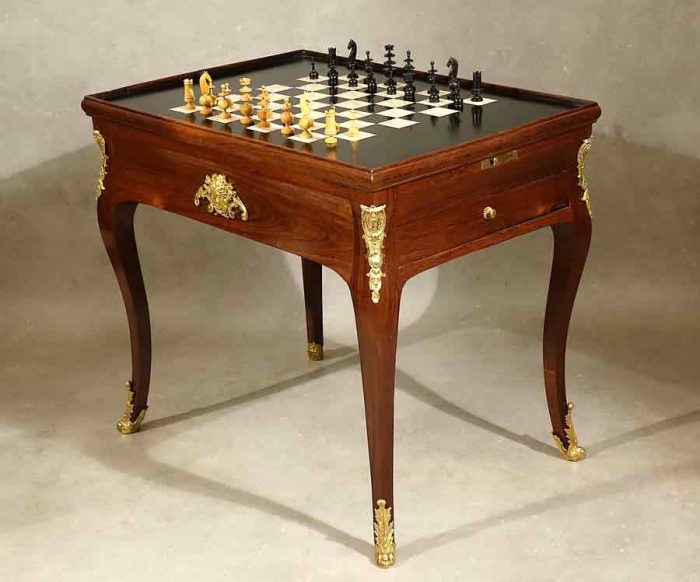
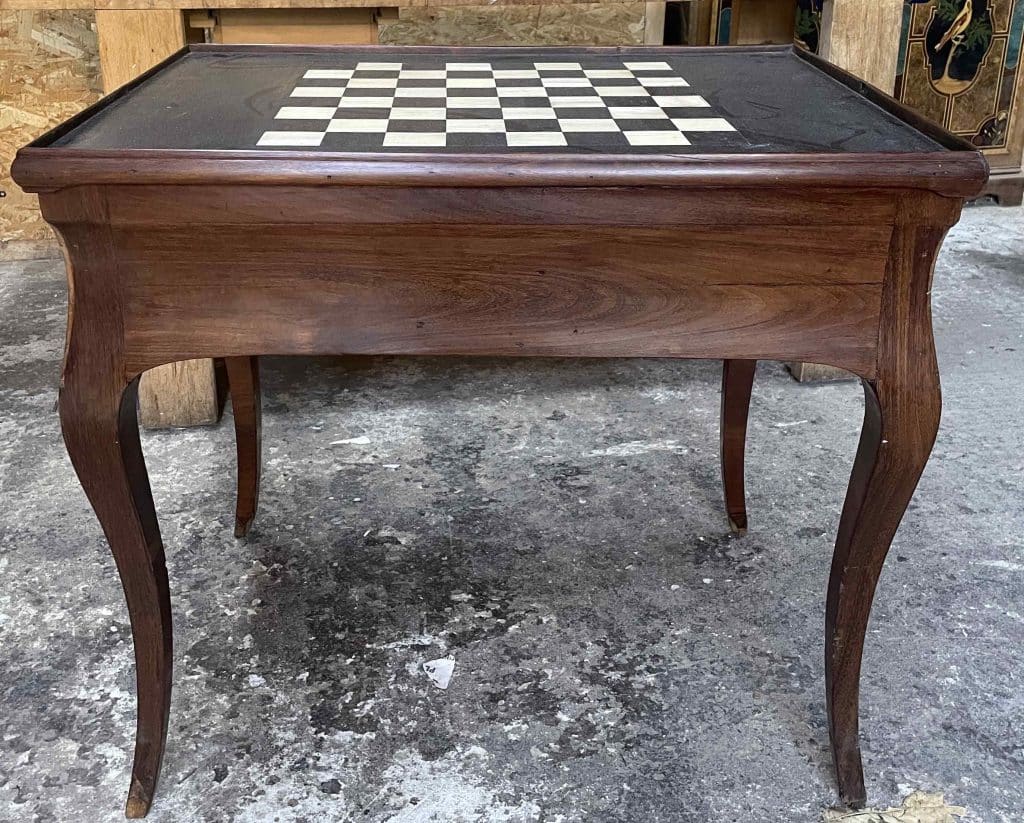
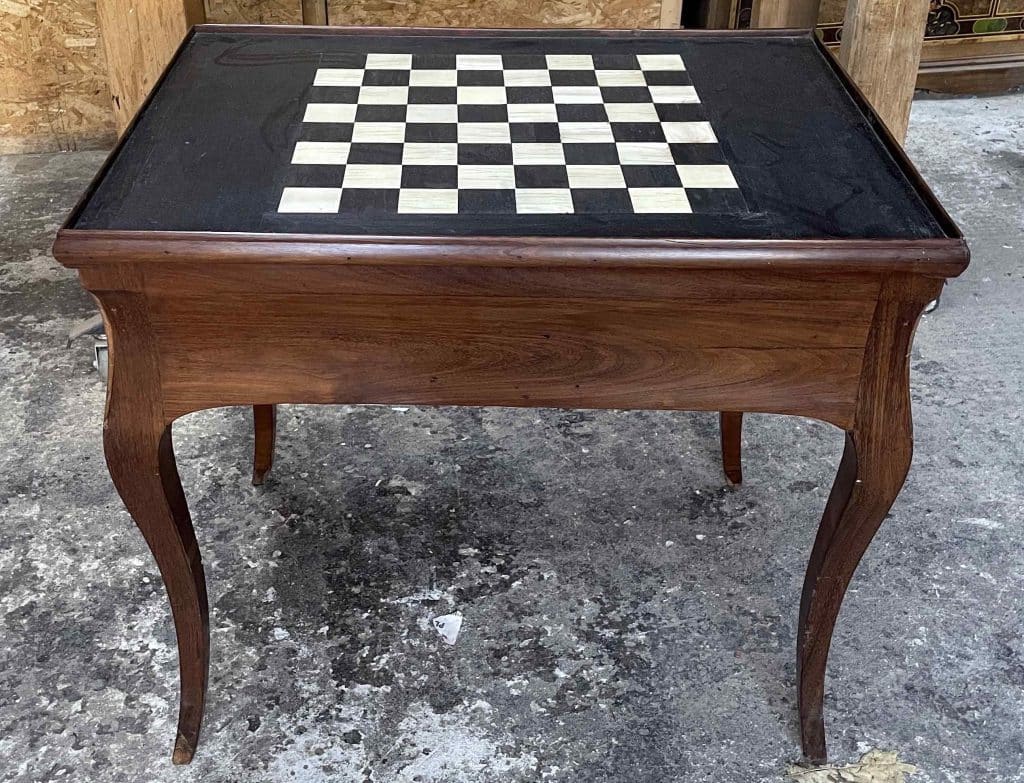
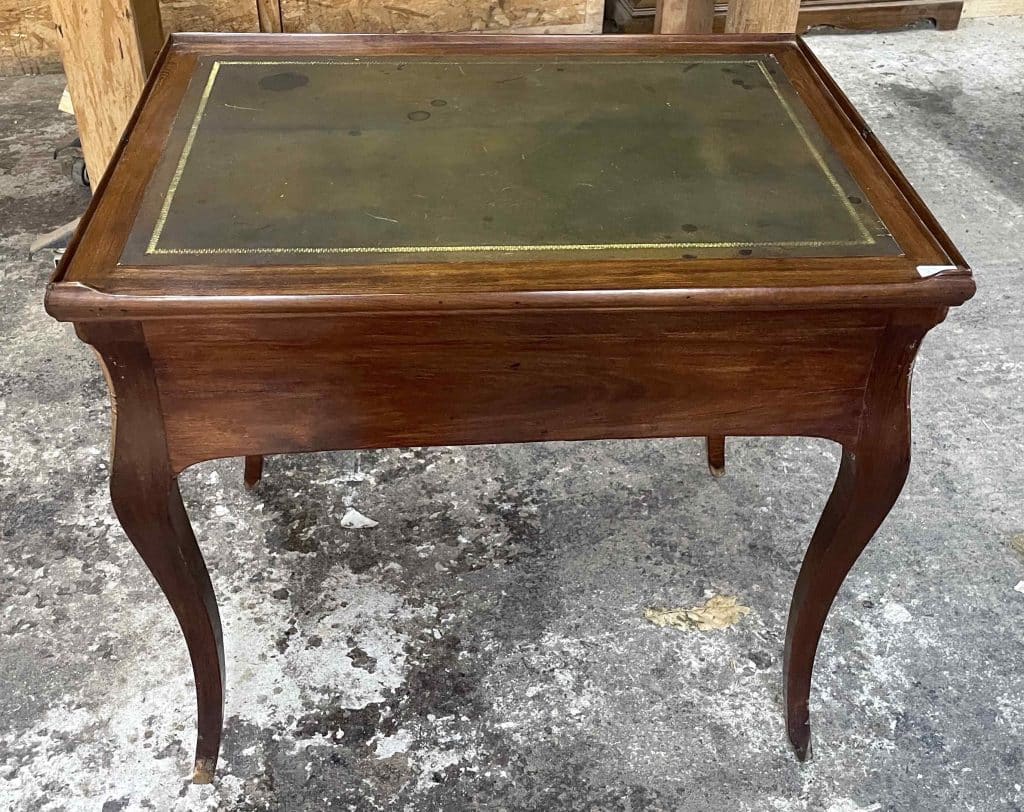
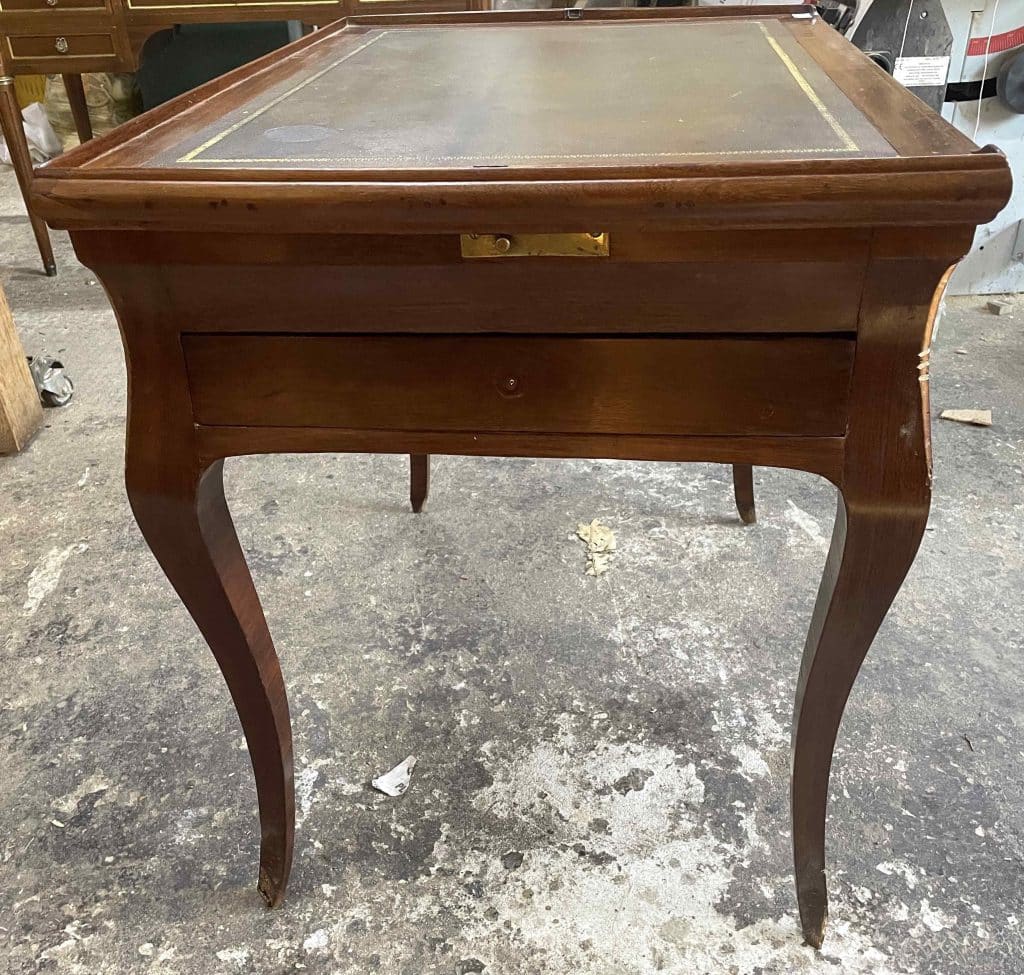
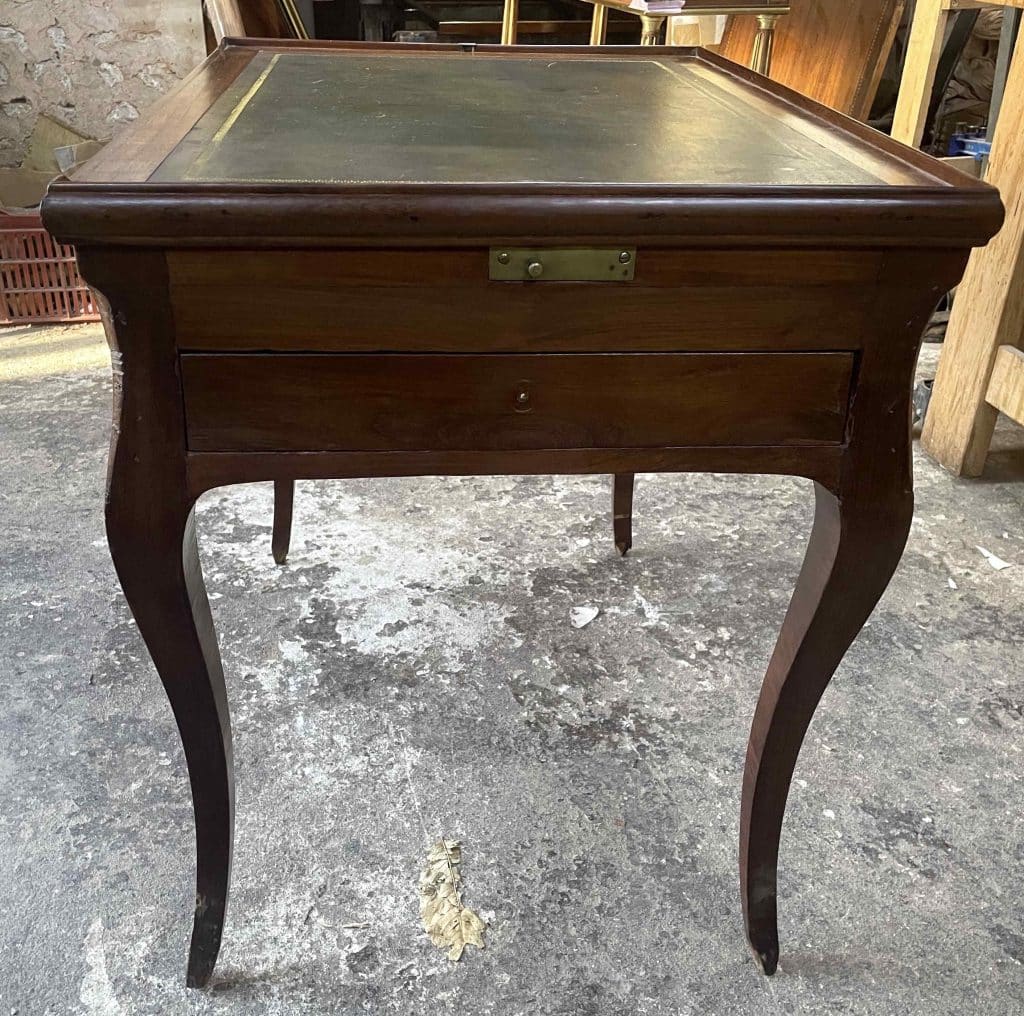
Restoration of a Regency period games table converted into a desk, resting on four cabriole legs. It is veneered with thick amaranth leaves and features two drawers (called "chétrons") on the sides and a removable top (locked by a push-button mechanism) covered in dark leather on its facing and a checkerboard pattern veneered in ebony and inlaid with ivory on the reverse. When the top is removed, it reveals a backgammon set in ebony and ivory. The molded astragal surrounding the top is made of solid amaranth wood. The legs and stretchers are beech, the panels are softwood.
This table has several purposes, therefore serving at once as a small desk, or even as a cabaret table, but above all as a table for card games, checkers and chess (remember that in the first half of the 18th century the same sixty-four square checkerboard was used for both) and finally as a backgammon game.
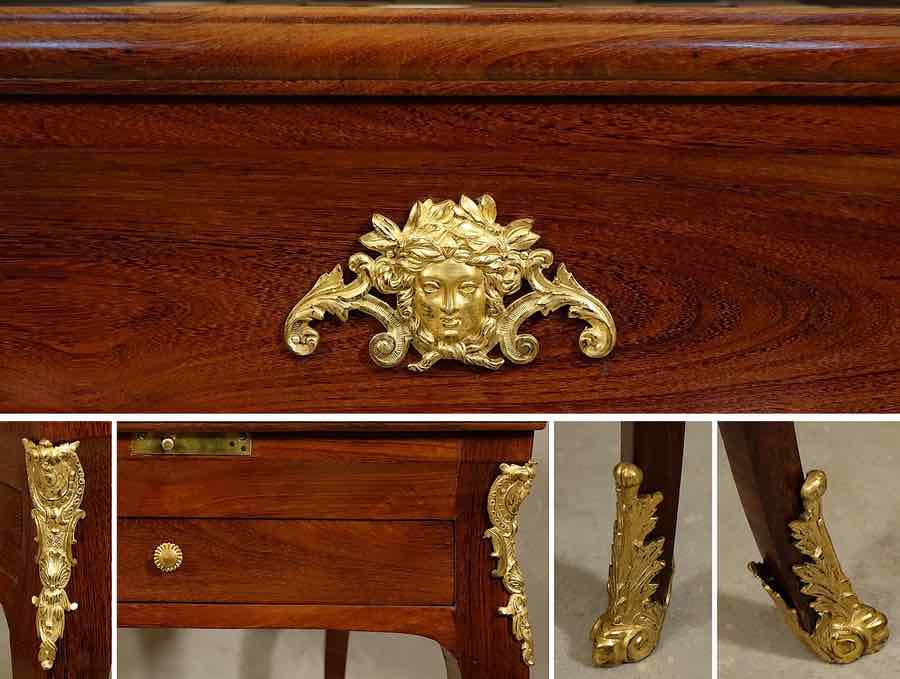
The piece of furniture is adorned with gilt and chiseled bronze ornamentation: an important mascaron of Ceres on each of the front bands, four corner drops decorated with cartouches, shells, egg-and-dart and reticulated backgrounds, four enveloping feet known as "in slipper" decorated with palmettes and acanthus scrolls, and finally two small drawer pulls with rosettes.
François LIEUTAUD (1665 – 1748)
A cabinetmaker originally from Marseille, he received his master's certificate in Paris at the end of the 17th century and was active during the reign of Louis XIV and the Regency. He worked within the privileged confines of the Saint-Jean-de-Latran cloister, and Louis XIV granted him the rare privilege of creating and crafting the bronze mounts for his furniture. He collaborated with Noël Gérard (who was also a mercer), as well as with Charles Cressent and even André-Charles Boulle (who appointed him as his personal expert during a trial in 1719). He founded a dynasty of cabinetmakers, as his son Charles and his grandson Balthazar (famous for his regulator clocks) practiced the same craft. Long unknown to art historians due to his stamp bearing only the initials "FL," he is nevertheless considered one of the greatest cabinetmakers of his time.
Bibliography
- French Cabinetmakers from Louis XIV to the Revolution – Editions du Chêne – 1989 – Alexandre Pradere
State of affairs report
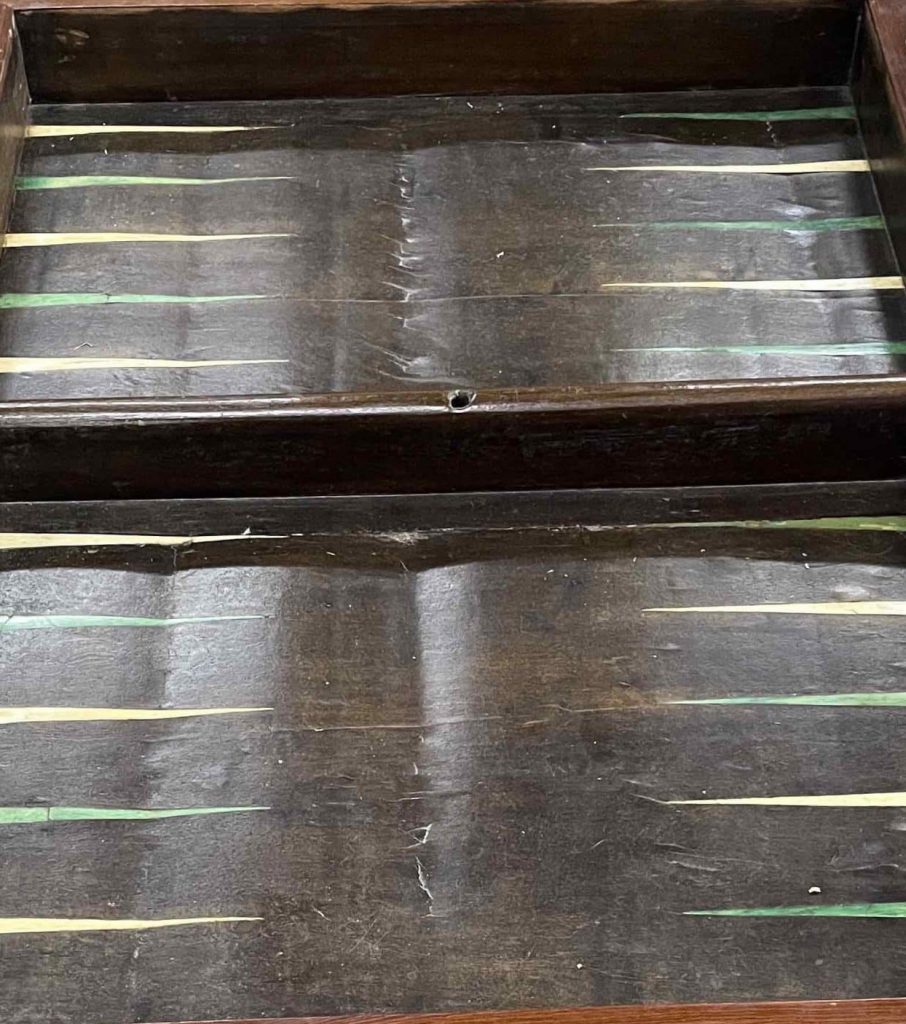
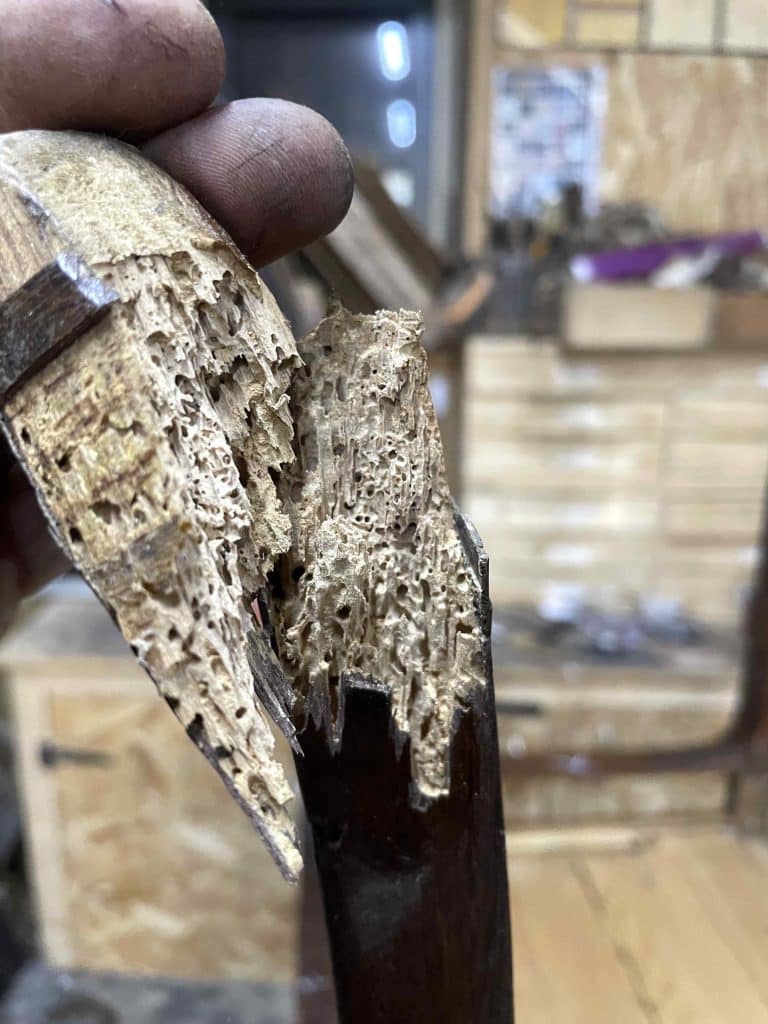
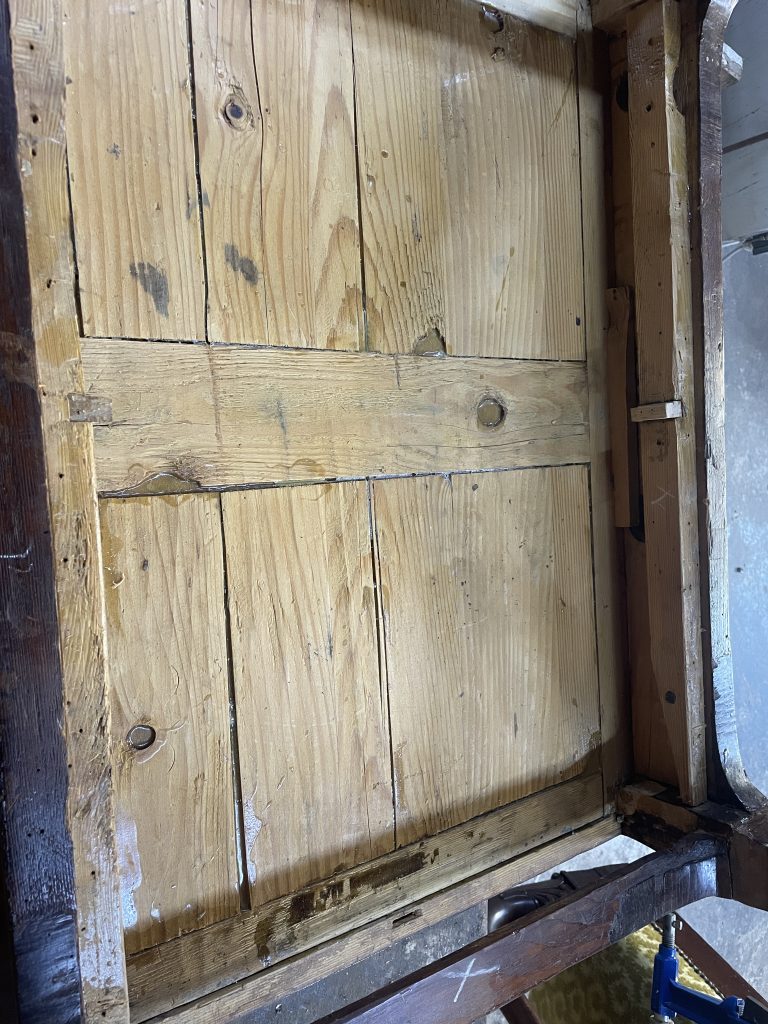
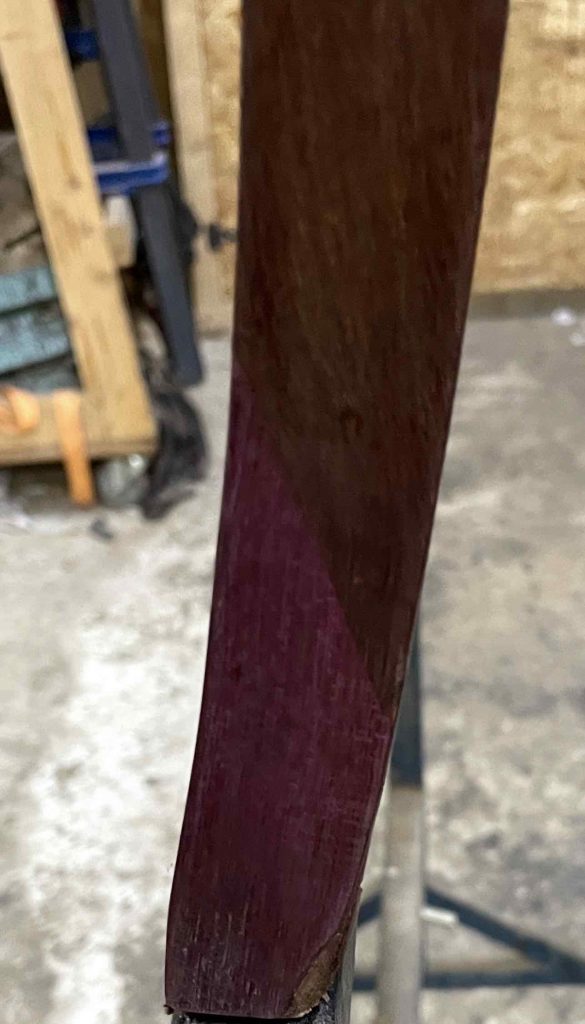
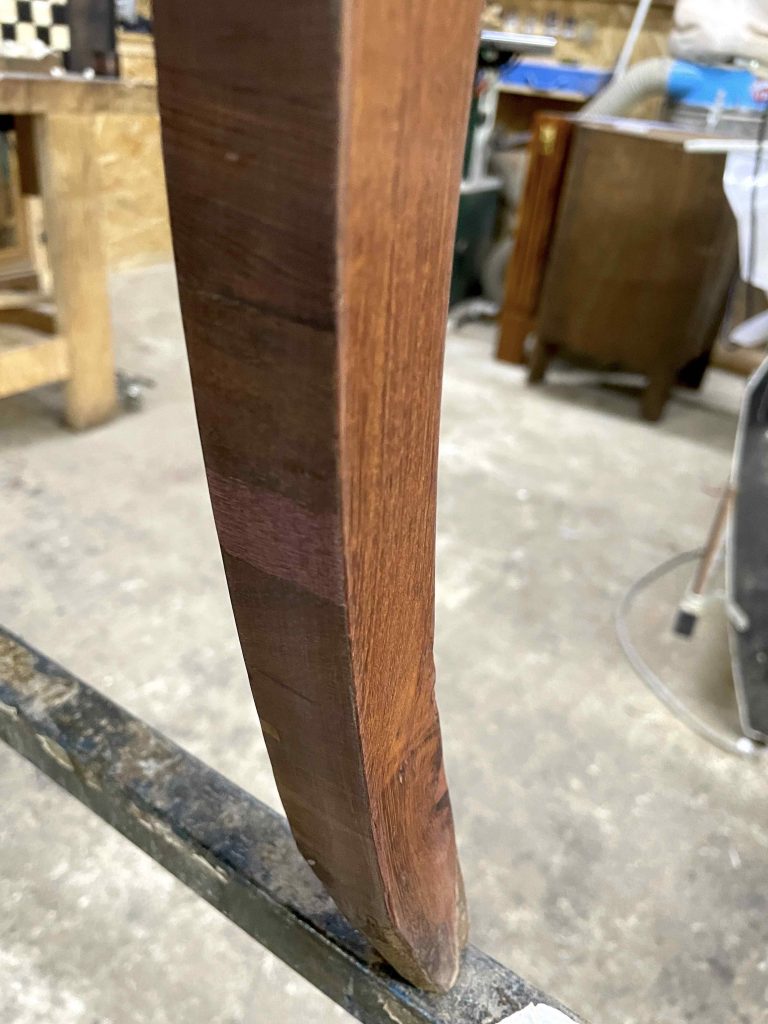
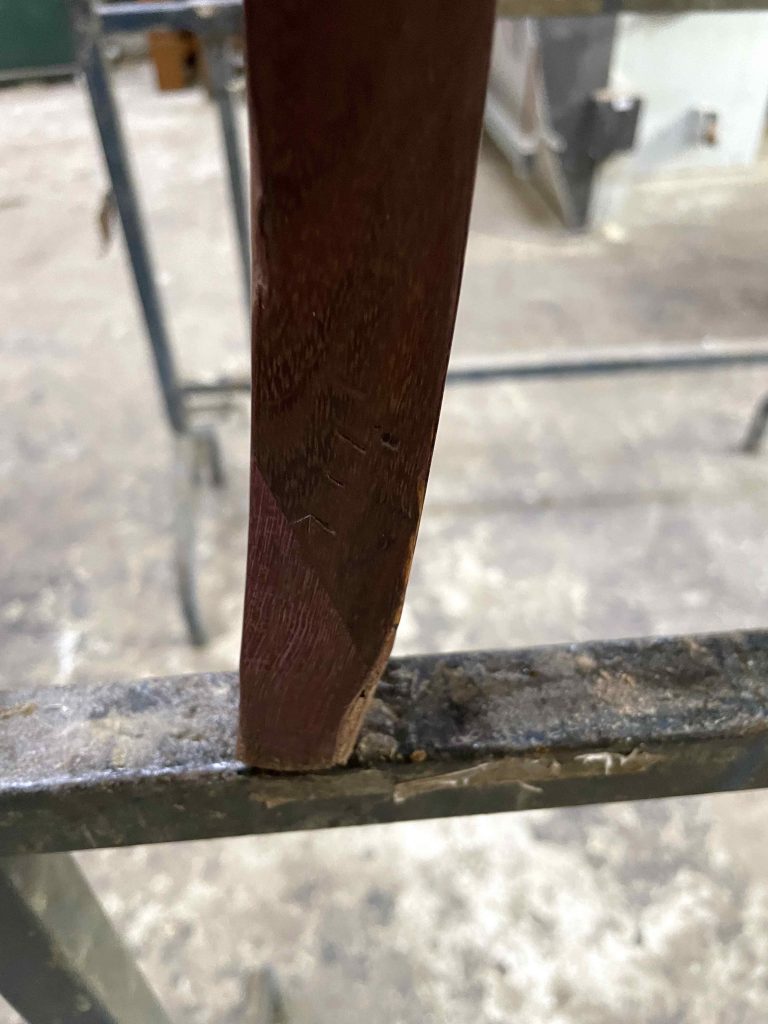
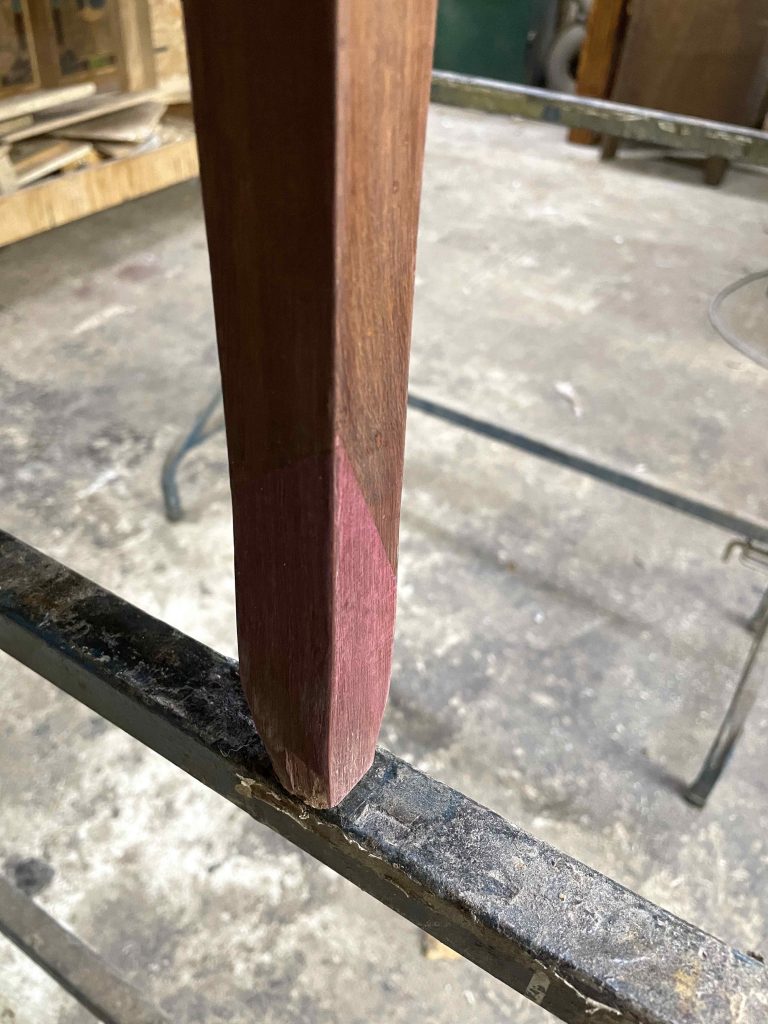
This games table arrived at the workshop in fairly good condition. There were some missing veneers, one leg gnawed by wood-boring insects, some peeling of amaranth and ivory veneers, and above all, a backgammon board badly damaged by the warping of the base it is made of.
The Restoration
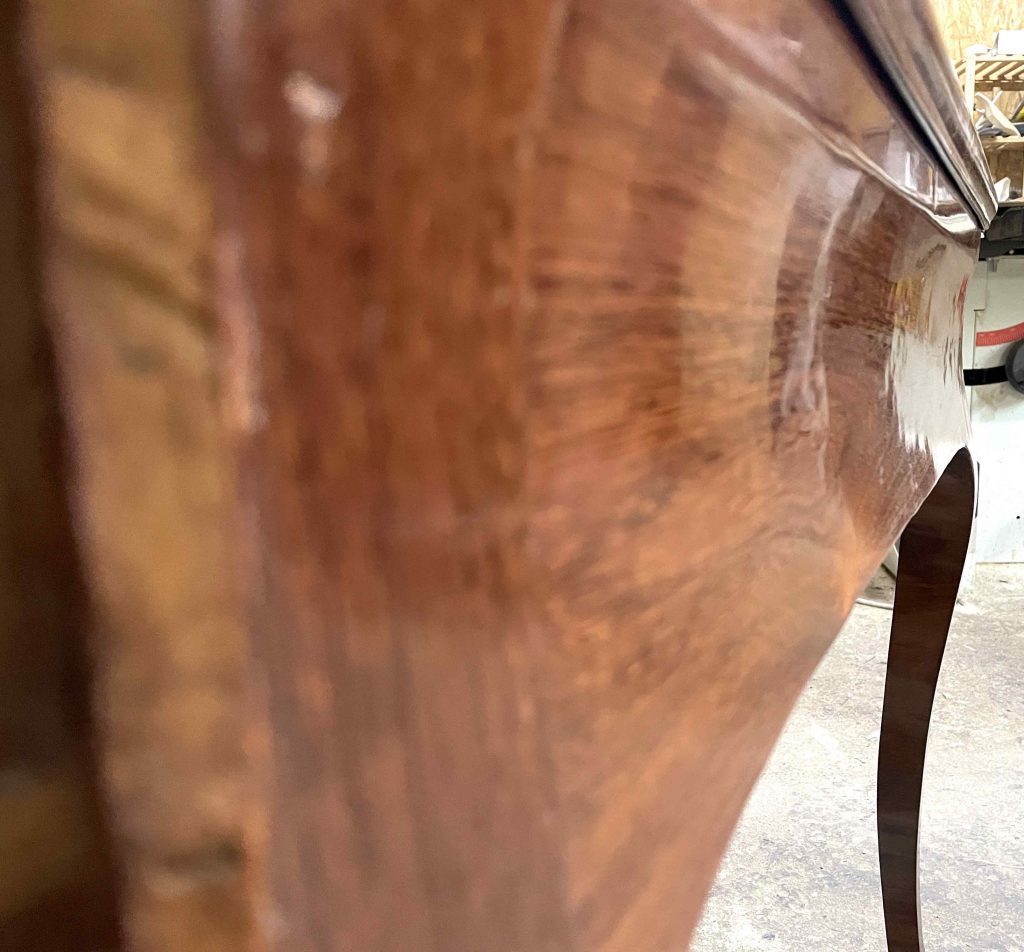
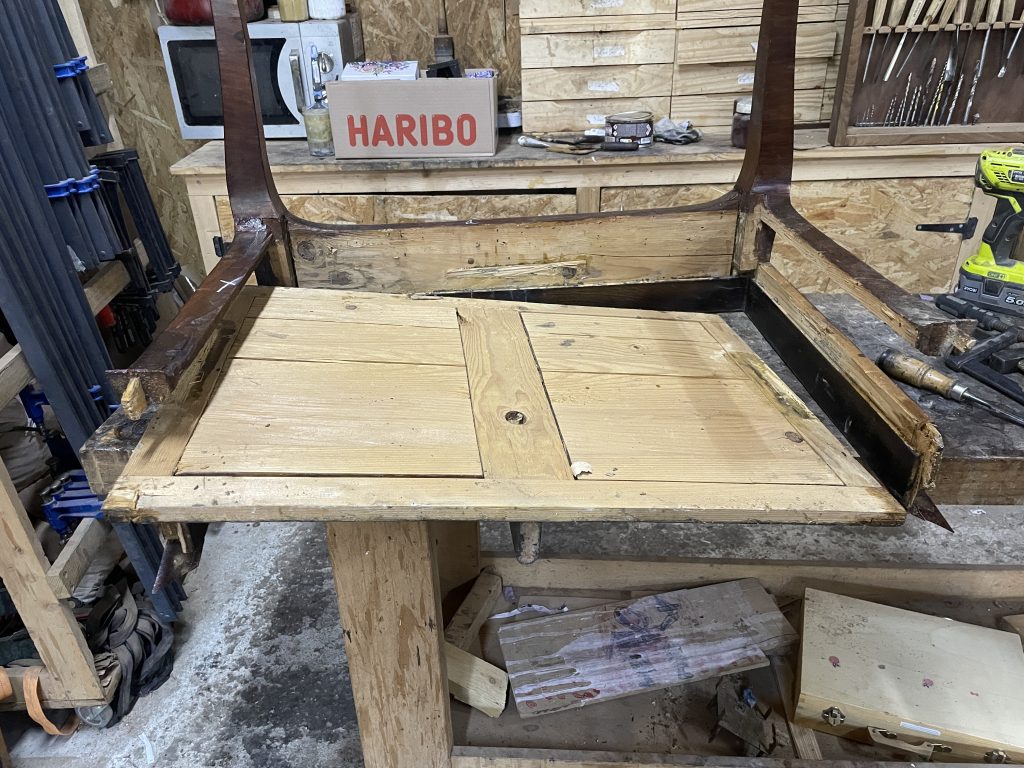
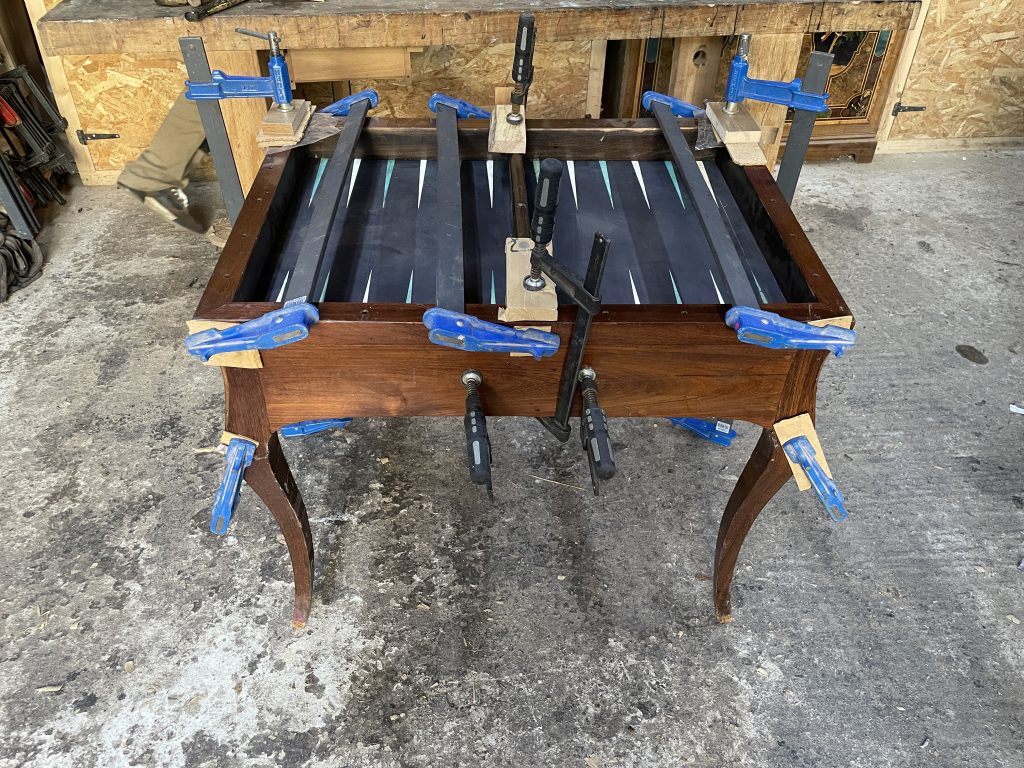
The most significant part of the work involved dismantling the piece of furniture to access the backgammon board, allowing for the removal of the marquetry and the restoration of its support. The few missing amaranth veneer pieces were replaced with new, sawn veneer, scraped, sanded, and applied to the correct thickness as a backing to avoid disturbing the existing golden patina of the amaranth.
The old varnish was removed using a stripper suitable for furniture restoration, allowing the underlying surface to be preserved in order to achieve a polish as described by André Jacob Roubo in his 1772 work. The art of the cabinetmaker – Pages 857 to 853, in order to try to be as close as possible to the original finish of this piece of furniture.

Son and grandson of journeyman carpenters, received as a Master in Paris, André-Jacob ROUBO bequeathed to us the monumental treatise on woodworking which is still authoritative today.
Considered the "bible" of the cabinetmaker, the ROUBO sets out the state of technical knowledge of a trade then at its peak and transmits to us the rules of an art that modern processes have not diminished in any way.
As for the bronzes, they were cleaned and the gilding was redone by the gilder. The leather, meanwhile, was cleaned and refinished with wax.