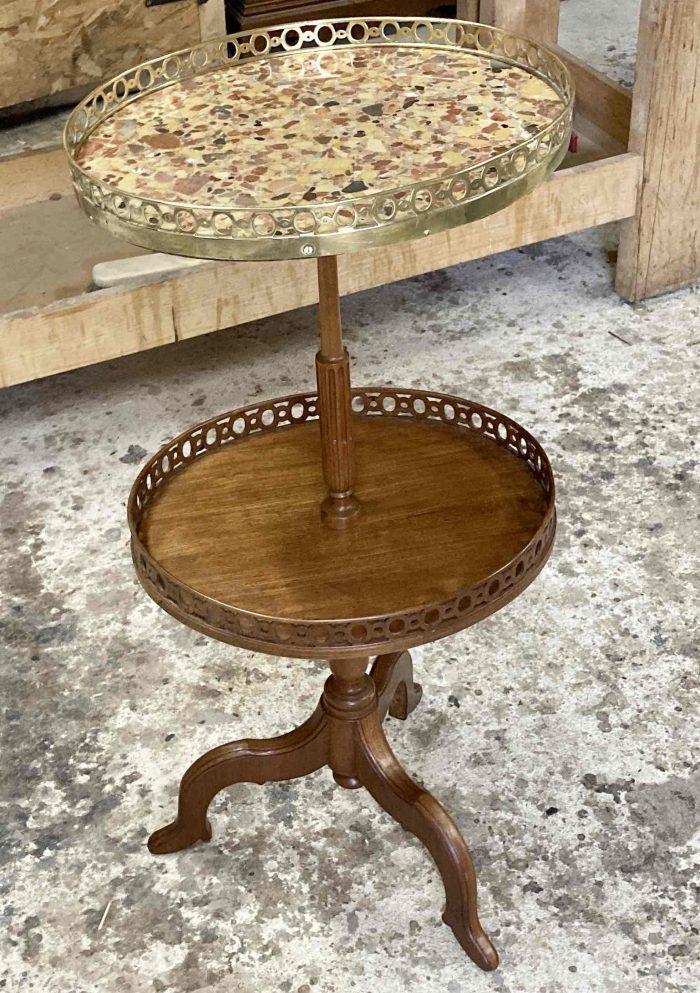
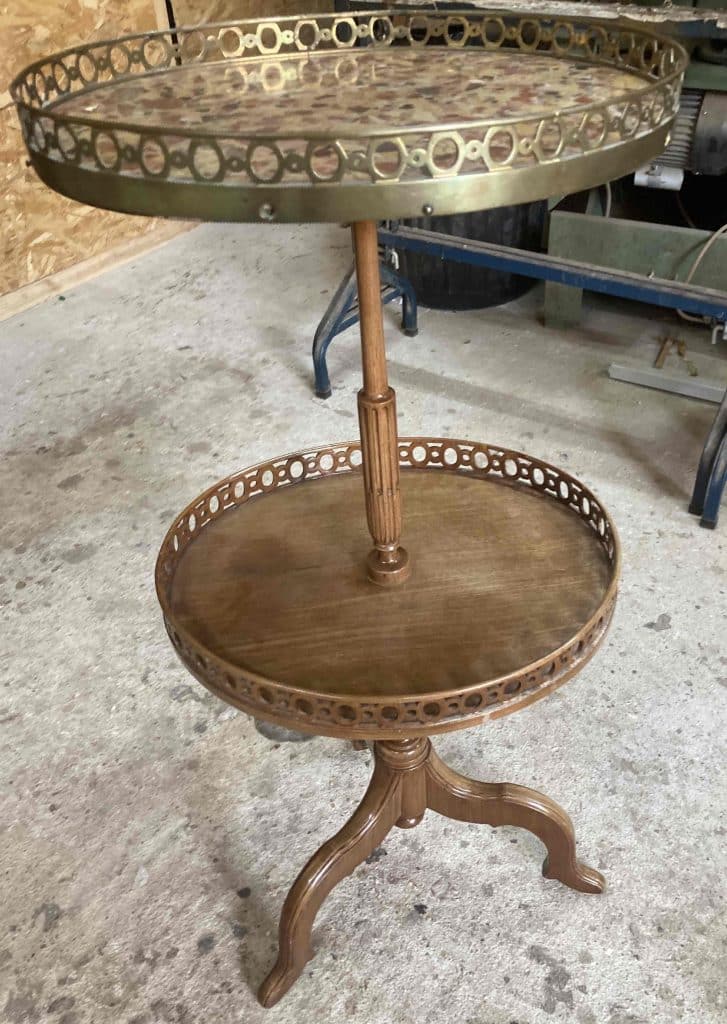
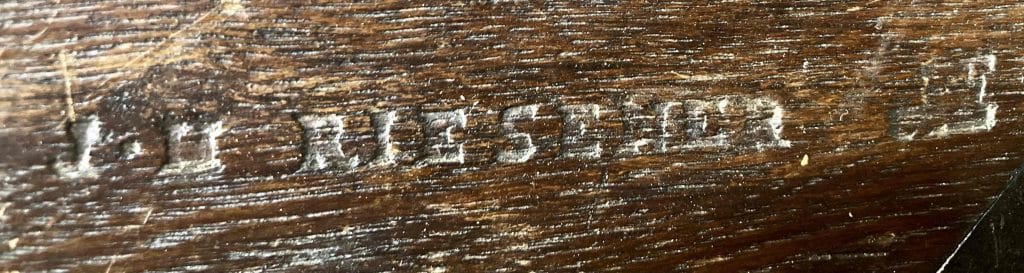
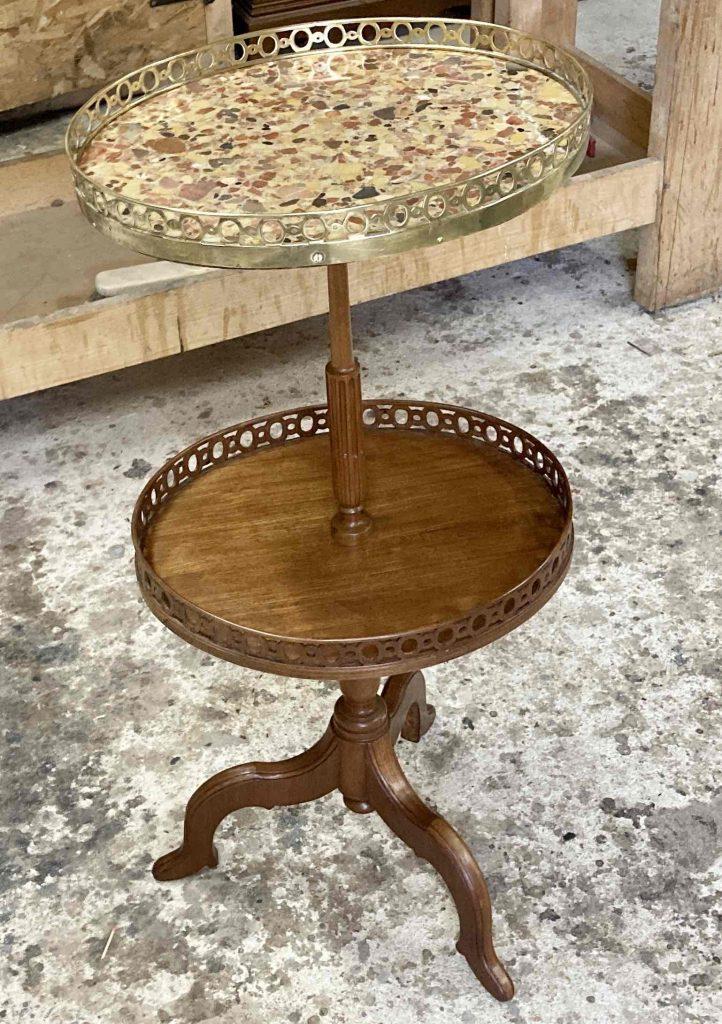
A minor restoration is needed for this "shelf-style" pedestal table, which can also be called a "dumb servant." It is made of solid mahogany, mahogany veneer, and Aleppo breccia marble. It bears the stamp of the lesser-known cabinetmaker to the Crown Furniture, Jean-Henri Riesener.
Is it really necessary to introduce Jean-Henri Riesener (July 4, 1734 – January 6, 1806), the undisputed master of the LXVI style, due to the scope and diversity of his work, but above all because of the very high quality of his furniture and the sumptuousness of the works commissioned by the court of Marie Antoinette?.
Born Johan Herman Riesener in Gladbeck, Germany, he began his career as an apprentice in the Parisian workshop of the great master Jean-François Oeben, cabinetmaker to the king at the Arsenal. Their collaboration culminated in the creation of the king's roll-top desk, begun by Oeben and finished by Riesener. Upon Oeben's death, he took over the workshop under the tutelage of Oeben's widow, Françoise Marguerite Vandercruse. (yet another large family of cabinetmakers) whom he married in 1767.
Having received his master craftsman's certificate on January 23, 1768, he was appointed cabinetmaker to the Crown in 1774, replacing Gilles Joubert. A privileged cabinetmaker, housed and protected by the king, Jean-Henri Riesener thus had the opportunity to break all the rules and work as he pleased. The inventory of the royal furniture repository reveals that he delivered nearly 700 pieces of furniture to the court between 1774 and 1784.
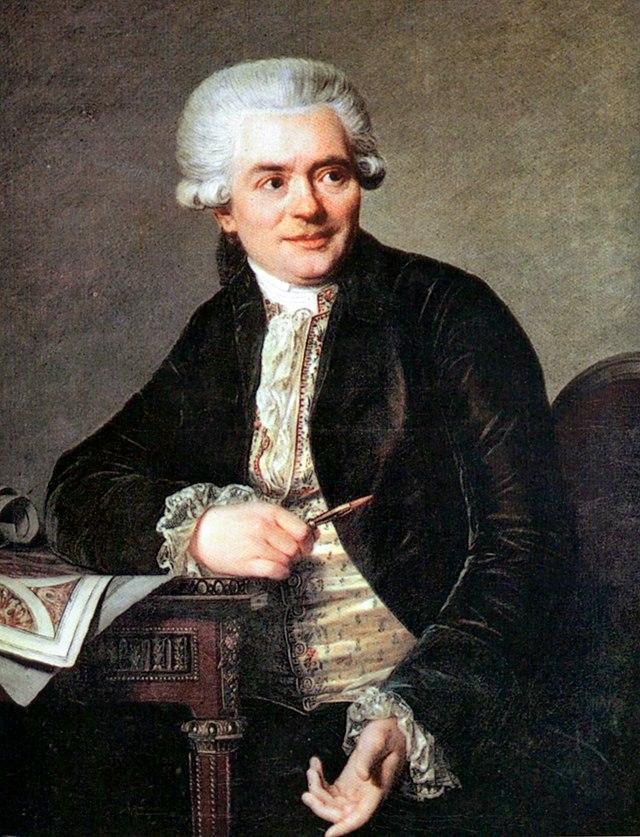
Riesener's fortunes finally declined in the 1780s, when he was gradually ousted from the Crown Furniture Repository due to his exorbitant prices. Nevertheless, he remained in favor with the queen, who continued to commission pieces from him. During the revolutionary sales, Riesener bought back some of the furniture he had delivered to the Repository. He then considered reselling it and attempted to do so several times. Riesener closed his workshop permanently in 1801.

BIBLIOGRAPHY
- French Furniture of the 18th Century – Pierre Kjellberg – Les Editions de l'Amateur – 2002
- Cabinetmakers of the 18th Century – Count François de Salverte – F. de nobele – 1975
- Jean-Henri Riesener: Cabinetmaker to Louis XVI and Marie Antoinette (Hardcover) – Helen Jacobsen, Rufus Bird, Mia Jackson – December 11, 2020 – Philip Wilson Publishers
- https://www.chateauversailles.fr/decouvrir/histoire/grands-personnages/jean-henri-riesener
As for our small side table, it represents a simple yet nonetheless interesting piece by the cabinetmaker. Let's not kid ourselves, there's no chance the cabinetmaker made this piece himself. Given the large number of pieces produced by his workshop, Riesener was a business owner, and therefore likely only worked on the most prestigious pieces.
But this pedestal table perfectly reflects the style and exceptional quality of the workshop. The mahogany used is of great finesse and without any flaws. The joinery and threaded rod connections are flawless. The wooden gallery of the lower shelf is composed of mahogany veneer glued to a beech core, with mahogany veneer on the edge. The feet are reinforced with inlaid metal plates.
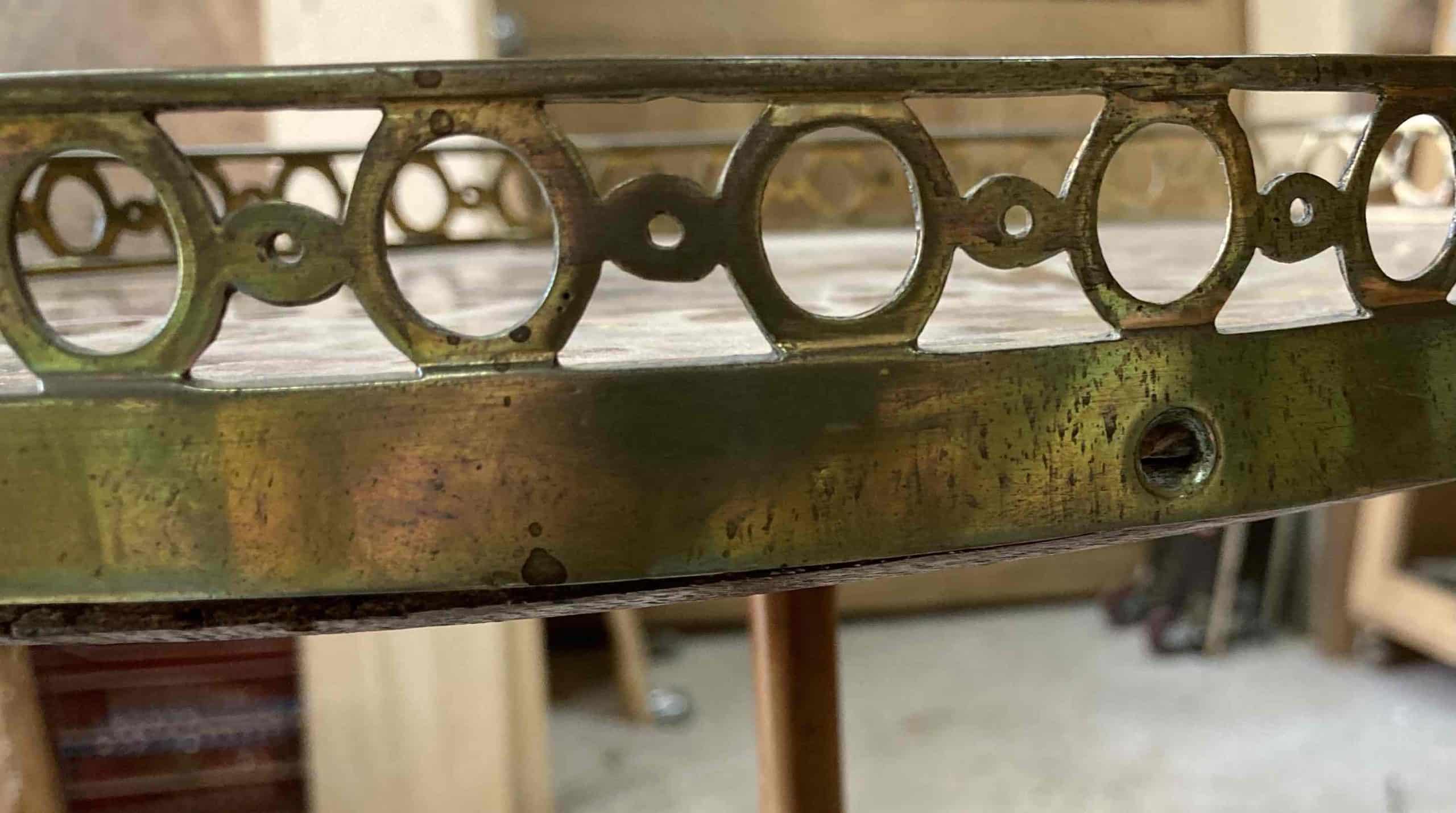
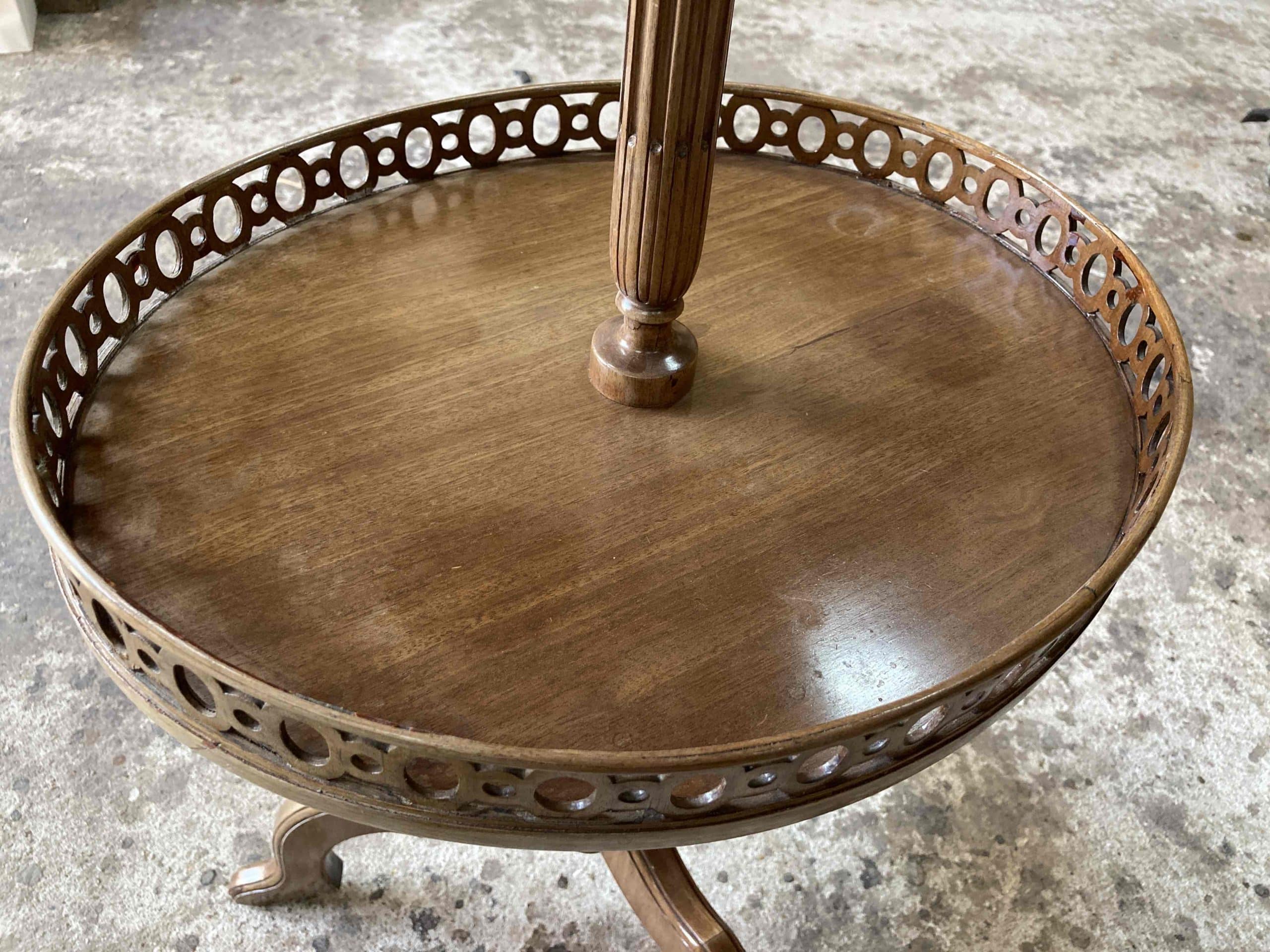
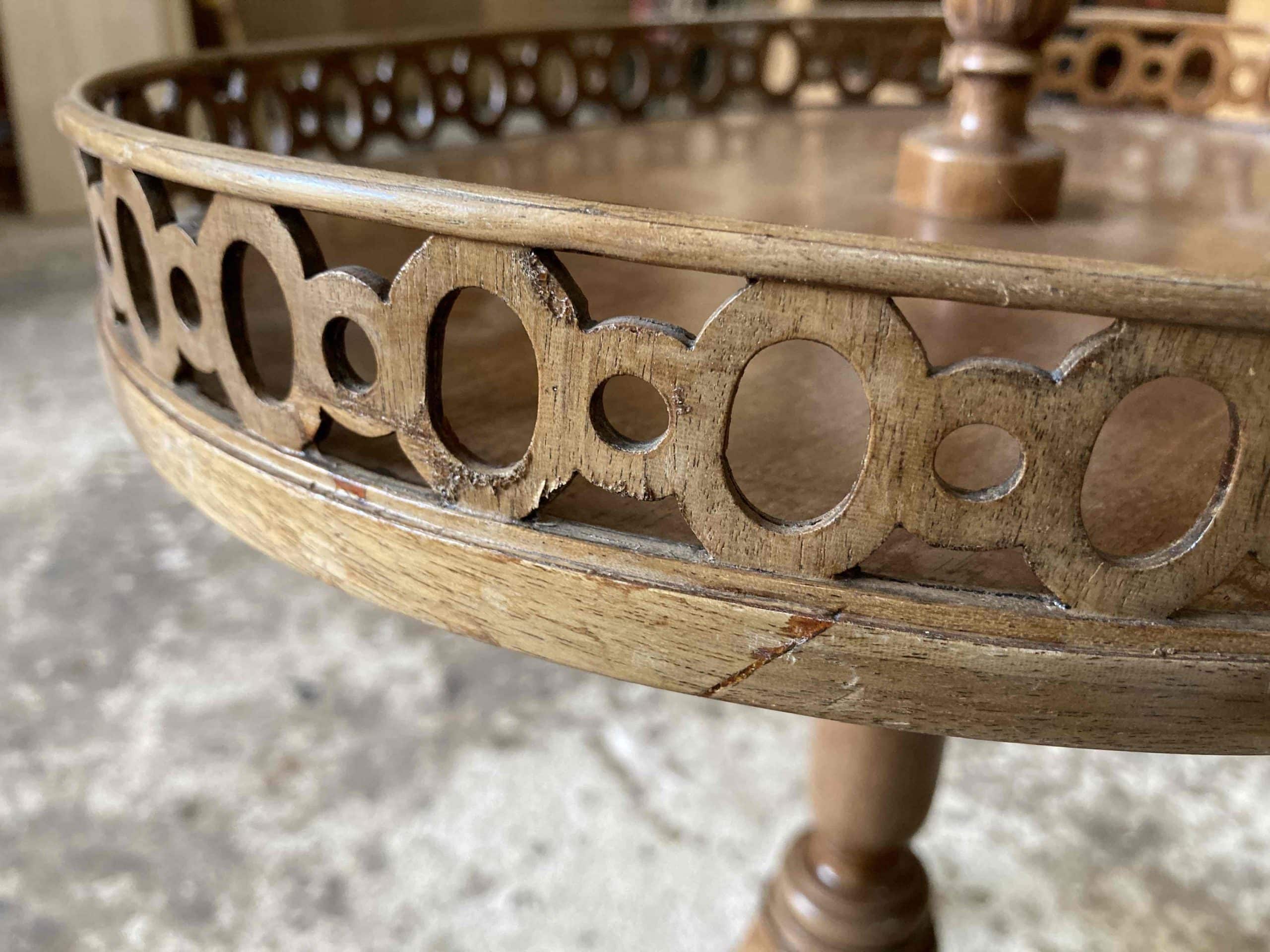
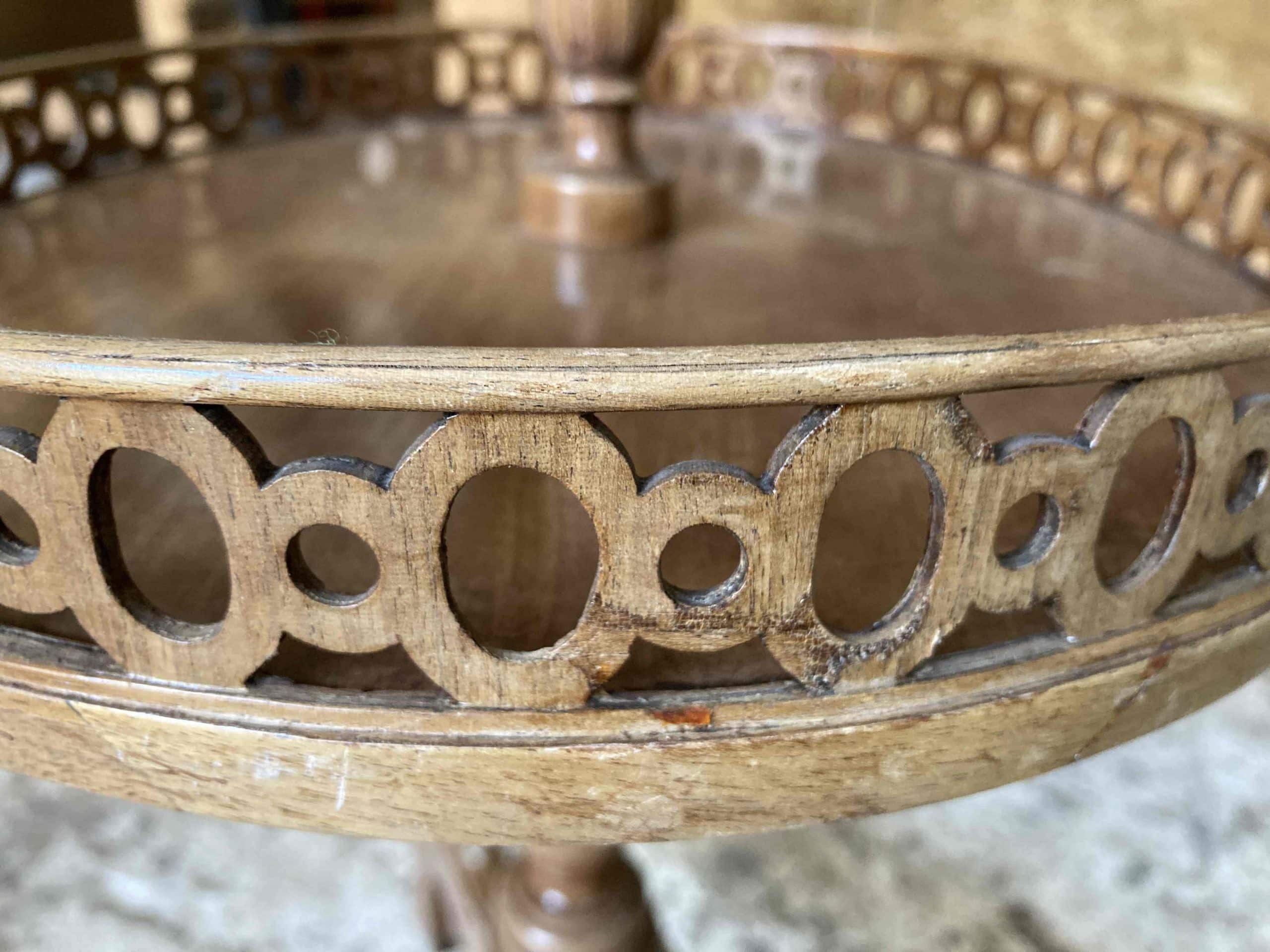
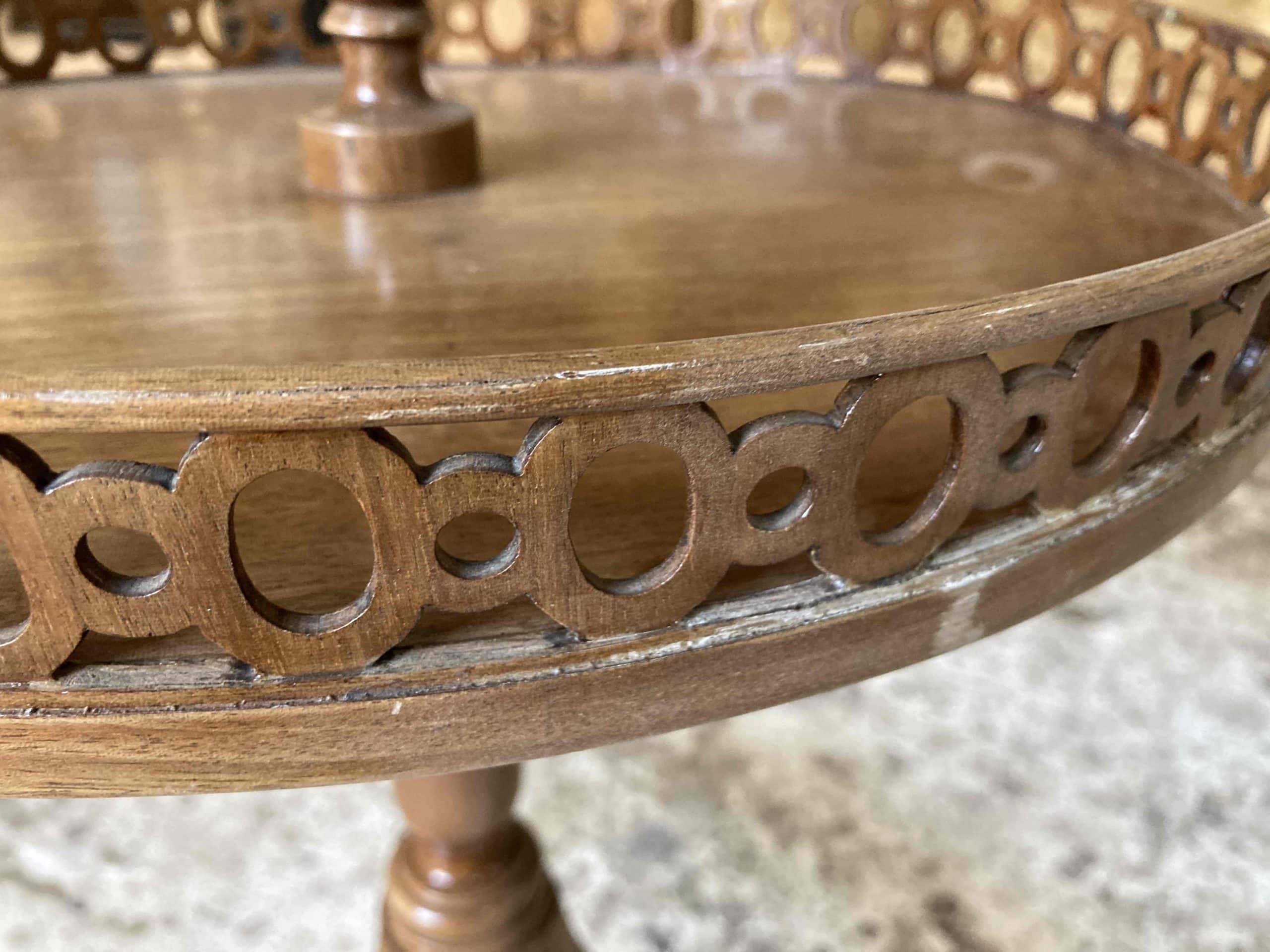
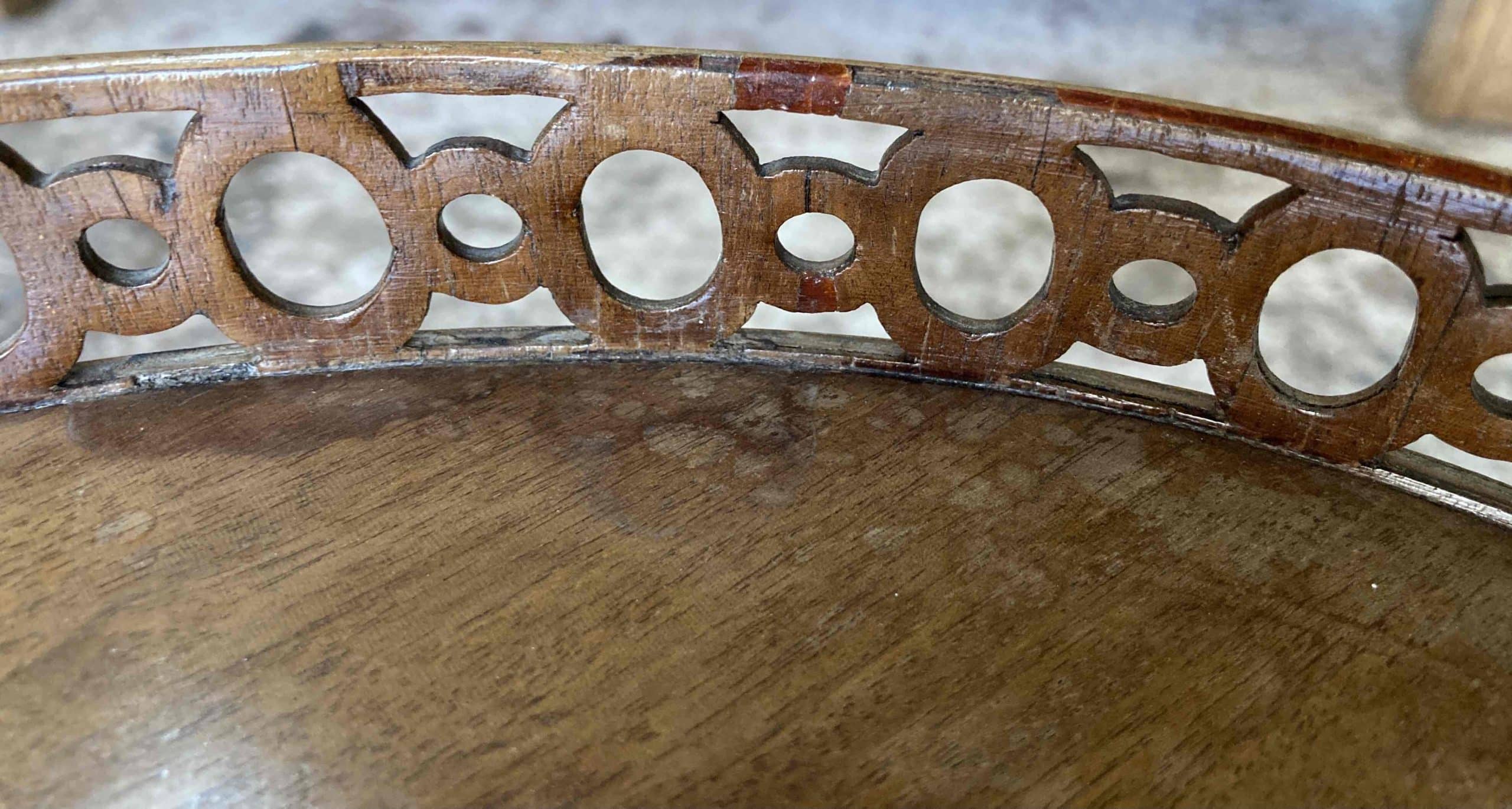
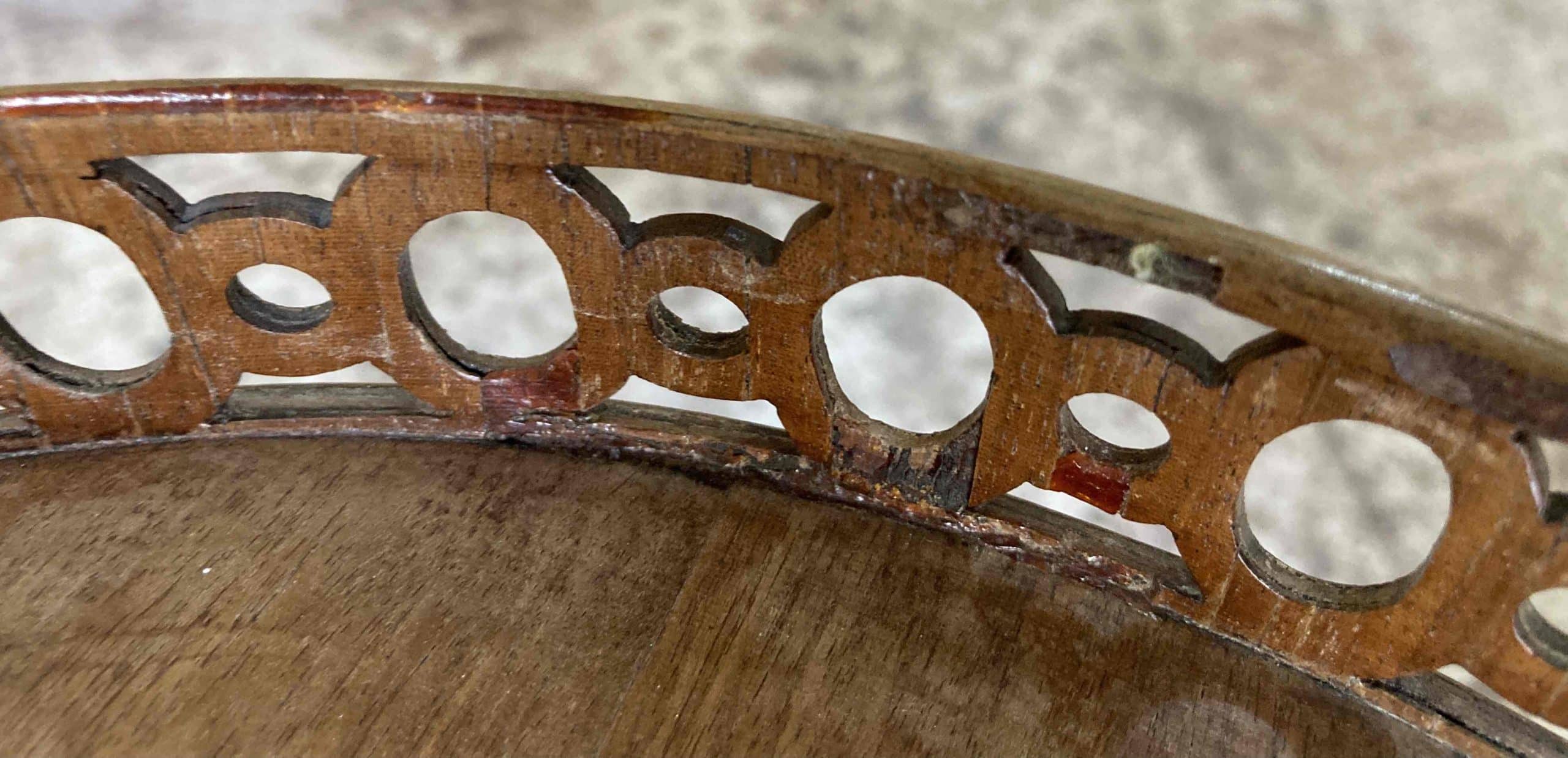
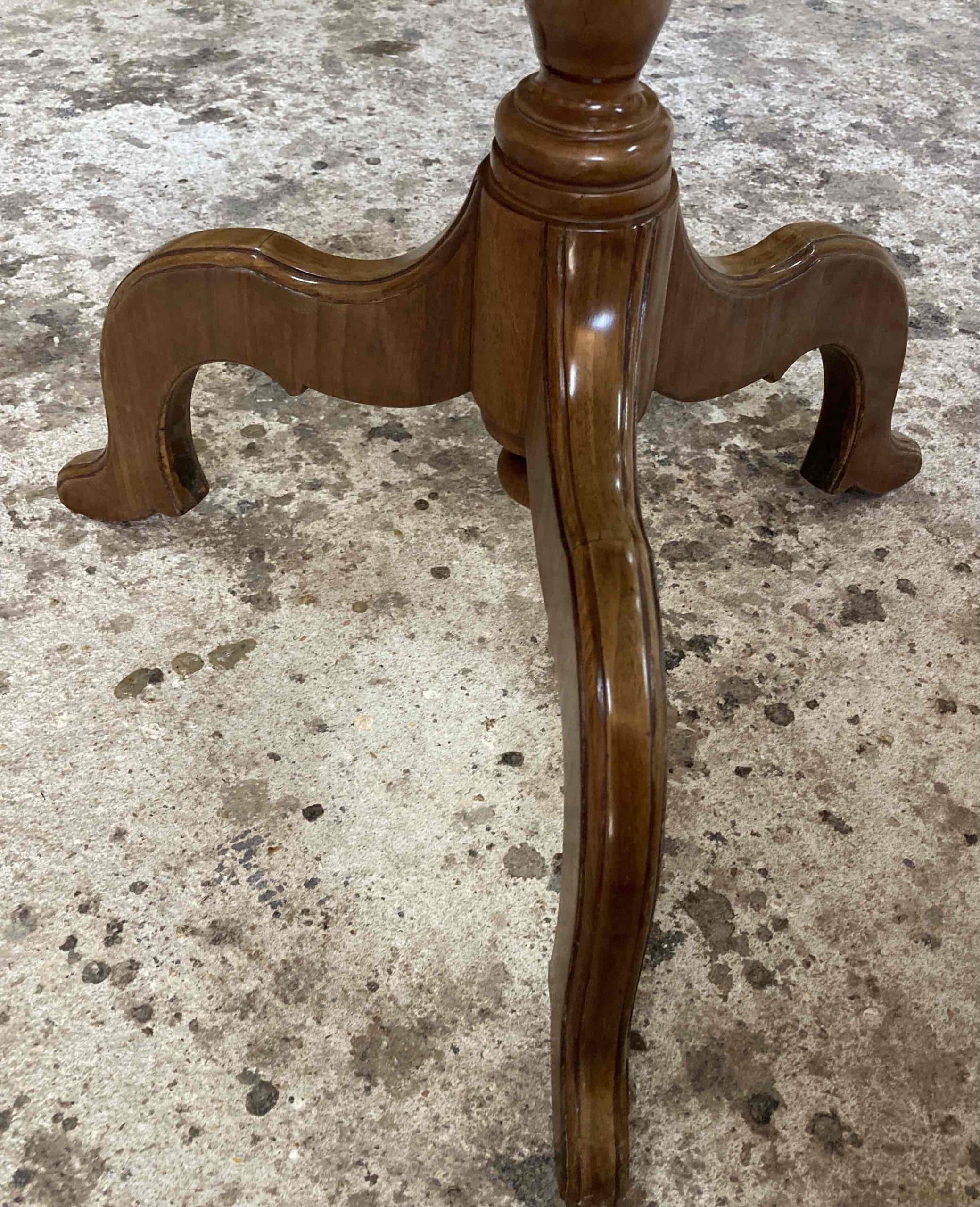
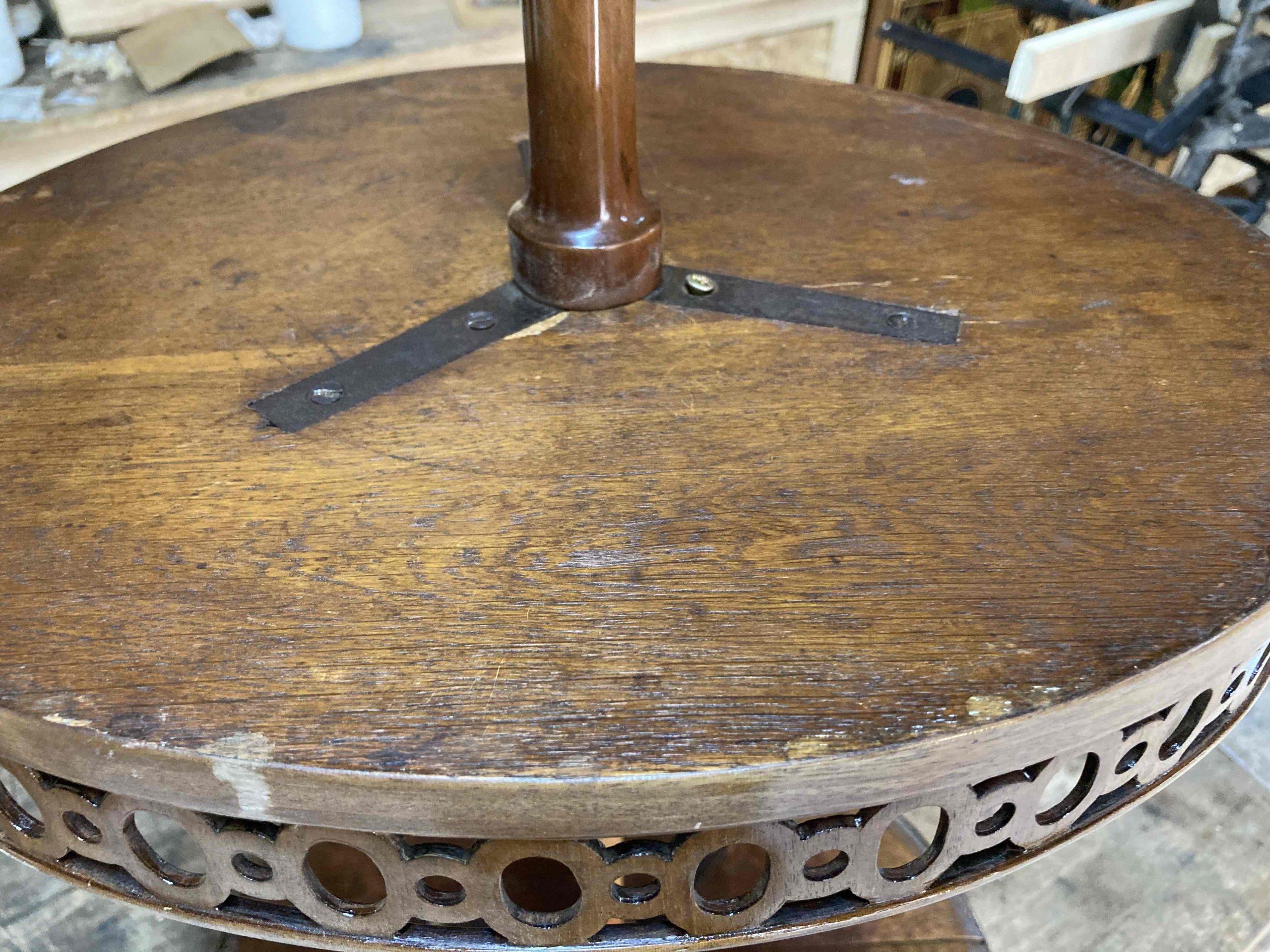
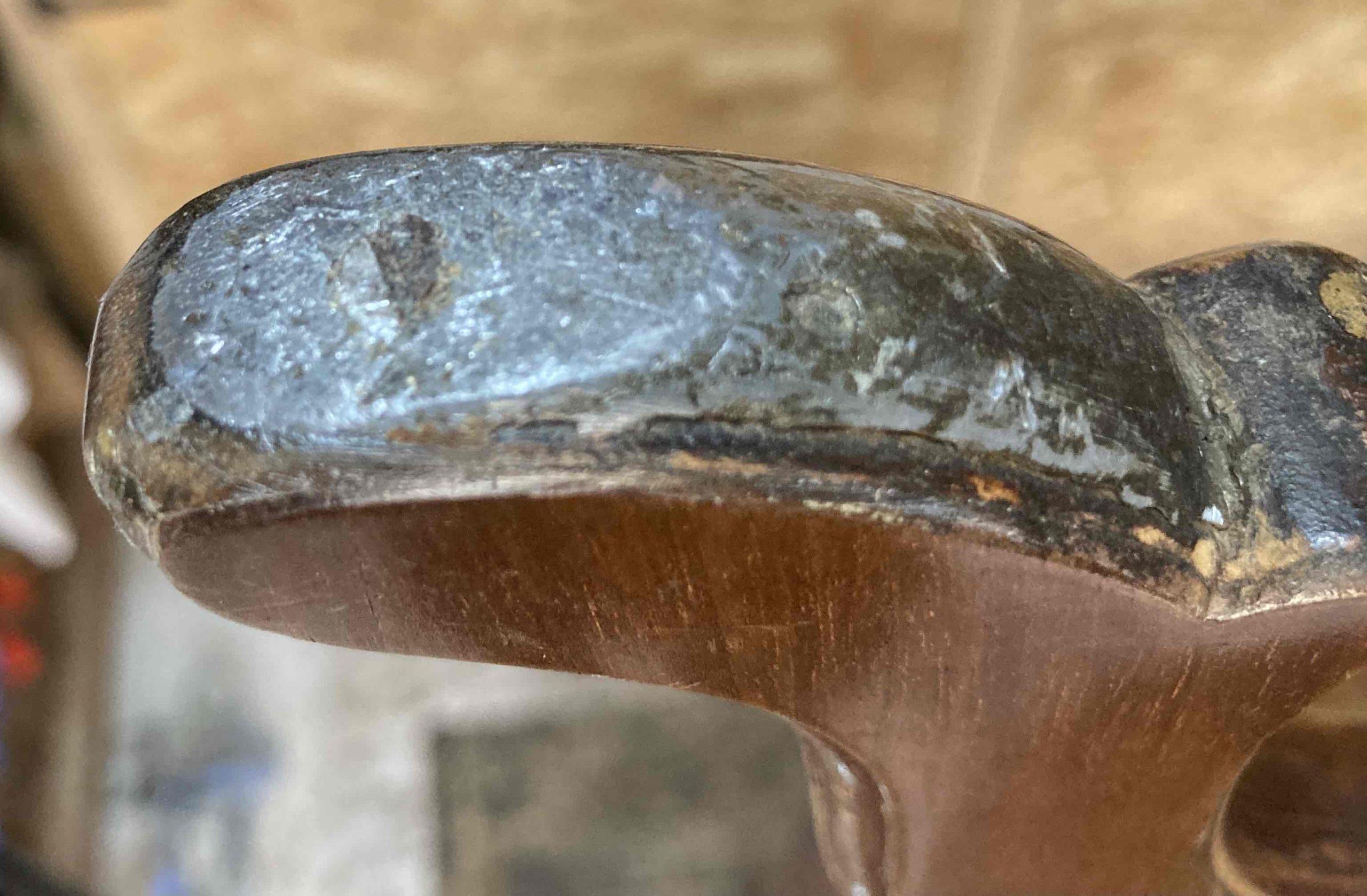
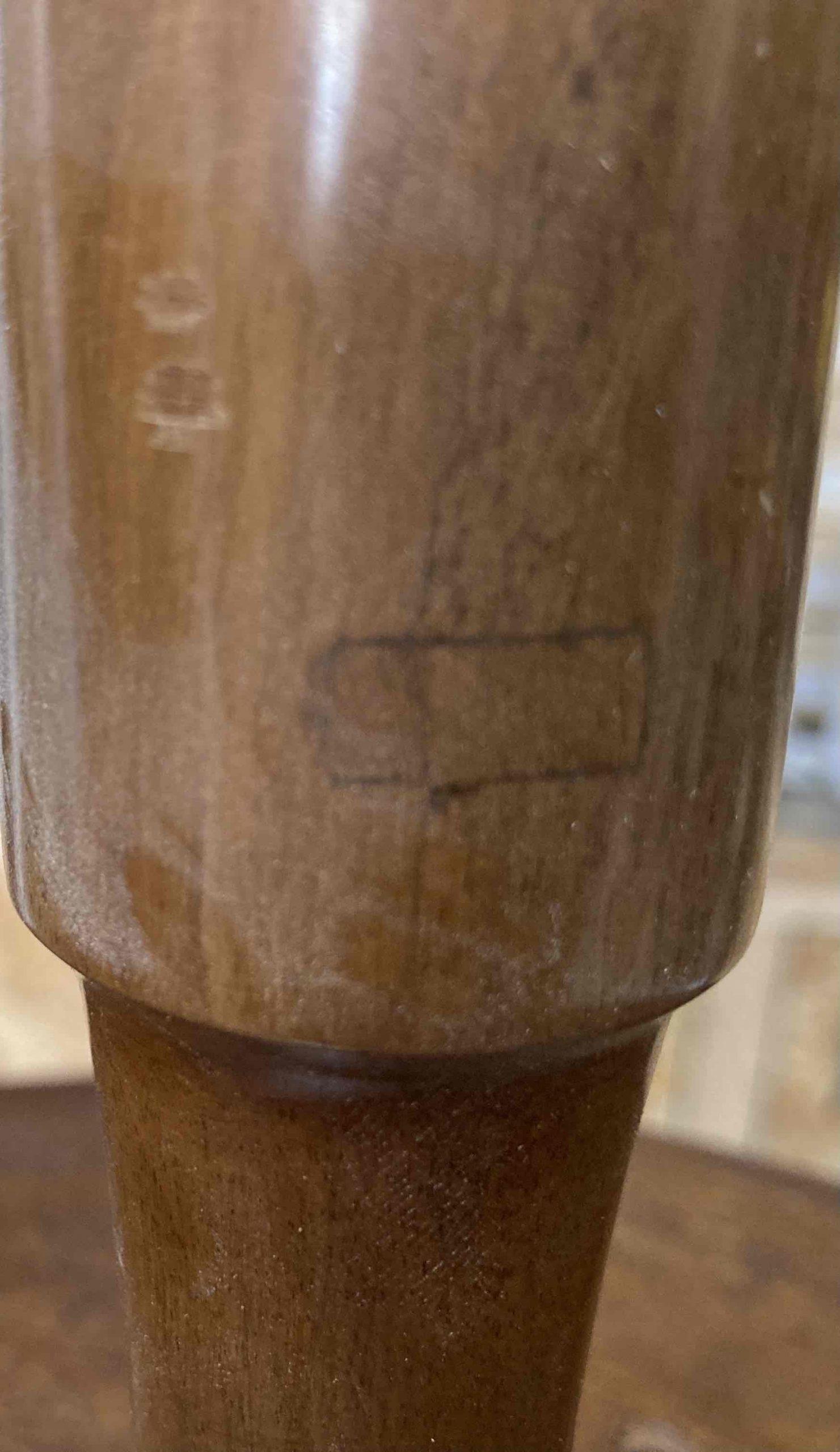
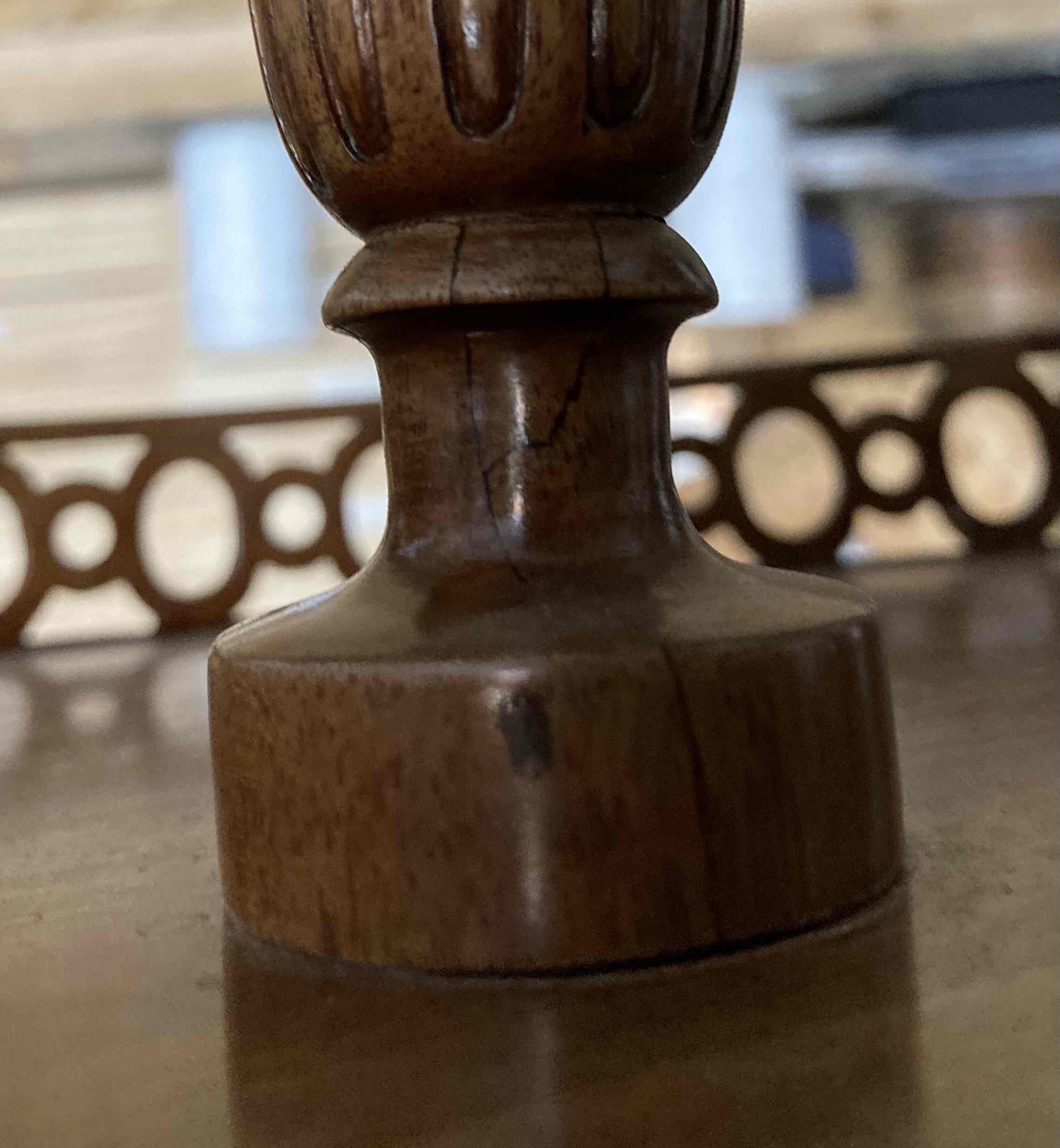
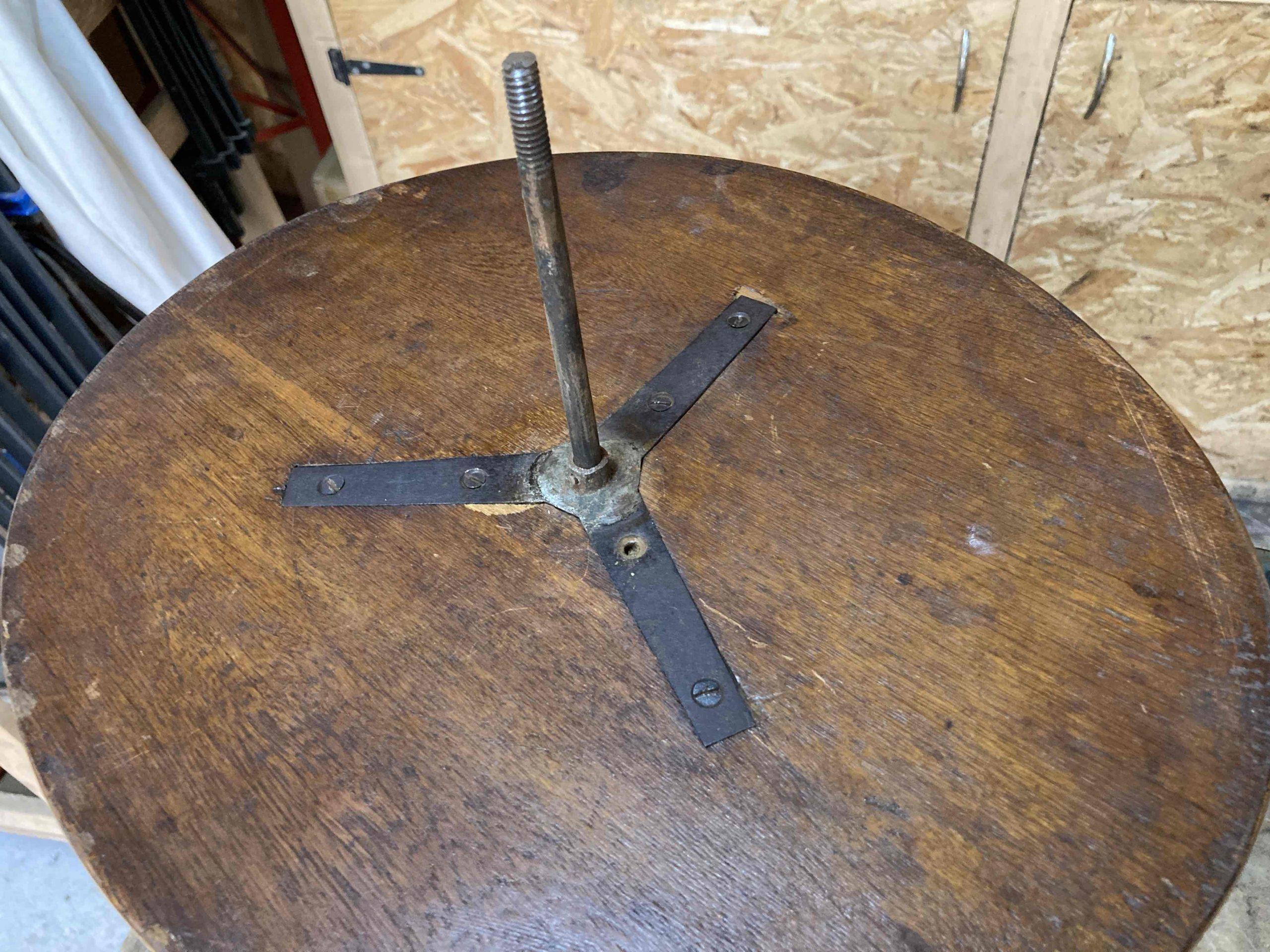
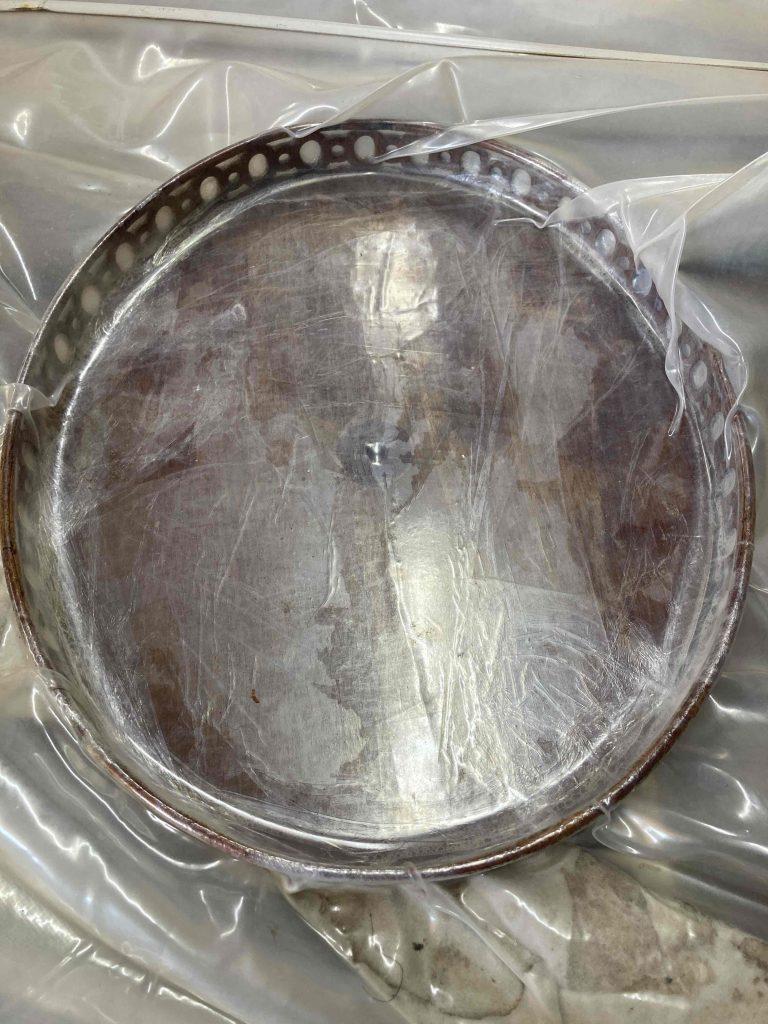
As for the restoration, it was very simple. It was purely a matter of conservation. The peeling veneers were repaired, as were the poorly filled areas with red shellac, and the Phillips head screws (which were obviously new) were replaced. The few holes were filled with color matching. Finally, the old varnish was simply restored, and a light coat of wax was applied to bring back all the luster to this simple piece of furniture by a great cabinetmaker.
To see previous restorations : https://ebenisterie-mathieuvath.fr/en-ce-moment-a-latelier/