
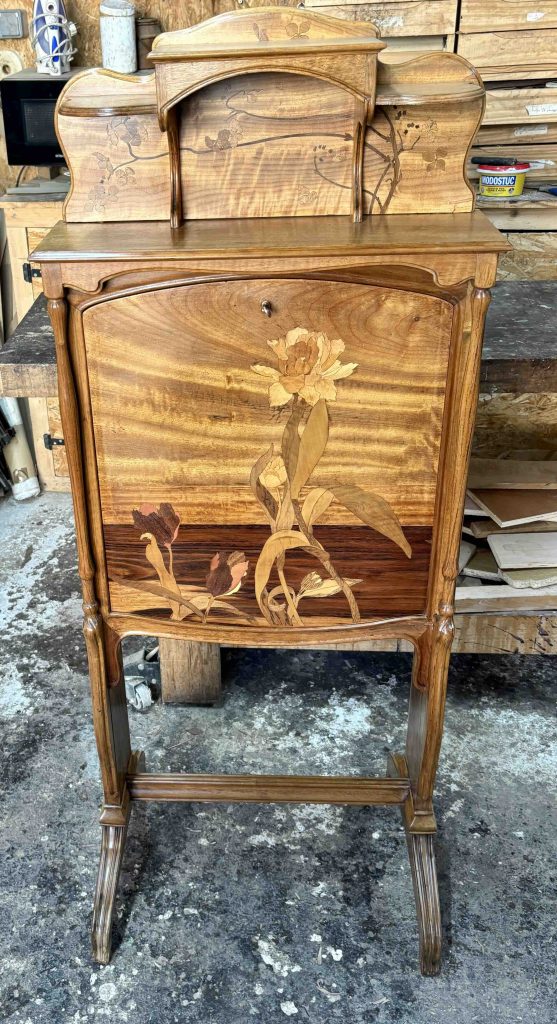
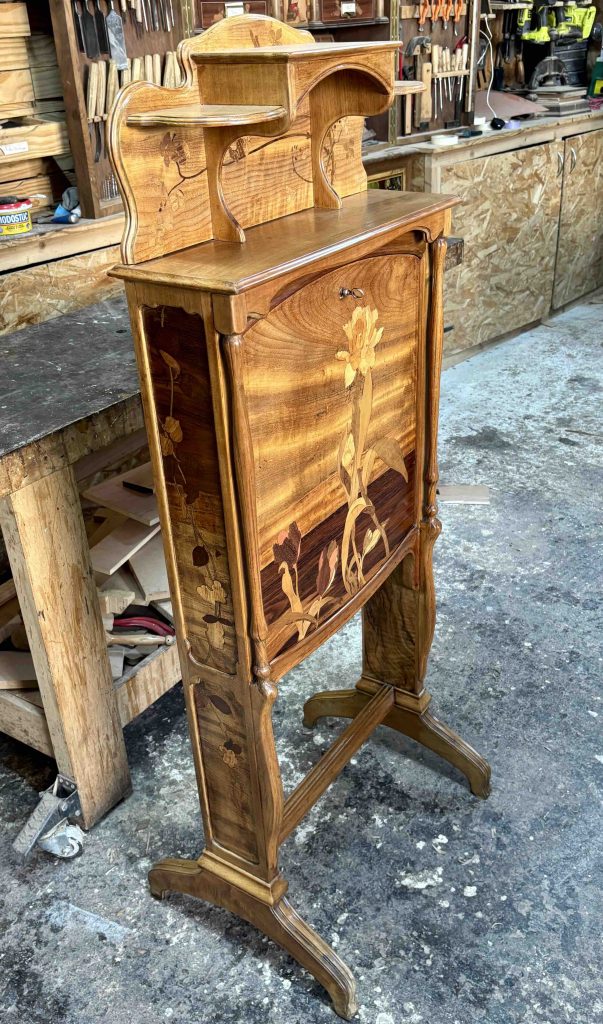
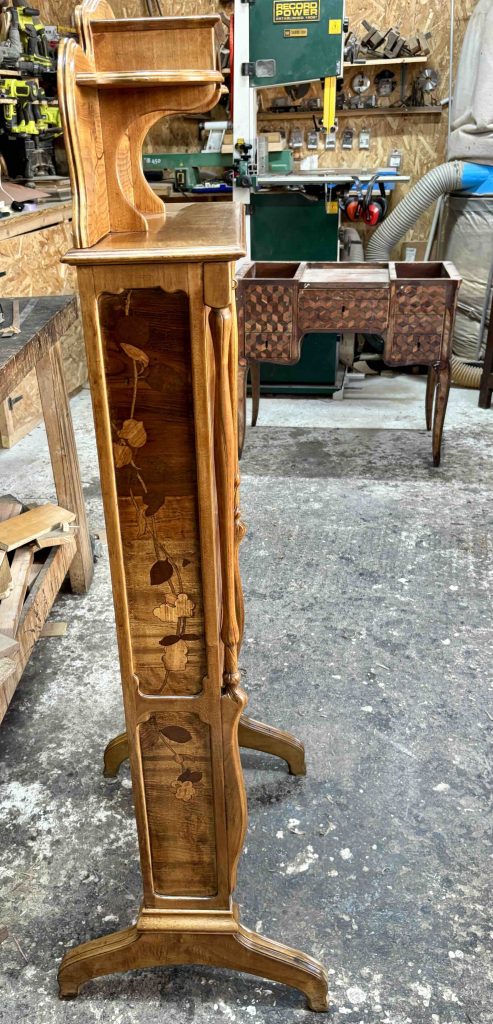
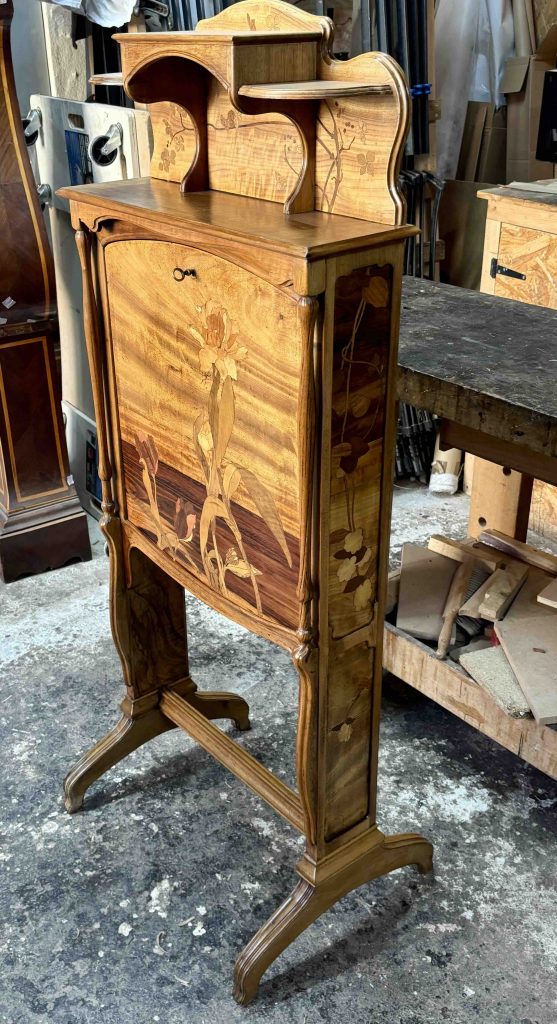
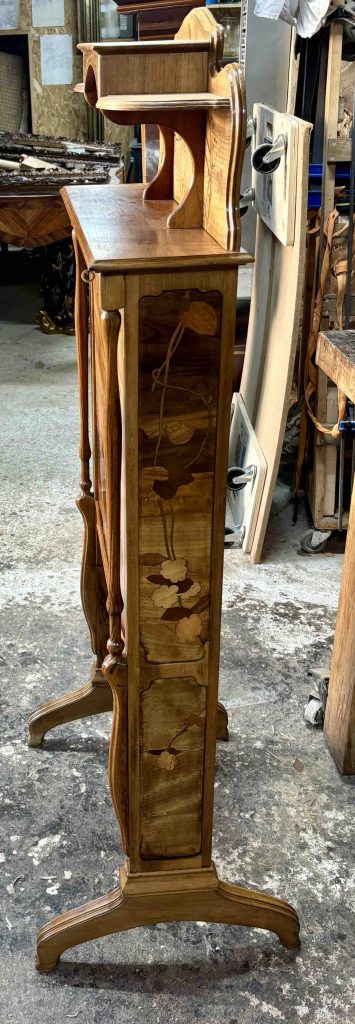
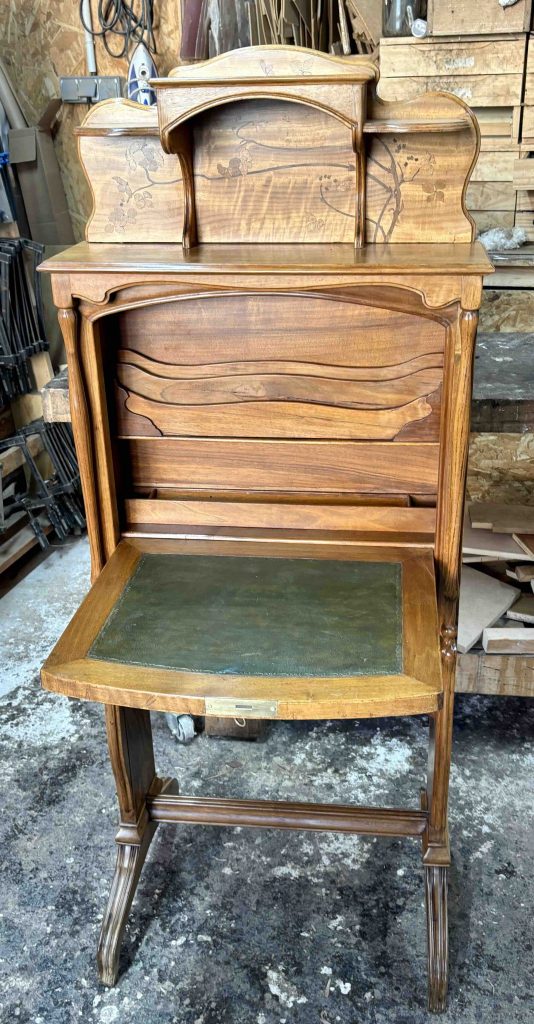
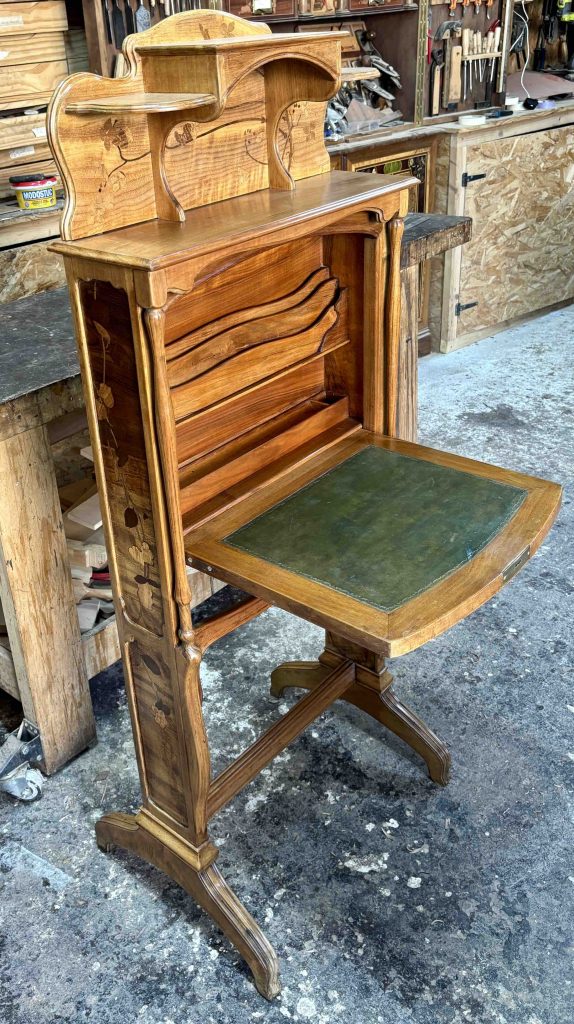
Congratulations to Léo, our workshop intern! He has completed his first restoration project here. It's a lady's writing desk, also known as a "billet doux" (love letter), stamped by Louis Majorelle.
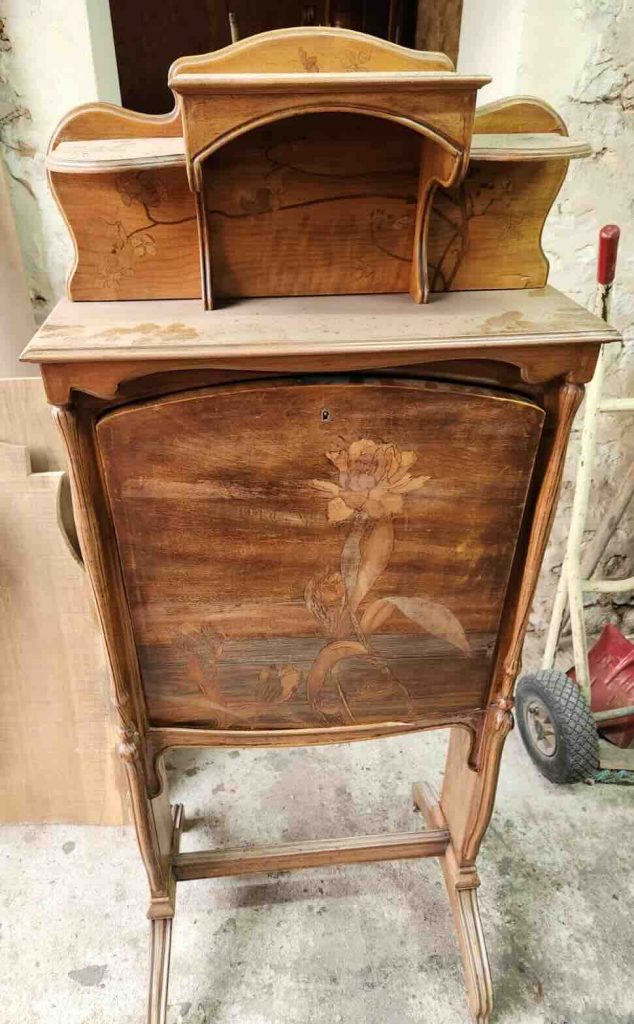
Love note
The love letter writing desk appeared in France at the end of the 18th century. Its use became particularly widespread under Louis XVI, and later during the Restoration. It was an intimate and refined piece of furniture, designed for correspondence. It was therefore often placed in a boudoir or bedroom. Later, at the beginning of the 20th century, Louis Majorelle helped to revive its popularity.
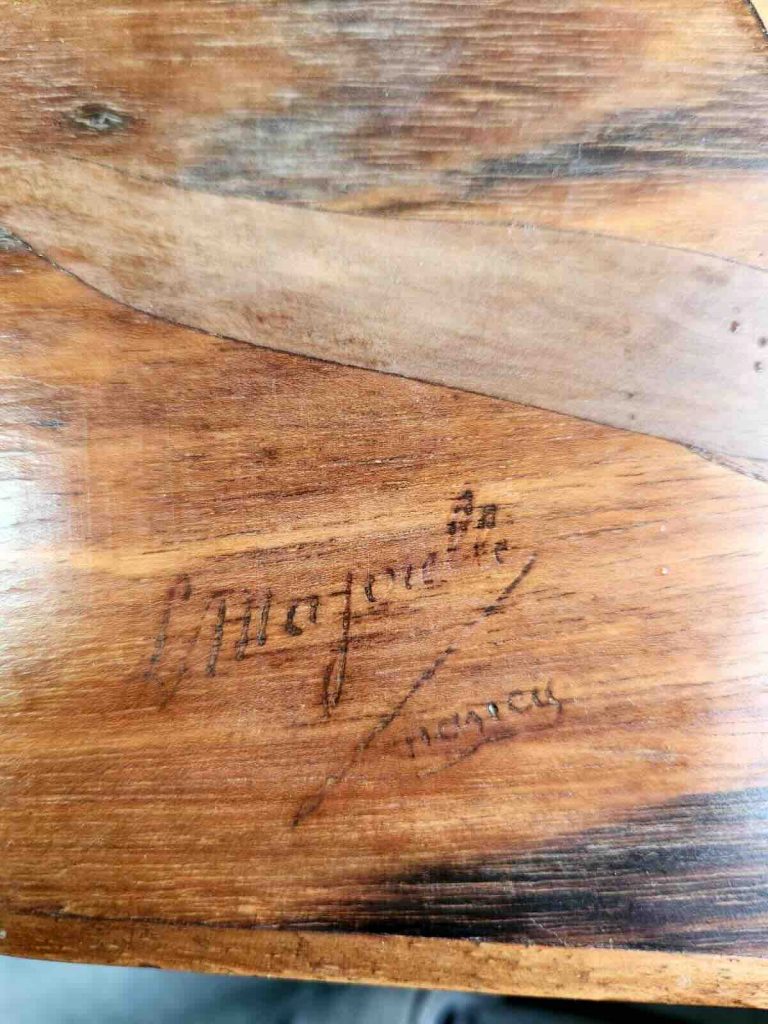
Louis Majorelle

Louis Majorelle was born in Toul in September 1859 and died in Nancy in January 1926. The son of furniture maker Auguste Majorelle, he showed an early aptitude for craftsmanship and drawing. He enrolled at the École des Beaux-Arts in Nancy. Then, in 1877, he joined Aimé Millet's studio at the École des Beaux-Arts in Paris. Upon his father's death, Louis and his brother Jules took over the family business, which at the time manufactured furniture and earthenware. Louis assumed the artistic direction and later opened his own shop in Nancy. Even today, he remains a major figure of Nancy's Art Nouveau movement.
From Louis XV copies to Art Nouveau
Initially, Louis Majorelle trained under his father's craftsmen. A few years later, he was ready to take over the business. From then on, he paid homage to his father's furniture with Louis XV style copies. These were met with immense success. He exhibited his creations several times. In 1889, he even received a silver medal at the Universal Exhibition in Paris.
Very quickly, however, Majorelle broke free from these models and found his own style. In the late 1890s, he became interested in the work of...’Émile Gallé, A glassmaker and cabinetmaker, he embraced Art Nouveau. His aesthetic became fluid, naturalistic, and symbolist. Stems, water lilies, thistles, and dragonflies intertwine on his furniture. Furthermore, in 1897, he established a metal workshop to produce the bronze mounts for his furniture and lighting fixtures. Finally, he also exhibited ceramics and glassware.
Condition assessment and restoration
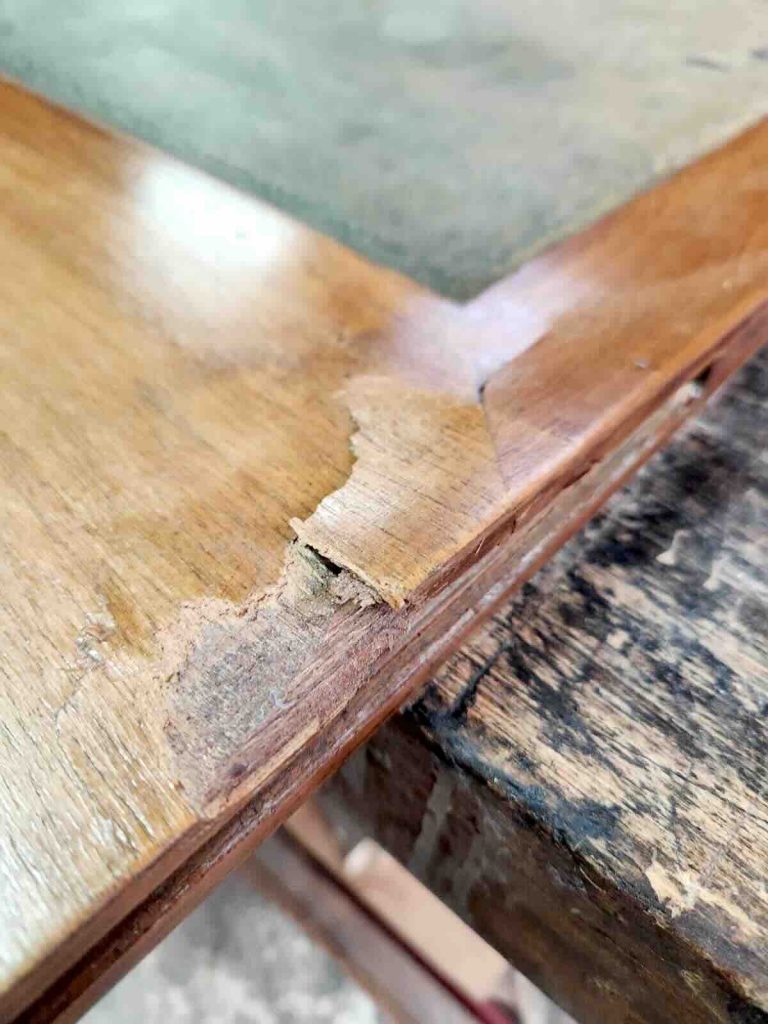
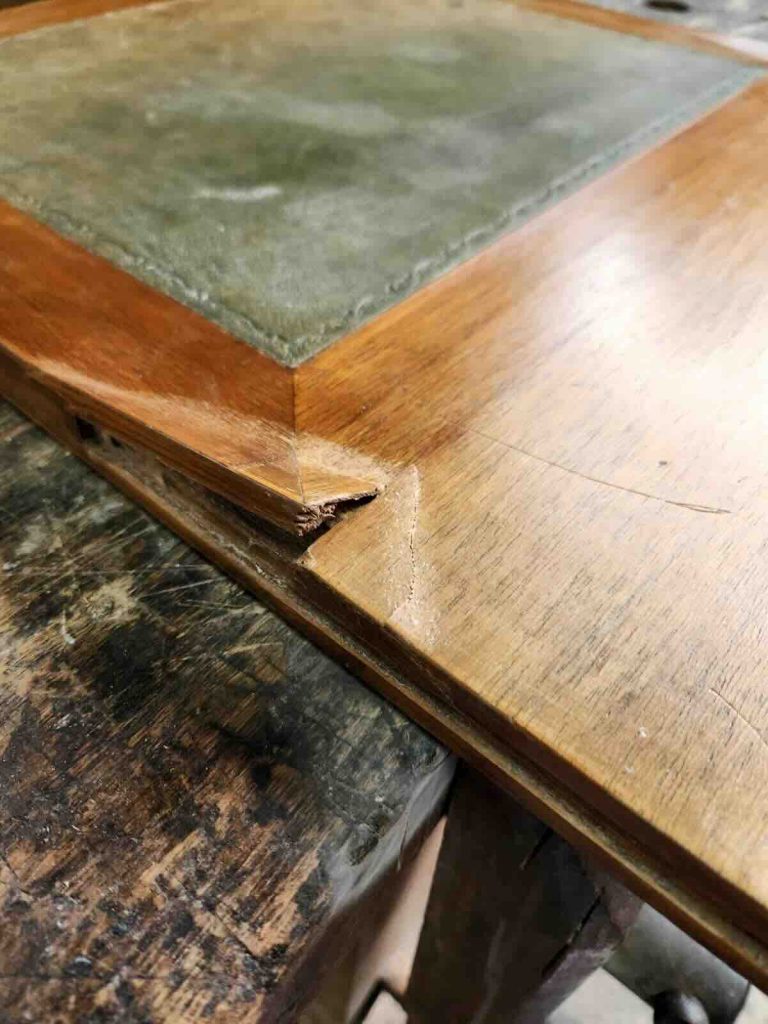
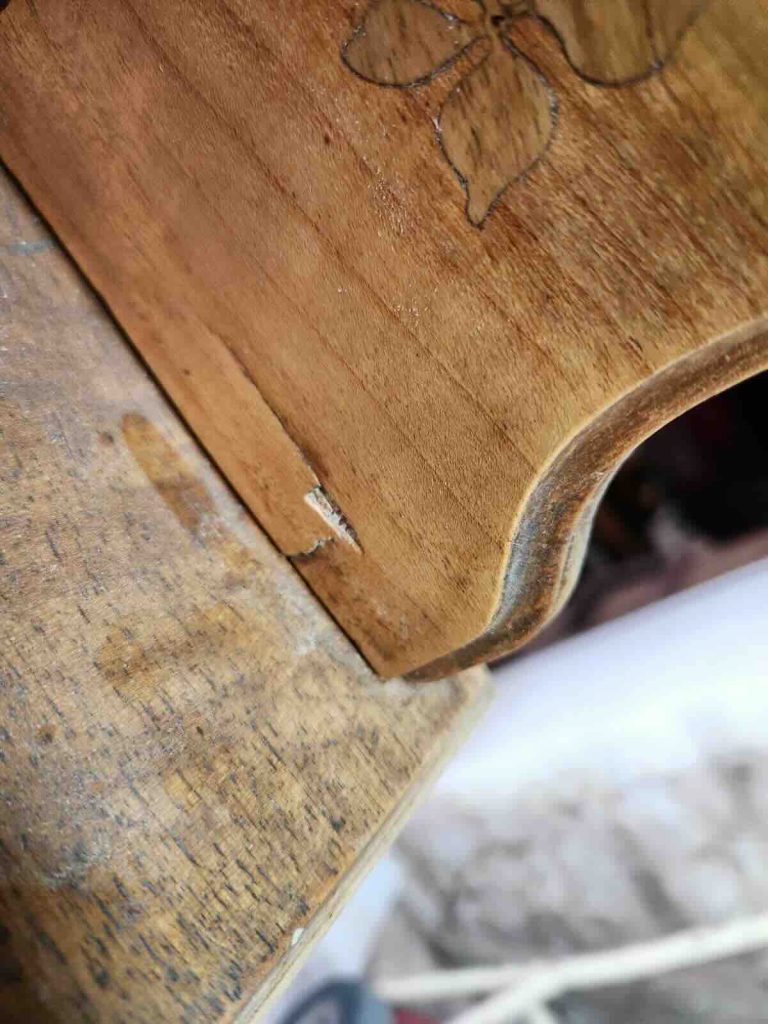
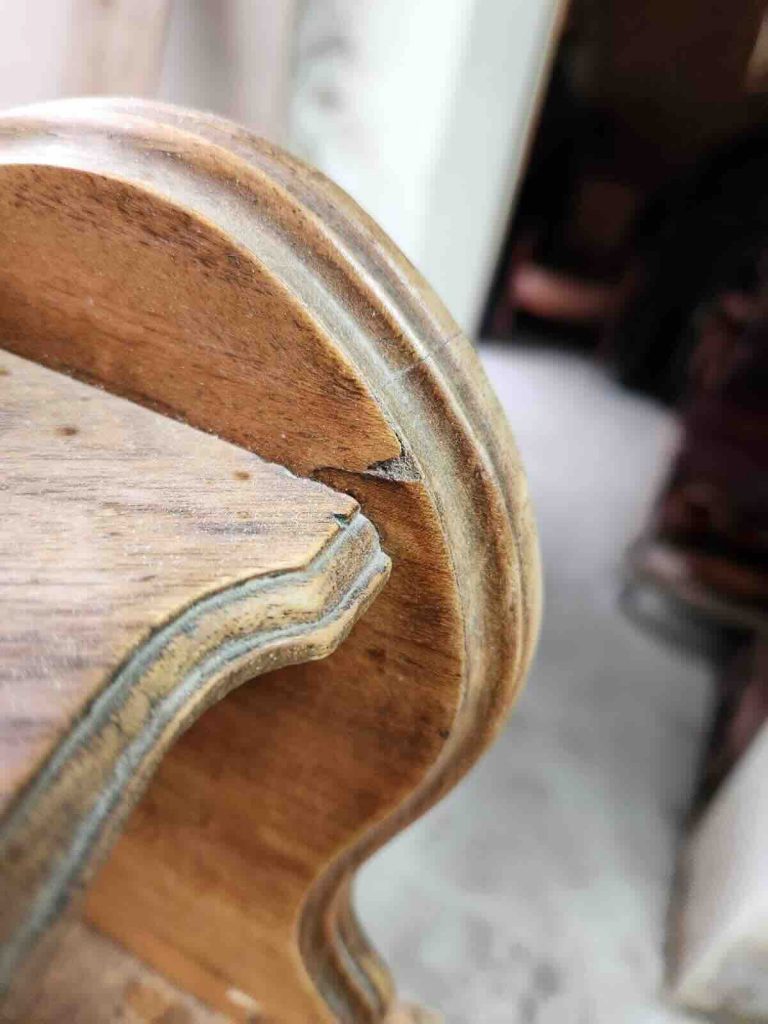
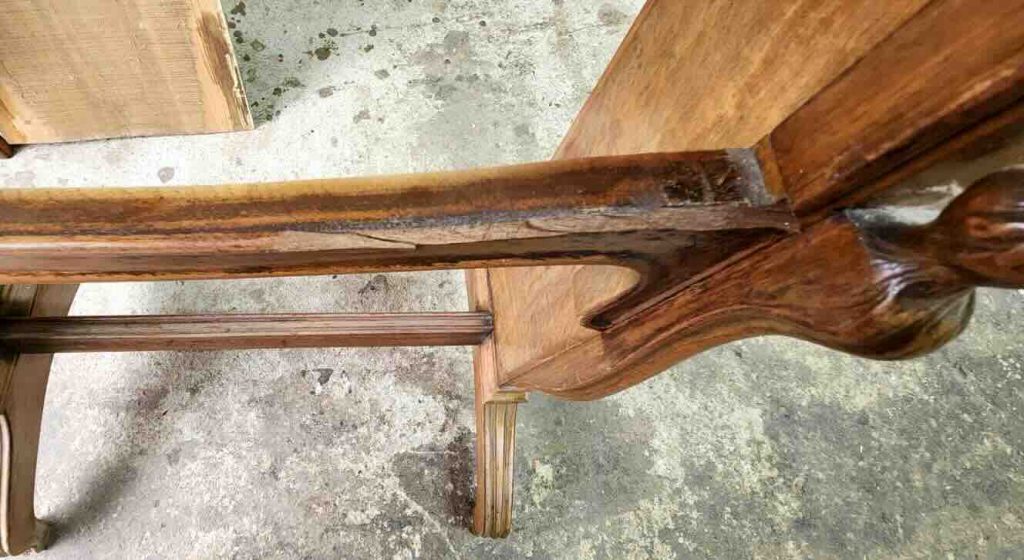
The shellac finish was completely ruined. There were also a few minor flaws: missing veneer, chips at the hinges of the drop-leaf, and a missing piece of molding on the lower rail. First, Leo filled the gaps with a suitable wood, matching the grain and texture. Then he carved a solid walnut graft that followed the curve of the molding. Finally, he stripped the piece and applied a wax finish.
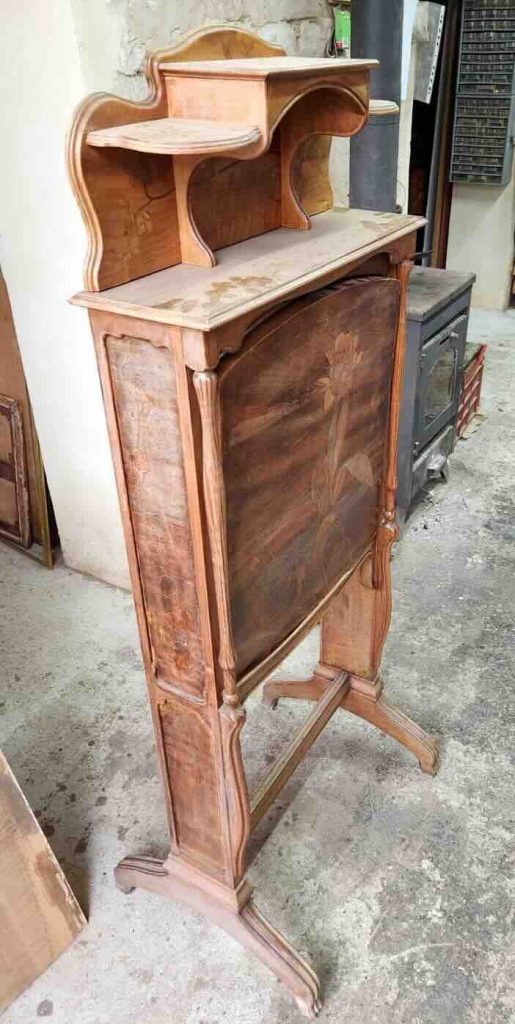
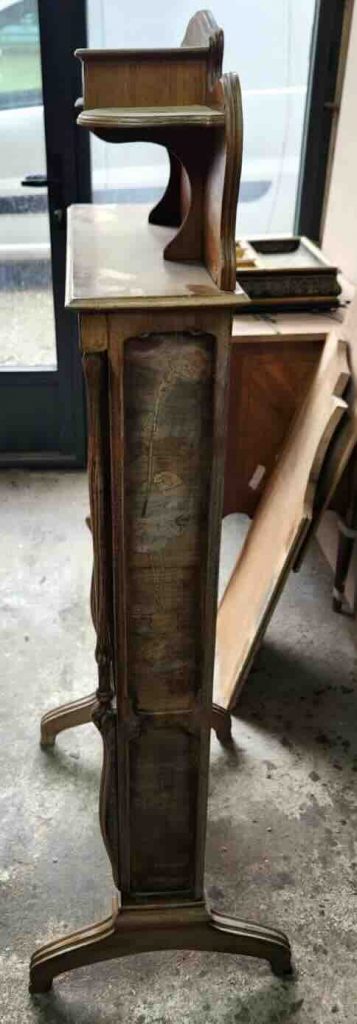
Magnificent restoration work on an unusual piece of furniture. I would truly love to have your expertise!