furniture conservation and restoration
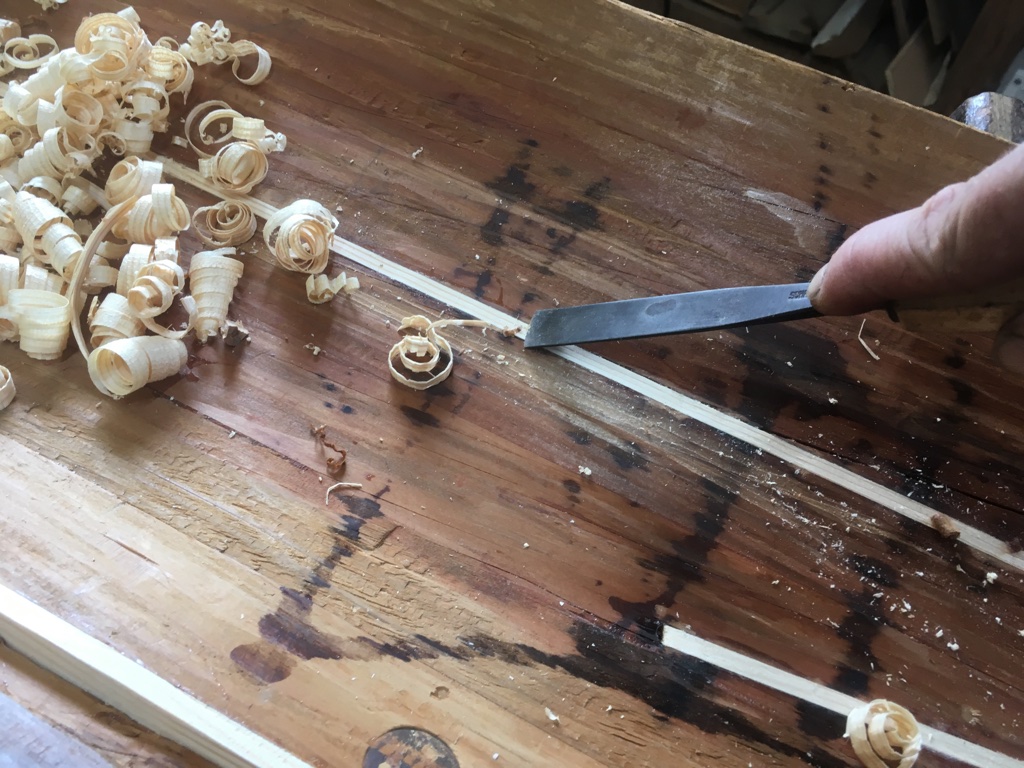
The conservation and restoration of furniture relies on a thorough knowledge of the materials, manufacturing techniques, and history of the objects. Our intervention is part of a process that is both technical, scientific and artisanal, aiming to preserve the authenticity of the furniture while ensuring its longevity — that is the whole business of furniture restorer.
Each piece is subject to a preliminary and individualized study. Observing the materials, construction, joinery, decoration, and finishes allows us to identify the techniques used and understand the different stages in the life of the piece of furniture. A condition assessment then allows us to characterize any alterations: weakening of the structure, deformations, lifting or gaps in veneer and marquetry, deterioration of the finishes, old attacks by wood-boring insects, or damage related to storage conditions.
Based on this diagnosis, a intervention protocol is defined. It favors a reasoned intervention, adapted to the state of conservation and the nature of the object. When necessary, curative conservation or restoration interventions may complement the treatment in order to stabilize fragile elements and restore a coherent understanding of the work.
 Traditional techniques in the service of conservation
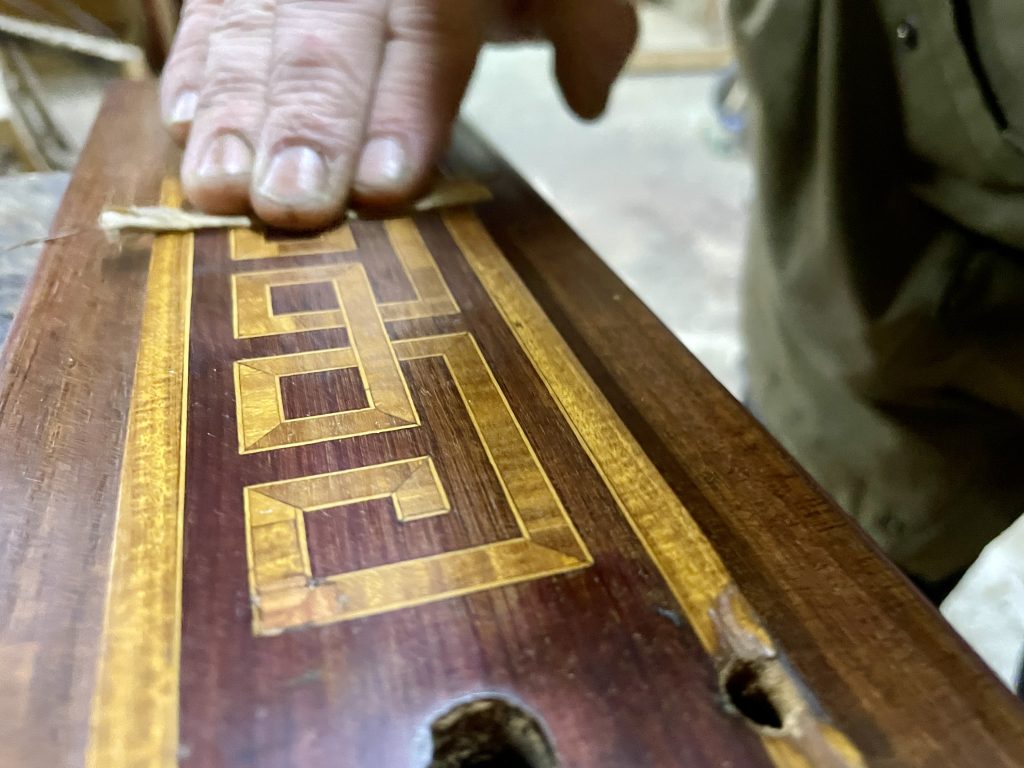
Mastering the traditional skills of cabinetmaking and restoration constitutes the core of our practice. Interventions may concern structures and assemblies, veneers, marquetry, sculpted or turned elements, as well as the different types of decoration and finishes.
Working with antique wood requires a thorough understanding of its properties and behavior. Repairs are carried out using original manufacturing techniques, ensuring the compatibility of materials and the stability of joints.
Particular attention is paid to marquetry and materials associated with art furniture Precious and stained woods, mother-of-pearl, metal, tortoiseshell, horn, bone, or other decorative materials. The restoration of missing parts is carried out with care, in order to restore the aesthetic coherence of the whole without erasing traces of its history.
The cleaning, consolidation, clearing, or finishing operations are carried out progressively, with the objective of preserve as much of the old material as possible.
Our approach is based on the fundamental principles of professional ethics. conservation-restoration : respect for authenticity, minimal intervention, compatibility of materials, legibility of interventions and, when technical conditions allow, reversibility.
The goal of restoration is not to make the piece of furniture look brand new. It consists of to preserve its identity, its material and the testimonies of its history, while allowing it to regain structural and aesthetic coherence.
Each intervention is thus conceived according to the object itself, its condition, its provenance, its use, and its heritage value. The choice between conservation, restoration, or restitution is determined on a case-by-case basis, after analysis of the available information.
 A contemporary approach to the profession
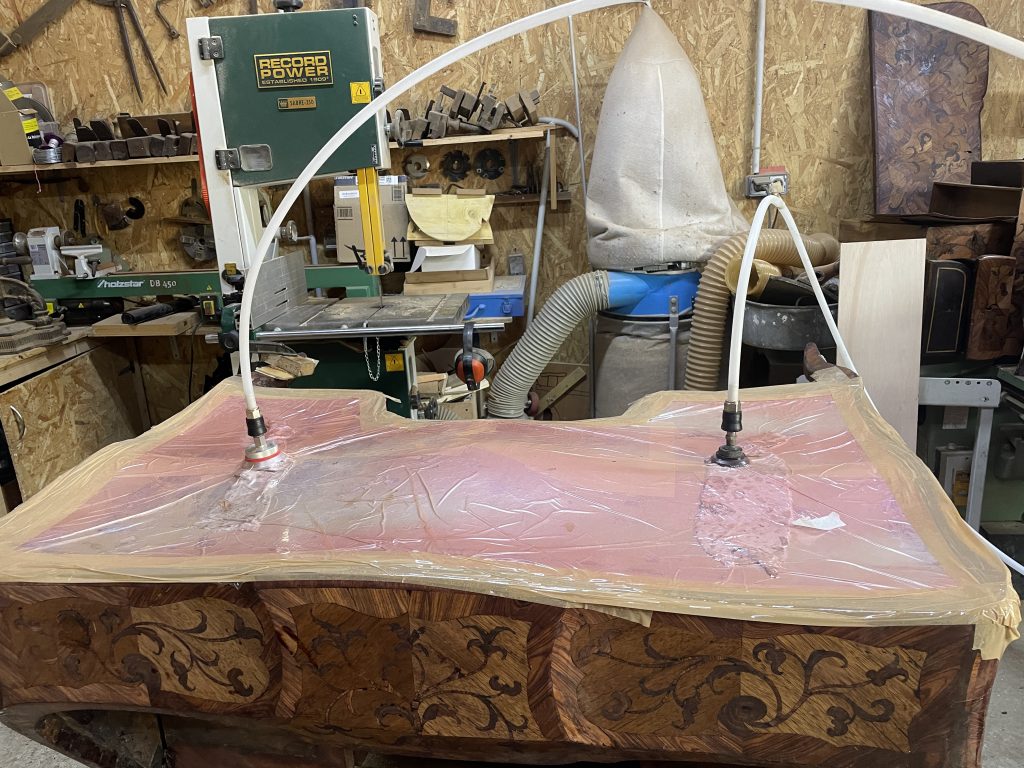
Traditional craftsmanship is combined with contemporary conservation and restoration knowledge and techniques. This complementarity allows intervention methods to be adapted to the specific problems of each piece of furniture and improves the control of treatments.
Observation, material analysis, and documentation of interventions are all integral parts of this approach. From everyday furniture to art furniture and heritage pieces, Our expertise is thus based on a balance between technical mastery, sensitivity to the material and historical understanding of the object.
Preserve, restore and pass on: Our intervention aims first and foremost to ensure the longevity of the furniture while respecting what makes it unique, authentic and valuable.